Direct factory supply of high-tensile, corrosion-resistant, and exotic alloy fastener assemblies with multi-layer PTFE fluorocarbon surface finishes built for critical projects.
In high-salinity, high-humidity, and sulfurous environments—such as the coastal refining zones of Lekki, Port Harcourt, and deep offshore operations in the Gulf of Guinea—conventional cadmium, zinc electroplating, and standard hot-dip galvanizing fail prematurely. Atmospheric corrosion rates in coastal Nigeria routinely exceed C5-M marine classifications according to ISO 12944-2, accelerating pitting, rust bleed, and thread galling within 6 to 18 months of installation.
Our engineered PTFE Fluorocarbon Coated Fastener Systems (commonly referred to in heavy industry as Teflon™ or Xylan® 1070/1014 coatings) integrate a multi-stage surface conversion technology: metallic zinc-nickel or thermoset phosphate undercoats topped with high-density, resin-bonded fluorocarbon polymers. This forms an impermeable barrier against aggressive chemical agents including hydrogen sulfide (H2S), chlorides, carbon dioxide (CO2), and industrial sulfuric gases.
Selecting the optimal bolting assembly prevents disastrous plant turnarounds, volatile emissions, and flange blowout incidents. Below is a comparative engineering benchmark between conventional coatings and our proprietary industrial fluorocarbon coating systems:
| Coating / Alloy Solution | Undercoat System | ASTM B117 Neutral Salt Spray | Coefficient of Friction (μ) | Operating Temp Range | Niger Delta / Onshore Durability |
|---|---|---|---|---|---|
| Standard Electro-Zinc | None (Direct Plating) | 96 - 120 Hours | 0.15 - 0.22 (Unstable) | -20°C to +120°C | Rapid failure within 3-6 months (Severe rust) |
| Hot Dip Galvanizing (HDG) | Intermetallic Zinc-Iron | 800 - 1,000 Hours | 0.18 - 0.25 (Galling prone) | -40°C to +200°C | Chipping during torquing, sacrificial zinc loss |
| AICC Blue PTFE System | Zinc-Nickel / Ceramic Base | 3,000 - 4,500+ Hours | 0.05 - 0.08 (Precise) | -195°C to +260°C | 10-15+ years non-galling, breakout torque < makeup |
| Inconel 625 / 718 Bare | Passive Nickel Oxide Film | Immune to general spray | 0.20 - 0.30 (Galling risk) | -250°C to +650°C | Immune to chlorides; needs PTFE for makeup torque control |
From upstream offshore platforms off Warri to downstream mega-refineries in Lagos State, our fasteners are specified for severe structural integrity demands.
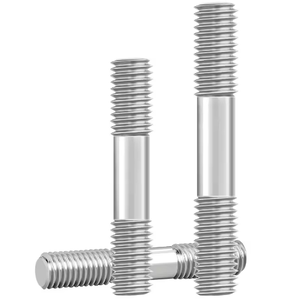
High-temperature fluid catalytic cracking units (FCCU), hydrotreaters, and alkylation pipelines requiring ASTM A193 B7/B7M studs coated with PTFE to prevent chloride stress cracking and seizing under tropical wet heat.
Subsea trees, risers, and turret mooring systems deployed in offshore Bonga, Egina, and Erha fields. Combining Super Duplex UNS S32750 or Inconel 718 with low-friction fluoropolymer for zero-maintenance underwater performance.
Bonny Island LNG liquefaction trains, cryogenic heat exchangers, and LPG distribution hubs. Cryogenic ASTM A320 L7/L7M bolting systems with fluorocarbon coatings tested for Charpy V-notch impact toughness at -101°C.
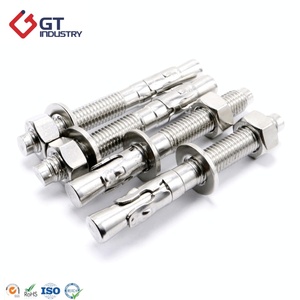
Docking facilities, container cranes, and seawater intake manifolds continuously exposed to marine splash zones. Stainless Steel 316 and PTFE-coated Grade 8.8 expansion fasteners eliminating catastrophic rust binding.
Geregu, Egbin, and Azura-Edo power stations require high-tensile turbine casing bolts and exhaust manifold studs resistant to cyclic thermal expansion up to 550°C without micro-welding or thread seizing.
Industrial RO plants, desulfurization units, and heavy mineral processing complexes across Ogun and central mining belts requiring chemical-proof PEEK and fluorocarbon bolting resistant to sulfuric and hydrochloric slurries.
The Nigerian oil and gas industry is undergoing a structural transformation under the Nigerian Oil and Gas Industry Content Development (NOGICD) Act and the deregulation sparked by the Petroleum Industry Act (PIA). Operators such as NNPC, Shell (SPDC), TotalEnergies, Chevron, and leading domestic EPC contractors like Shoreline, Seplat, and Oando are shifting procurement metrics from initial purchase cost to Total Cost of Ownership (TCO).
Historically, Nigerian maintenance turnarounds in offshore swamp environments incurred millions of dollars in downtime because corroded carbon steel stud bolts required hot work permits, pneumatic nut splitters, or oxy-acetylene torch cutting. By adopting PTFE fluoropolymer coated fasteners with low, consistent friction coefficients (0.06 ± 0.01), breakout torque remains lower than initial installation makeup torque—even after 5 years in humid saltwater splash zones. Maintenance teams can safely disassemble critical flanges with standard hydraulic torque wrenches, eliminating fire hazards and slashing turnaround schedules by up to 40%.
The West African market has frequently struggled with non-certified fastener imports with fabricated mill test certificates, incorrect heat treatment, or substandard coating thicknesses (less than 10 μm) that flake under wrench engagement. Leading Nigerian international oil companies (IOCs) now mandate strict compliance with EN 10204 Type 3.1 or 3.2 certification, API 20E (alloy steel bolting) and API 20F (corrosion-resistant bolting) alloy levels, along with independent third-party inspection (TPI) witnessed by SGS, Bureau Veritas, or TÜV Rheinland before export clearance from China.
Simple single-layer PTFE application is no longer deemed sufficient for offshore Niger Delta platforms. The trend is firmly transitioning toward two-coat and three-coat duplex coating architectures: a metallic ceramic or zinc-nickel sacrificial undercoat (10-15 μm) followed by an engineered resin-bonded fluorocarbon topcoat (15-25 μm). This barrier prevents catastrophic galvanic cell corrosion between dissimilar metals (e.g., carbon steel bolting on duplex stainless or titanium flange assemblies).
Combining hot/cold forging, precision multi-axis CNC machining, automated fluoropolymer coating lines, and global metallurgical testing under one unified ISO 9001:2015 quality system.
Certified by TÜV Rheinland for European and global pressure equipment standards. Full traceability from certified mill heat numbers to final threaded bolts.
In-house heat treatment lines ensure strict hardness controls (e.g., ≤ 22 HRC for ASTM A193 B7M/2HM grades) eliminating the risk of hydrogen-induced stress cracking in sour gas services.
Equipped with automated dip-spin machines, controlled pre-baking furnaces, and computerized thickness gauges ensuring an even, cohesive 20-35 μm PTFE layer without thread clumping.
Equipped for Positive Material Identification (PMI), optical emission spectroscopy, Charpy impact testing down to -196°C, micro-hardness profiles, and continuous salt-spray chambers.
Extensive shipping experience into Lagos (Apapa & Tin Can Island) and Onne Port. Clean documentation including Form M, SONCAP / CCVO compliance, and seaworthy desiccated packaging.
Direct partnerships with certified titanium, duplex, and nickel alloy melt mills. We manufacture standard fasteners and bespoke parts strictly to customer blueprint drawings.
Answers to common inquiries regarding standards, SONCAP certifications, coating specifications, and logistics delivery to Lagos, Port Harcourt, and Warri.
Whether you require ASME B16.5 flange stud bolts for refinery turnarounds or non-standard bespoke machined parts in exotic alloys, our engineering desk delivers technical quotes within 24 hours.
Send an Inquiry