
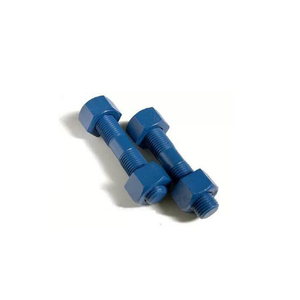
Explore our core export lines for the European mechanical market, spanning Titanium Grade 5 structural fixings, Hastelloy nickel alloys, high-performance Xylan coatings, and duplex offshore stud bolts.
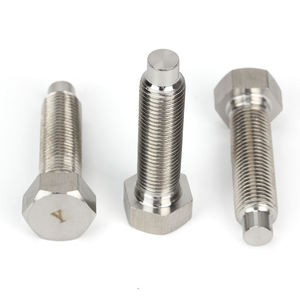
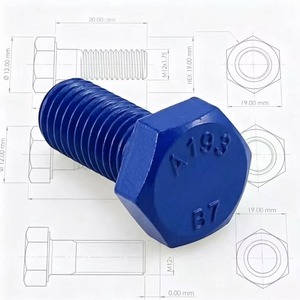
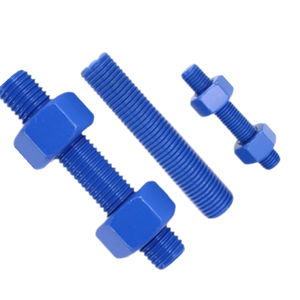
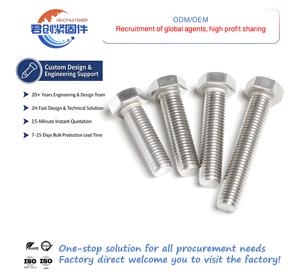
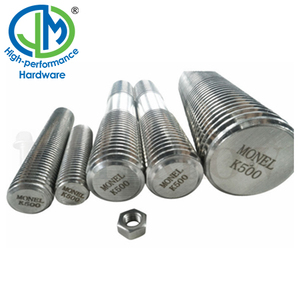
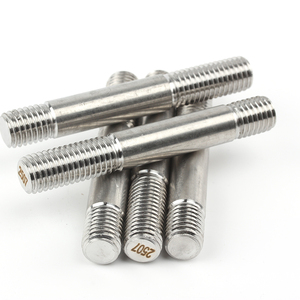
In high-end German manufacturing—from the automotive clusters of Baden-Württemberg and Bavaria to the aerospace supply networks of Hamburg and Bremen—engineering designs increasingly dictate mass minimization without sacrificing yield threshold or cyclic fatigue integrity. Titanium Grade 5 (designated as Material Number 3.7165, UNS R56400, or Ti-6Al-4V) represents the gold standard in high-strength, lightweight fastener engineering. As an alpha-beta alloy, its microstructural balance provides a minimum tensile strength of 900 to 930 MPa, while boasting a low density of only 4.43 g/cm³.
Compared to standard Class 8.8 or Class 10.9 structural steels (density ~7.85 g/cm³), Titanium Gr5 delivers an extraordinary strength-to-weight ratio, effectively eliminating nearly 45% of the tare weight in rotating and oscillating assemblies. However, for a Chinese manufacturer supplying German procurement teams, mechanical properties alone are insufficient. Successful integration into German mechanical assemblies requires rigorous compliance with the engineering calculation standard VDI 2230 Blatt 1 (Systematic calculation of high-duty bolted joints), tight pitch tolerance control according to DIN 13-1, and absolute prevention of stress corrosion cracking and galling (Kaltverschweißung).
Our manufacturing base couples high-purity vacuum arc remelted (VAR) ingots with dual-annealing heat treatments. This ensures complete stabilization of the needle-like alpha and equiaxed beta phase matrix, eliminating internal residual stresses and delivering high impact notch toughness even in cryogenic environments down to -196°C.
| Property Parameter | Titanium Gr5 (3.7165 / Ti-6Al-4V) | Austenitic A4-80 (1.4401) | High-Tensile Steel Class 10.9 | Inconel 718 (2.4668) |
|---|---|---|---|---|
| Density (ρ) | 4.43 g/cm³ | 8.00 g/cm³ | 7.85 g/cm³ | 8.19 g/cm³ |
| Tensile Strength (Rm) | ≥ 930 MPa | ≥ 800 MPa | 1,000 - 1,200 MPa | 1,240 - 1,400 MPa |
| Yield Strength (Rp0.2) | ≥ 830 MPa | ≥ 600 MPa | ≥ 900 MPa | ≥ 1,030 MPa |
| Elastic Modulus (E) | 110 - 114 GPa | 193 GPa | 210 GPa | 205 GPa |
| Specific Strength (Rm / ρ) | 210 kN·m/kg (Superior) | 100 kN·m/kg | 132 kN·m/kg | 151 kN·m/kg |
| Chloride Pitting Resistance | Immune (Room Temp) | Moderate (PREN ~25) | Susceptible to Rust | Immune (PREN ~52) |
Designed to meet strict EU directives and German manufacturing standards, our Titanium Gr5 fasteners serve as primary components in mission-critical applications across key industrial regions.
Extensively supplied to performance tuning and Tier-1 racing contractors around Stuttgart and Munich. Ti Gr5 hub bolts, connecting rod studs, and suspension link pins reduce unsprung mass, improving dynamic chassis response and dampening high-frequency vibrations.
Supporting aircraft frame components, nacelle bracket fixings, and autonomous eVTOL assemblies. Our fasteners conform strictly to ISO 9100/AS9100 manufacturing discipline and withstand thermal shock cycles while minimizing payload weight.
Installed across offshore wind substations and North Sea brine immersion hubs. Ti Gr5 provides total immunity to chloride crevice corrosion and pitting attack, eliminating cathodic rust run-off and minimizing long-term subsea maintenance costs.
Compliant with biocompatibility standards and MRI-inert environments. Non-magnetic Ti Gr5 socket cap screws (DIN 912) are widely used in cleanroom robotic surgery end-effectors, imaging gantries, and autoclave sterilization devices.
Precision-machined fasteners for High Vacuum (HV) and Ultra-High Vacuum (UHV) chambers. Our customized vented titanium screws feature drilled longitudinal vacuum release ports to prevent virtual leaks in thin-film coating equipment.
Providing exceptional resilience in moist, mildly acidic, and humid hydrogen processing cells. Unlike standard carbon steel, specialized titanium grade fasteners are immune to hydrogen embrittlement when heat treated and passivated under strictly controlled parameters.
Purchasing dynamics in Germany have shifted dramatically over the past 24 months. German original equipment manufacturers (OEMs) and supply chain executives no longer prioritize baseline unit prices above all else; instead, they demand long-term supply resilience, regulatory compliance, and total lifecycle accountability.
1. Strict Carbon Accounting & CBAM Alignment: As the EU’s Carbon Border Adjustment Mechanism (CBAM) enters operational enforcement, German industrial buyers require documented primary carbon data for all imported metals. Our titanium smelting and forging partnerships use clean-grid melting protocols, helping tier-1 purchasers meet their Scope 3 supply chain reduction goals.
2. Supply Chain Due Diligence Act (Lieferkettensorgfaltspflichtengesetz - LkSG): German corporations are legally accountable for human rights, labor welfare, and environmental integrity throughout their upstream supply base. Working with an ISO-certified, environmentally compliant factory in China guarantees transparent supply networks that withstand tier-1 supply audits.
3. Dual-Sourcing Strategies (China + Europe): Geopolitical shocks have underscored the risk of single-source procurement. Leading German valve, pump, and automation producers use our advanced manufacturing capabilities to establish a stable dual-sourcing model, combining rapid batch sampling with reliable volume production for series releases.
Backed by decades of specialized metallurgy expertise, advanced hot/cold heading lines, and comprehensive in-house metallurgical testing laboratories.
Our fabrication lines operate under internationally verified Quality Management systems. Our PED certification via TÜV Rheinland qualifies our bolts and pressure studs for direct installation in high-pressure steam boilers, heat exchangers, and chemical plants throughout the European Union.
Every production run is permanently laser-etched with a discrete heat tracking code. Mill test certificates detailing chemical spectrographic values, elongation, yield, and tensile tests are supplied as standard. Independent third-party inspection (TUV, DNV, SGS, Bureau Veritas) is routinely organized.
To overcome titanium's inherent galling tendencies, our facilities deploy cold and warm thread rolling machines that generate smooth 6g / 4h thread profiles. Additionally, we offer proprietary MoS2, PVD Nitride, and Xylan fluoropolymer dry-film treatments for reliable tightening torques.
Direct technical answers addressing standards compliance, anti-friction treatments, customs handling, and quality assurance verification.
Partner with an established China manufacturing leader certified to international standards. Share your DIN/ISO specification, drawing prints, material grade, and delivery schedule—our application engineers will return a complete mechanical analysis and quotation within 24 hours.