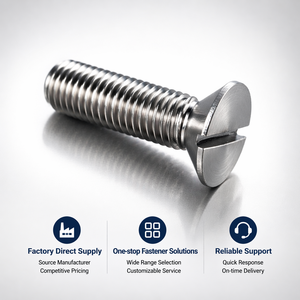
Slotted Countersunk Bolts Stainless Steel 304/316 CNS A2-70/A4-80 Marine Fasteners
Flush-mounted architectural and mechanical fasteners providing laminar hydrodynamic flow across marine hulls and coastal intake valves.
Inquire Now
Designed for high-salinity Persian Gulf exposure, intertidal splash zones, and corrosive hydrocarbon transmission systems.
Flush-mounted architectural and mechanical fasteners providing laminar hydrodynamic flow across marine hulls and coastal intake valves.
Inquire Now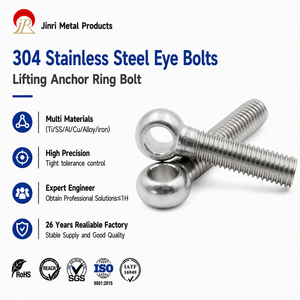
Drop-forged dynamic lifting rings certified for complex crane rigging, dockside hoist points, and mooring array connections.
Inquire Now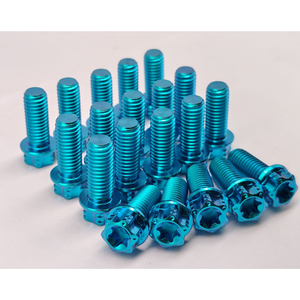
Ti-6Al-4V Grade 5 alloy bolts possessing complete zero-corrosion immunity in raw Persian Gulf brine while cutting mass by 45%.
Inquire Now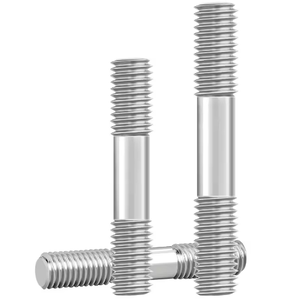
Engineered dual-threaded studs intended for heavy pump casings, flanged pipeline manifolds, and offshore subsea manifold skids.
Inquire Now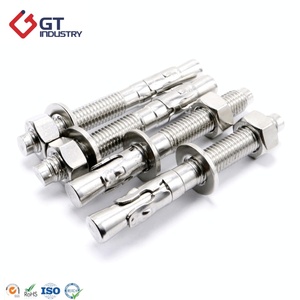
High shear-rated concrete expansion mechanical anchors for structural quay wall installation, dock bollards, and crane runways.
Inquire Now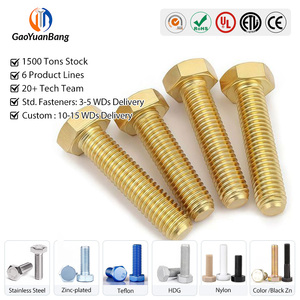
Biofouling-resistant, non-magnetic naval bronze fasteners built specifically for cooling water seawater intakes and electrical grounding.
Inquire Now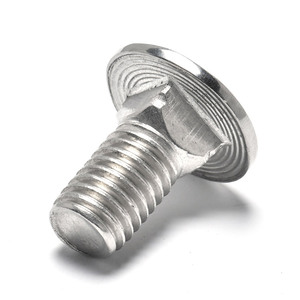
Square-neck self-locking bolts delivering anti-vibration integrity for port gangways, wooden fenders, and passenger terminal jetties.
Inquire Now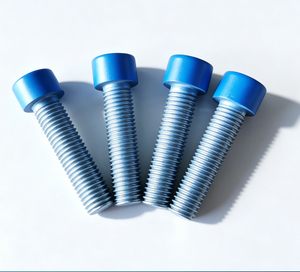
Fluoropolymer Xylan-coated heavy structural studs offering anti-galling precision, uniform torque coefficient, and acid barrier integrity.
Inquire NowThe Iraqi maritime and industrial interface represents one of the harshest physical operating regimes globally for mechanical fasteners. Coastal developments concentrated around Basra Governorate—spanning the Northern Persian Gulf, the Shatt al-Arab waterway, the industrial docks of Umm Qasr, Khor Al-Zubair, and the massive ongoing construction at Al-Faw Grand Port—exert extreme environmental stresses. Marine fasteners imported into this operating theater encounter an aggressive convergence of hyper-saline marine aerosols, ambient summer temperatures soaring past 52°C (125°F), airborne silica dust scour, and chemical contamination laden with hydrogen sulfide (H₂S) stemming from surrounding petroleum extraction fields like Rumaila, Zubair, and West Qurna.
Standard stainless steel bolting (such as standard cold-headed AISI 304) frequently exhibits catastrophic failure profiles in this operational environment. At ambient surface metal temperatures exceeding 50°C, chloride deposits undergo intense wet-dry evaporation cycling. This induces localized passive-film breakdown, resulting in rapid pitting, crevice corrosion beneath bolt heads and flat washers, and catastrophic Chloride Stress Corrosion Cracking (CSCC). Consequently, mechanical specifications drawn by engineering, procurement, and construction (EPC) contractors working within Iraq must transition toward higher Pitting Resistance Equivalent Number (PREN) alloys, specifically austenitic AISI 316L (with controlled molybdenum content ≥ 2.5%), Duplex 2205 (UNS S32205), Super Duplex 2507 (UNS S32750), Inconel 625, and structural ASTM A193 Grade B7/B8M systems armed with high-build fluoropolymer PTFE barriers.
Structural anchoring for precast breakwaters, caissons, dock bollards, and crane rails demands high tensile, shear-resistant fasteners. 316-grade heavy expansion concrete bolts and 2205 Duplex anchor studs deliver sustained structural clamping forces without brittle fracture under high dynamic mooring cycles.
Basra Oil Terminal (BOT) and Khor Al-Amaya Oil Terminal (KAAOT) utilize single point mooring (SPM) buoys and submerged pipelines. Fastening flanged spool joints requires ASTM A193 B7 stud bolts coated with thermoset blue PTFE, preventing galvanic seize-up and isolating the base metal from high-saline marine immersion.
Cooling channels and reverse-osmosis desalination modules in Basra’s petrochemical facilities process warm, untreated saline water. Silicon bronze and Copper-Nickel 70/30 hex fasteners prevent biological macro-fouling and galvanic decay across condenser flanges and heat exchanger tube sheets.
Comparative metallurgical performance data according to ASTM, ASME, and ISO standards.
| Material Grade | UNS / Spec | PREN Rating | Yield Strength (MPa) | Primary Resistance Characteristic | Ideal Iraq Project Application |
|---|---|---|---|---|---|
| AISI 316 / A4-80 | UNS S31600 / ISO 3506-1 | 23.0 - 25.0 | ≥ 600 | Pitting resistance in mid-saline atmospheric zones | Deck handrails, splash enclosures, light equipment racks |
| Duplex 2205 | UNS S32205 / ASTM A479 | 34.0 - 36.0 | ≥ 450 | Immunity to chloride SCC up to 150°C | Seawater pumps, dock infrastructure, piping flanges |
| Super Duplex 2507 | UNS S32750 / ASTM A182 | ≥ 42.0 | ≥ 550 | Exceptional resistance to crevice & pitting attack | Subsea manifold bolting, SPM buoy tethering systems |
| Titanium Grade 5 | UNS R56400 / ASTM B348 | N/A (Immune) | ≥ 828 | Total galvanic immunity, extreme strength-to-weight | Specialized subsea sensors, aerospace & naval defense |
| PTFE-Coated B7 | AISI 4140 / ASTM A193 B7 | Barrier Coating | ≥ 725 | Low breakout torque (0.12 μ), chemical shielding | Cross-country oil pipelines, Basra crude transfer lines |
| Silicon Bronze | UNS C65100 / ASTM B98 | N/A | ≥ 380 | Natural biocidal surface, zero biofouling adherence | Cooling water intakes, submerged propeller shaft housings |
The activation of the "Development Road" initiative—connecting the Al-Faw Grand Port in southern Iraq through high-speed rail and multi-lane expressways directly toward Turkey and Europe—is transforming Iraq into an indispensable Eurasian transit nexus. This multibillion-dollar corridor demands unprecedented civil and marine construction.
Engineering consultants are enforcing strict international procurement protocols, moving decisively away from undocumented commercial-grade hardware. Every bolted joint securing quay walls, container terminal cranes, railway bridges, and port fuel bunkering terminals is subject to rigorous third-party witnessing (such as Bureau Veritas, SGS, or TUV Rheinland). Supplying manufacturers must provide certified chemical mill test sheets, Charpy impact toughness testing at design-basis temperatures, and strict hardness limits satisfying NACE MR0175/ISO 15156 for sour hydrocarbons.
Conventional hot-dip galvanizing (HDG) and electro-zinc plating exhibit accelerated depletion rates when subjected to coastal Iraq's microclimates, where ambient humidity, salt encrustation, and intense ultraviolet radiation break down thin zinc barriers in fewer than 18 months.
Consequently, current engineering design specifications mandate thermosetting resin multi-layer barrier systems. High-build fluoropolymer coatings (like blue PTFE/Xylan), layered over phosphate or ceramic undercoats, furnish low co-efficients of friction ensuring precise bolt pretension without galling. Furthermore, these coatings achieve salt-spray testing endurance exceeding 3,000 to 5,000 hours per ASTM B117, dramatically minimizing maintenance shutdowns across coastal oil transport installations.
Decades of dedicated precision metallurgy, certified testing facilities, and comprehensive global export logistics.
Rigorous Quality Management System certified by TUV Rheinland under European Pressure Equipment Directive PED 2014/68/EU.
Full 100% heat-number traceability back to premium virgin melt ingots. Third-party witnessed inspections readily facilitated.
Integrated forging shops and multi-axis CNC lathe centers producing standard ANSI/DIN sizes as well as custom engineered components.
Established container ocean routes directly connecting Shanghai and Ningbo to Umm Qasr Port with dedicated customs documentation handling.
Addressing metallurgy selection, documentation, sour-service standards, and shipping procedures.
Basra's coastal areas experience extreme ambient summer temperatures combined with Persian Gulf salinity. Grade 304 lacks sufficient molybdenum, resulting in rapid pitting and chloride-induced stress corrosion cracking above 50°C. Grade 316 contains 2.0-3.0% molybdenum, elevating the Pitting Resistance Equivalent Number (PREN) to effectively withstand chloride attack and passive-layer degradation.
Yes. Marine fasteners designated for oil and gas transfer terminals processing H₂S-bearing sour crude undergo strictly controlled solution heat treatments and tempering. This guarantees that hardness parameters do not exceed 22 HRC (or equivalent Vickers/Brinell thresholds), preventing sulfide stress cracking (SSC) in accordance with NACE MR0175 specifications.
Every shipment arrives with full EN 10204 3.1 Inspection Mill Certificates recording mechanical tensile, yield, elongation, Charpy V-notch impact, and spectral chemical analysis. Third-party EN 10204 3.2 witnessed inspections (via SGS, TUV, DNV, or Bureau Veritas) can be coordinated upon project specification requirement.
PTFE coatings act as an impenetrable dielectric isolation barrier preventing galvanic reactions between dissimilar metals while stopping salt crusted corrosion products from bridging thread clearances. It establishes a consistent, low friction factor (0.11-0.15 μ), guaranteeing smooth tensioning and simple non-destructive breakout even after years of offshore splash-zone exposure.
Standard direct sea freight transit from major Chinese shipping ports (Shanghai, Ningbo, Qingdao) to Umm Qasr Port typically ranges between 22 and 28 days. We supply export seaworthy wood casing packing, anti-humidity VCI liners, and complete legal commercial documentation ensuring streamlined clearance through Iraqi General Commission of Customs.
Connect directly with our senior application metallurgical engineering team. We review bill-of-materials, provide engineering design feedback, and submit competitive factory-direct quotations with guaranteed quality certifications.