
Engineered for Boston's coastal maritime atmosphere and stringent Cambridge bioprocessing cleanrooms. Every fastener undergoes verified acid passivation to ensure an optimal chromium-to-iron surface oxide ratio.
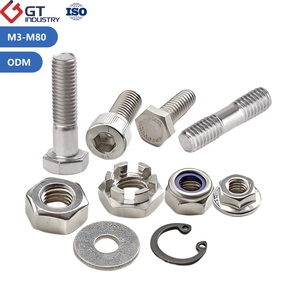
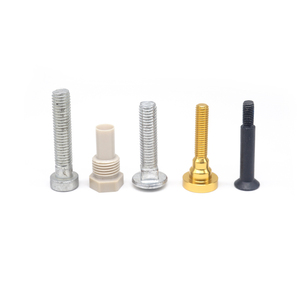
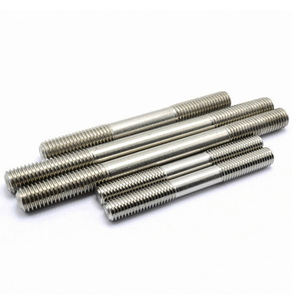
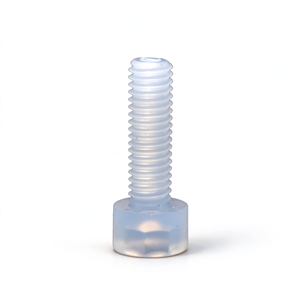
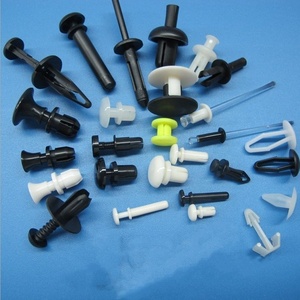
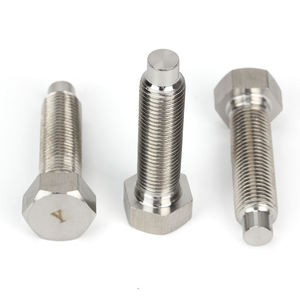
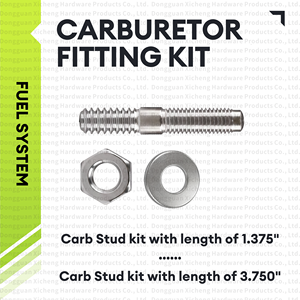
In New England's harsh climate—where atmospheric marine salinity meets freeze-thaw road deicing chemicals—unpassivated or improperly pickled stainless fasteners succumb to stress corrosion cracking (SCC) and localized pitting in under 18 months.
Passivation is not a coating or a mechanical finish; it is a controlled chemical dissolution of tramp iron, microscopic tool-wear particulates, and sulfides embedded during cold heading, hot forging, and thread rolling. When stainless steel (such as AISI 304, 316L, 17-4 PH) or nickel alloys (Hastelloy C276, Inconel 718) are processed, cutting tools deposit sub-micron free-iron particles on thread crests and bearing surfaces. Left untreated in the coastal humidity of Boston Harbor, these micro-contaminants initiate galvanic couples, precipitating catastrophic pitting.
Our ISO 9001:2015 and PED 2014/68/EU certified Chinese manufacturing facilities execute validated chemical passivation protocols compliant with ASTM A967 / A967M, AMS 2700 (Method 1 Nitric, Method 2 Citric), and ASTM A380. By systematically tailoring acid bath concentrations, ultrasonic agitation frequencies, bath temperatures, and sodium dichromate oxidizers, we selectively deplete elemental iron from the surface lattice. This facilitates the instantaneous spontaneous formation of a self-healing, chromium-rich passive oxide film ($\text{Cr}_2\text{O}_3$) measuring between 1.5 and 3.0 nanometers in thickness.
| Passivation Standard & Type | Chemical Bath Composition | Operating Temp / Immersion | Validated Quality Test Methods | Optimal Boston Industrial Application |
|---|---|---|---|---|
| ASTM A967 Citric 4 | Citric Acid (4% - 10% wt) + Chelating Agents | 140°F - 160°F (60°C - 71°C) / 10-30 min | ASTM A380 High-Humidity (24h) • Water Immersion | Kendall Square cleanrooms, pharmaceutical WFI piping, medical devices. |
| ASTM A967 Nitric 2 | 20% - 25% $\text{HNO}_3$ + 2.5% $\text{Na}_2\text{Cr}_2\text{O}_7$ | 120°F - 130°F (49°C - 54°C) / 20-40 min | Copper Sulfate Test (ASTM A967 Practice A) | Heavy marine bolting, Deer Island WWTP effluent channels, structural fasteners. |
| AMS 2700 Method 1 Class 4 | 45% - 55% $\text{HNO}_3$ High Nitric | 120°F - 135°F (49°C - 57°C) / 45-60 min | Salt Spray (ASTM B117) 2-hour free-iron check | Hanscom AFB defense aerospace, Route 128 cryogenic sensor fasteners. |
| ISO 16048 Chemical Passivation | Nitric / Organic Complex Acid Formulation | Room Temp to 60°C Controlled Sequence | Potentiostatic polarization, electrochemical pitting test | Offshore wind transition pieces, Conley Terminal container cranes. |
From Logan Airport marine seawalls to Kendall Square bioprocessing incubators, our passivated hardware provides verified anti-galling performance, exact pitch conformity, and certified alloy metallurgy.
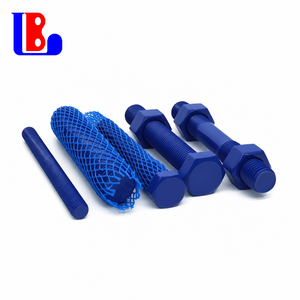
Boston's coastal waters carry aggressive chlorides and dissolved oxygen. Conley Container Terminal and Boston Harbor ferry piers demand passivated 316L, Duplex 2205, and PTFE-coated stud bolts for wharf mooring bollards, splash-zone fender assemblies, and submerged pilings without risk of galvanic pitting.
World-leading biotechnology and sterile processing facilities mandate passivated 316L and Hastelloy C276 fasteners for skid assemblies, chromatography columns, and high-purity water-for-injection (WFI) loops. Our citric acid passivated hardware complies with ASME BPE-2022 surface finish criteria.
As offshore wind projects scale across the Martha's Vineyard and Salem Harbor marshaling ports, foundation transition pieces and nacelle housings require Super Duplex 32750 and Inconel 718 bolts passivated to resist severe North Atlantic subsea biofouling and dynamic cyclic fatigue.
Boston's high-tech robotics innovators, university laboratories, and defense contractors require miniature precision screws, custom-machined dowel pins, and PA66 / 17-4 PH components that maintain non-magnetic traits and dimensional repeatability within micron-level envelopes.
Serving Greater Boston, the MWRA Deer Island plant processes aggressive municipal effluent with high hydrogen sulfide ($\text{H}_2\text{S}$) and chlorine levels. Our Hastelloy C276, 316L, and PTFE fluorocarbon coated bolts resist hydrogen embrittlement under strict NACE MR0175 protocols.
Strategic supply chain evolution across Greater Boston is reshaping how engineering directors, EPC contractors, and inventory managers qualify overseas fastener manufacturers.
Massachusetts' statutory commitment to 5,600 MW of offshore wind by 2027 is accelerating demands for high-strength, anti-seize bolting capable of surviving 25-year submerged design lives without intermediate retorquing.
Pharma manufacturers in Cambridge and Somerville are phasing out hazardous nitric acid passivation in favor of validated green citric passivation systems (ASTM A967 Citric 4) to eliminate environmental nitrates while achieving superior Cr/Fe oxide purity.
To mitigate domestic distribution markups, Boston procurement teams increasingly bypass intermediary wholesalers, partnering directly with certified Chinese manufacturing mills offering pre-cleared customs logistics right into Conley Terminal.
Stringent building codes and FDA inspections across New England make non-traceable fasteners unusable. Every shipment must feature EN 10204 3.1 heat-number engraving, chemical assay certificates, and mechanical elongation curves.
Answers to common technical, logistics, and compliance inquiries from engineering teams throughout Massachusetts and New England.
Combining high-capacity metallurgical production with accredited quality assurance to deliver superior industrial fasteners at competitive direct-from-factory pricing.
We melt, forge, and machine under unified quality management. Raw bars undergo ultrasonic testing (UT) and Positive Material Identification (PMI) before heading to ensure zero mix-ups in nickel superalloys or austenitic stainless grades.
Our dedicated wet-chemistry lines feature automated temperature controls, ultrasonic agitation, and closed-loop filtration for citric and nitric acid processes that deliver pristine, unblemished finishes.
Operated in strict compliance with ISO 9001:2015 and PED 2014/68/EU guidelines validated by TUV Rheinland. Our internal laboratories conduct dimensional, mechanical, and corrosion evaluations on every production heat.
Looking to optimize procurement costs, upgrade corrosion resistance, or schedule scheduled container shipments into Boston? Request our complete technical catalog, alloy selection guides, and factory pricing schedules today.