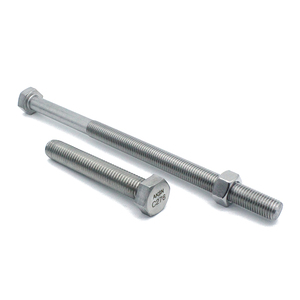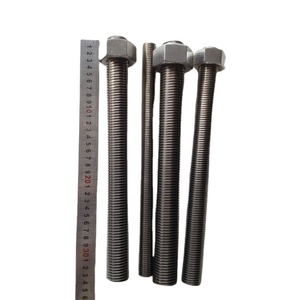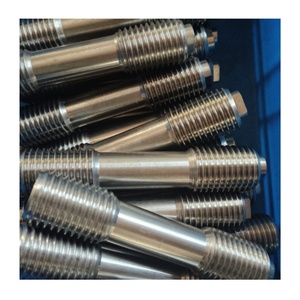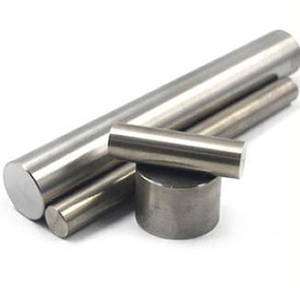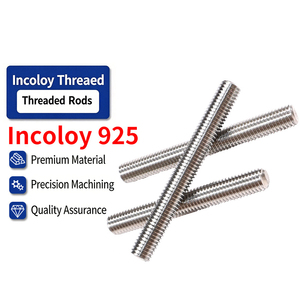
Incoloy 925 (designated as UNS N09925 and closely aligned with the European Werkstoff standard 1.4529 parentage) is an age-hardenable nickel-iron-chromium superalloy specifically designed to deliver an extraordinary combination of high mechanical strength and exceptional corrosion resistance. In standard austenitic alloys, mechanical strength can typically only be elevated through cold working, which severely restricts allowable fastener geometry, particularly for large-diameter flange bolts exceeding M24 or 1-inch dimensions. Incoloy 925 resolves this fundamental metallurgy trade-off through controlled additions of Titanium (1.90% - 2.40%) and Aluminium (0.10% - 0.50%), which undergo precipitation reactions to generate gamma prime [γ′ - Ni₃(Al, Ti)] intermetallic phases during tailored thermal aging.
Our manufacturing facility in China integrates strict induction vacuum melting (VIM) followed by electroslag remelting (ESR). This process eliminates microscopic slag inclusions and prevents segregation along the core grain boundaries of heavy forged fasteners. Consequently, Incoloy 925 studs and bolts consistently achieve a minimum yield strength of 650 MPa (94 ksi) and tensile strengths surpassing 965 MPa (140 ksi), while maintaining Charpy V-notch impact toughness that comfortably surpasses standard subsea and cryogenic requisites.
| Alloy Grade | UNS Designation | Yield Strength (Rp 0.2%, MPa) | Tensile Strength (Rm, MPa) | PREN Value | Resistance to Chloride Stress Cracking (SCC) |
|---|---|---|---|---|---|
| Incoloy 925 | UNS N09925 | 650 - 850 (Aged) | 965 - 1150 | ≥ 38.0 | Immune in ambient/warm seawater & H₂S |
| Incoloy 825 | UNS N08825 | 240 - 350 | 580 - 700 | ≥ 31.0 | High resistance, moderate strength |
| Duplex 2205 | UNS S32205 | 450 - 500 | 650 - 800 | ≥ 35.0 | Susceptible to hydrogen embrittlement if cathodically protected |
| Super Duplex 32750 | UNS S32750 | 550 - 650 | 750 - 900 | ≥ 42.0 | Prone to sigma phase precipitation if incorrectly heat treated |
| Stainless Steel 316L | UNS S31603 | 220 - 290 | 520 - 620 | ≥ 23.0 | High failure rate due to pitting and crevice SCC in marine splash zones |
In corrosive maritime and industrial atmospheres, chloride pitting and crevice attack are quantified via the Pitting Resistance Equivalent Number [PREN = Cr + 3.3(Mo + 0.5W) + 16N]. Incoloy 925 yields an impressive PREN of ≥ 38.0. Bolstered by its high nickel composition (38.0% to 46.0%), the alloy demonstrates virtual immunity to chloride-ion stress-corrosion cracking (CSCC). Furthermore, the combined presence of molybdenum (2.5% to 3.5%) and copper (1.5% to 3.0%) provides exceptional durability against sulfuric, phosphoric, and sour hydrogen sulfide (H₂S) condensates, making it certified to meet NACE MR0175 / ISO 15156 limits up to hardness levels of 38 HRC.
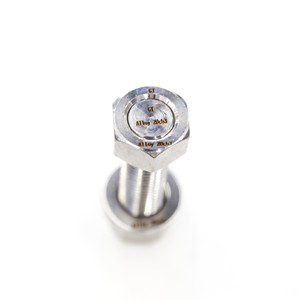
The lock operations at Agua Clara (Atlantic) and Cocoli (Pacific) endure continuous hydraulic cycles under mixed saline and freshwater regimes. Mechanical culverts, sector gate hinging systems, and trash racks undergo high dynamic stress and crevice formation. Conventional austenitic and basic duplex fasteners often fail through localized pitting or crevice fatigue under warm tropical currents. Incoloy 925 heavy hex bolts and anchoring rods deliver the high preload tension needed to prevent joint loosening, with the precipitation metallurgy preventing stress corrosion in confined tidal splash zones.
Panama is a crucial global bunkering and crude transit bridge. The Petroterminal de Panamá (PTP) storage complexes, handling facilities in Chiriquí Grande (Bocas del Toro), and the Puerto Armuelles Pacific terminal handle sour crude and refined hydrocarbons in coastal zones. Marine loading arms, pig launchers, and subsea manifold valves encounter high internal H₂S partial pressures combined with aggressive external salt fog. Incoloy 925 B8M-style studs and high-load flange bolts fully satisfy NACE MR0175 parameters, preventing both external crevice breakdown and sulfide stress cracking (SSC).
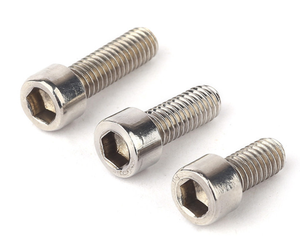
Container facilities at Manzanillo International Terminal (MIT), Colon Container Terminal (CCT), and Balboa require immense craneage, gantry assemblies, and coastal pile-tie systems. In these environments, ambient temperatures exceed 32°C year-round and relative humidity often stays above 85%, accelerating marine galvanic degradation on standard structural fastenings. Incoloy 925 socket bolts and heavy structural assemblies provide decades of maintenance-free service life, drastically reducing downtime and replacement cycles in critical container-handling berths.
In the past, regional procurement across Central American maritime corridors relied heavily on AISI 316L or hot-dip galvanized structural carbon steel (such as ASTM A325 or Grade 8.8) to limit initial capital expenditure (CAPEX). However, continuous operational reviews by port authorities and pipeline operators have revealed an unsustainable Total Cost of Ownership (TCO). Fasteners installed on offshore intake manifolds, marine loading buoys (CALM), and canal sluice control structures often corroded within 18 to 36 months, requiring expensive diving inspections, joint refurbishments, and unforeseen operational shutdowns.
Consequently, Panama's marine engineering, energy, and copper mining sectors (such as developments near Donoso in the Colón province) are increasingly standardizing on high-integrity alloys like Incoloy 925. The transition provides significant benefits:
By delivering yield capacities above 650 MPa without work-hardening variations, engineering teams can downsize bolt diameters from bulky M36 configurations down to compact M24 arrangements, noticeably trimming structural weight and flange material costs.
Unlike galvanized or PTFE-coated carbon steels where microscopic scratches expose base metal to rapid galvanic pitting, Incoloy 925 forms an instantaneous, self-healing chromium-nickel-molybdenum oxide passive film in saline atmospheres.
When combined with our proprietary anti-galling treatments or molybdenum disulfide / PTFE overlays, Incoloy 925 avoids the common galling problems seen when tightening conventional stainless steel fasteners.
Certified under ISO 9001:2015 and approved for pressure equipment manufacturing under PED 2014/68/EU by TÜV Rheinland, ensuring complete regulatory compliance across high-pressure environments.
Every single Incoloy 925 fastener lot is shipped with an EN 10204 3.1 Mill Test Certificate (MTC) detailing chemical analysis, melt heat identity, tensile tests, hardness readings, and microstructural evaluations.
We operate 500-ton hot-forging heading presses alongside multi-station CNC turning centers. This allows us to supply both mass production orders and custom, drawing-based fasteners up to M120 diameter.
Standardized packaging includes vapor corrosion inhibitors (VCI), sealed heavy-duty export crates, and established direct shipping lanes to Panama's Caribbean and Pacific sea terminals or Tocumen International Airport (PTY).
Consult with our metallurgical engineers, request material test sample certifications, or submit complete project bills of materials (BOM) for fast, direct factory pricing and technical support.