
Precision hot forged, solution annealed, precipitation age-hardened, and CNC-machined to ASME B18.2.1, DIN 933, and custom API 6A dimensional criteria.
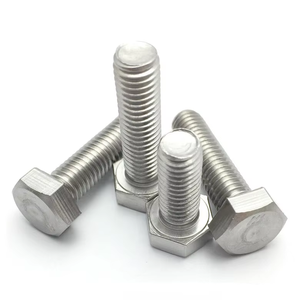
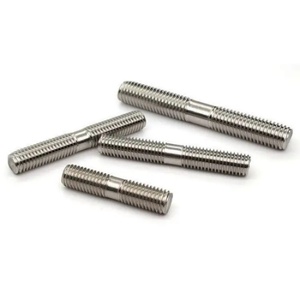
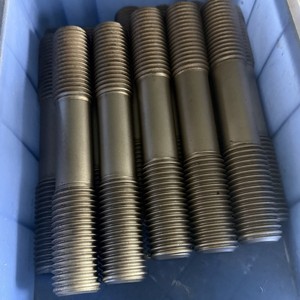
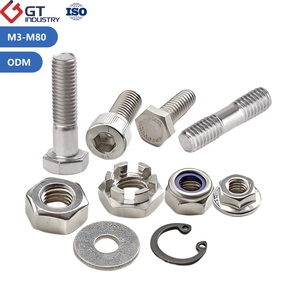
Inconel 718 (UNS N07718 / W.Nr. 2.4668) is a premier precipitation-hardenable nickel-chromium-iron superalloy formulated for service in severely aggressive mechanical and corrosive environments. While austenitic stainless steels (such as AISI 316L) succumb to chloride stress corrosion cracking (CSCC) and standard duplex alloys degrade under elevated temperatures, Inconel 718 maintains exceptional yield strength, rupture ductility, and notch resilience up to 650°C (1200°F).
The alloy gains its extraordinary structural load-bearing performance from sluggish precipitation-hardening kinetics driven by columbium (niobium) additions. During our controlled double-aging heat treatment, coherent intermetallic phases—primarily body-centered tetragonal gamma double-prime (γ" - Ni3Nb) and face-centered cubic gamma prime (γ' - Ni3(Al, Ti))—precipitate within the nickel-chromium matrix. This distinct gamma-double-prime morphology retards thermal coarsening and strain-age cracking during welding or hot heading, making Inconel 718 the optimal fastener alloy for high-pressure high-temperature (HPHT) extraction wells, flare stack manifolds, and marine petrochemical facilities across Saudi Arabia.
Corrosion Architecture: With a minimum nickel content of 50.0% coupled with 17.0–21.0% chromium and 2.8–3.3% molybdenum, Inconel 718 fasteners exhibit near-immunity to chloride ion stress corrosion cracking and hydrogen embrittlement in saturated sour crude (H₂S) streams encountered in the Arabian Gulf and Rub' al Khali basins.
Procurement engineers and piping integrity teams in Jubail, Yanbu, and Dhahran must verify that alloy batches adhere stringently to ASTM B637 and API 6A CRA standards. The table below delineates the elemental baseline and physical metrics delivered by our China manufacturing facility:
| Property / Element | UNS N07718 Nominal Range | API Specification 6A CRA Limit | Technical Functionality |
|---|---|---|---|
| Nickel (Ni) + Cobalt (Co) | 50.00 – 55.00 % | 50.00 % min | Austenitic matrix stabilizer, immune to SCC |
| Chromium (Cr) | 17.00 – 21.00 % | 17.00 – 21.00 % | Passivating oxide film against sour crude & oxidation |
| Niobium (Nb) + Tantalum (Ta) | 4.75 – 5.50 % | 4.85 – 5.50 % | Primary hardening precipitate (γ" phase) formation |
| Molybdenum (Mo) | 2.80 – 3.30 % | 2.80 – 3.30 % | Suppresses localized pitting in brine/chloride streams |
| Titanium (Ti) & Aluminum (Al) | 0.65–1.15% (Ti) / 0.20–0.80% (Al) | Standard API Controlled | Auxiliary γ' precipitate phase for high-temp creep life |
| Tensile Strength (Rm) | ≥ 1,275 MPa (185 ksi) | ≥ 1,034 MPa (150 ksi) | Withstands catastrophic downhole blow-out forces |
| Yield Strength (0.2% Offset) | ≥ 1,034 MPa (150 ksi) | ≥ 827 MPa (120 ksi) | Maintains flanged joint preload under cycling pressures |
| Hardness (Condition A / NACE) | 36 – 44 HRC | Max 40 HRC / 35 HRC Specific | Guarantees resistance against sulfide stress cracking |
The extreme operating climate of Saudi Arabia combines hypersaline seawater (TDS exceeding 45,000 ppm in the Arabian Gulf), continuous desert UV radiation, atmospheric dust storms carrying erosive quartz particles, ambient surface temperatures reaching 55°C, and sour hydrocarbon streams containing high partial pressures of H₂S and CO₂. Standard 316 stainless bolts, B7 studs, and lower-grade alloys fail prematurely under these overlapping stressors. Inconel 718 fasteners serve four primary local installations:
Installed across the Ghawar oilfield, Safaniya offshore fields, and Jafurah unconventional gas basin. API 6A Inconel 718 studs secure Christmas tree valves, choke bodies, and blowout preventers exposed to lethal wet H₂S conditions without pitting or embrittlement.
Crucial for Sabic refining units in Jubail and Yanbu Industrial Cities. Ethylene pyrolysis furnaces, steam cracker headers, and sulfur recovery unit (SRU) flange connections require Inconel 718's mechanical endurance against thermal fatigue cycling and oxidation up to 650°C.
Deployed in Ras Al-Khair, Shuaibah, and Jubail seawater reverse osmosis facilities. High-pressure pump casings, energy recovery device (ERD) manifold flanges, and high-concentration brine reject headers demand Inconel 718's complete resistance to crevice corrosion.
Under the auspices of Saudi Vision 2030, the Kingdom is orchestrating massive industrial capital investments, anchored by the expansion of the Jafurah gas basin, Aramco's downstream petrochemical integration (Liquid-to-Chemicals programs), and giant green hydrogen hubs in NEOM (Oxagon).
Historically, Middle Eastern EPC contractors procured nickel alloy bolting through Western distribution hubs, resulting in 26- to 36-week lead times and substantial price markups. The bilateral trade corridor between Saudi Arabia and China has rewritten this procurement dynamic. Chinese specialty alloy manufacturers now possess advanced vacuum induction melting (VIM), electroslag remelting (ESR), multi-directional hydraulic forging presses, and precision thread-rolling facilities capable of meeting Aramco 9COM specifications at significant cost efficiencies. By procuring directly from certified Chinese superalloy factories, Saudi project developers shorten critical delivery paths from 8 months to 4-6 weeks while upholding zero-compromise EN 10204 3.1/3.2 validation.
Operating with integrated forging, heat-treatment, and machining facilities, our factory provides end-to-end metallurgical control that ensures structural reliability in mission-critical applications:
Unbroken grain-flow directionality via closed-die hot heading prevents shear failure under dynamic surge pressures, while multi-axis CNC lathes maintain tight tolerances on customized drawing-based components.
Our programmable vacuum heat-treatment furnaces execute strict solution annealing followed by two-stage precipitation aging, consistently keeping bolt hardness within the NACE MR0175 / ISO 15156 threshold to eliminate sulfide cracking risks.
Every consignment ships with full heat-number traceability, optical emission spectrometry (OES) chemical verification, Charpy impact test logs at sub-zero temperatures, tensile test curves, and optional TUV/Lloyd's third-party inspection signoffs.
Key technical, compliance, and logistical answers for engineering contractors, Aramco project vendors, and regional stockists.