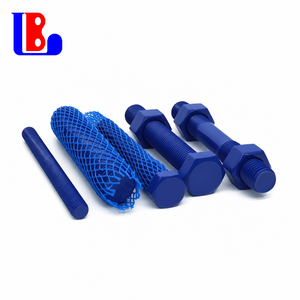
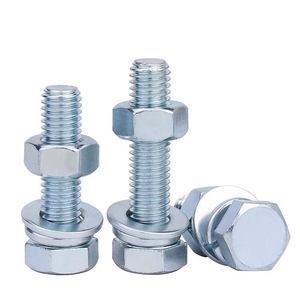
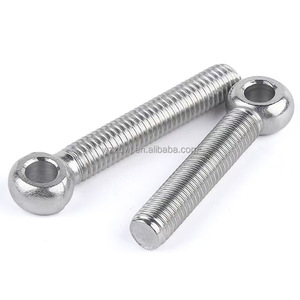
Custom OEM Precision CNC Fasteners Manufacturers & Suppliers in the New Zealand market

Precision-Engineered Exotic Alloy & High-Tensile Fasteners for Geothermal Energy, Marine Infrastructure, Dairy Processing, and Advanced Seismic Architecture across New Zealand.

Engineered Inventory

Precision Fastener Catalog for Extreme Industrial Environments

From ASTM/ASME standard studs to custom multi-axis CNC machined components manufactured in nickel superalloys, marine bronze, and structural carbon steels.

±0.005mm
CNC Machining Tolerance
EN 10204
3.1 & 3.2 Mill Traceability
45+ Grades
Inconel, Monel, Duplex & Ti
100% PMI
Spectrometric Verification

Technical Whitepaper: Precision Bolting Engineering for New Zealand's Extreme Operating Theatres

Industrial procurement within New Zealand (Aotearoa) operates under an environmental envelope unlike anywhere else in the Asia-Pacific region. The intersection of severe marine maritime conditions, highly active geothermal belts, stringent clean-in-place (CIP) dairy sanitary mandates, and critical seismic resilience criteria (NZS 1170.5 / NZS 3404) renders commercial off-the-shelf fasteners inadequate. Fasteners in critical New Zealand assets cannot merely be mechanical ties; they must be metallurgically engineered systems designed to resist hydrogen embrittlement, stress corrosion cracking (SCC), severe chloride attack, and sustained dynamic harmonic vibrations.

⚡

Geothermal & Volcanic Steam Exploitation

The Taupo Volcanic Zone and Wairakei geothermal complexes subject downhole extraction strings, steam turbines, and condenser re-injection piping to high-temperature H₂S, CO₂, and chloride-saturated condensate. Utilizing standard carbon or standard austenitic stainless steels inevitably leads to sulfide stress corrosion cracking (SSCC). We supply custom-machined fasteners in Inconel 625 (UNS N06625), Incoloy 825 (UNS N08825), and Hastelloy C276 tested to NACE MR0175 / ISO 15156 hardness limits, assuring continuous service above 350°C without mechanical degradation.

🌊

Marine, Offshore & Port Infrastructure

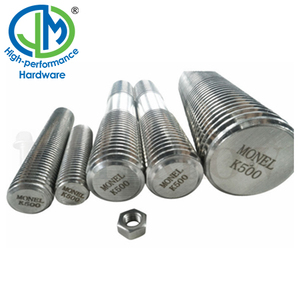
From the Cook Strait ferry terminals to the commercial fishing ports of Tauranga and Lyttelton, subsea and splash-zone structural bolts face catastrophic pitting and crevice corrosion driven by oceanic salt spray. For these aggressive environments, we engineer cold-forged and precision-machined Super Duplex Stainless Steel (UNS S32750 / 2507) and Monel 400/K500 fasteners featuring a Pitting Resistance Equivalent Number (PREN) > 42, complemented by multi-layer fluoropolymer PTFE and Xylan dry-film barriers preventing galvanic electrolytic pairing.

🥛

Sanitary Dairy & Food Processing Equipment

New Zealand’s agricultural export economy, anchored by companies like Fonterra, demands uncompromising hygiene across vast ultrafiltration, spray drying, and aseptic pasteurization machinery. Fasteners applied in CIP cycles are exposed to concentrated nitric acid and caustic washdowns. Our dedicated 5-axis Swiss-machined AISI 316L (UNS S31603) and 17-4 PH (UNS S17400) fasteners undergo proprietary electropolishing down to Ra < 0.4 µm, completely mitigating microscopic bacteria-harboring crevices and pitting phenomena.

Seismic Structural Integrity Compliance: AS/NZS 1252.1:2016 Standards

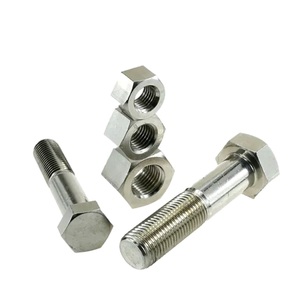
Following historical seismic realities in Christchurch and Wellington, structural engineering standards in New Zealand have elevated the regulatory thresholds for fastener yield, shear ratios, and post-yield ductility. TorqBolt manufactures certified Class 8.8 and Class 10.9 heavy hex structural bolt assemblies with controlled thread-root radii and documented Charpy V-Notch (CVN) impact toughness validated at -20°C and -46°C, guaranteeing plastic deformation capabilities under seismic wave propagation without catastrophic brittle failure.

Material Selection Engine

High-Performance Alloy Fastener Specifications for NZ Engineers

Direct comparison of key mechanical, chemical, and environmental metrics across our core OEM alloy portfolio.

Alloy Grade UNS / Standard Tensile Strength (MPa) Yield Strength 0.2% (MPa) PREN Value Primary NZ Industry Fitment
Inconel 718 UNS N07718 / ASTM B637 ≥ 1240 ≥ 1030 N/A (Superalloy) Geothermal downhole strings, high-pressure steam turbines
Super Duplex 2507 UNS S32750 / EN 1.4410 750 – 1000 ≥ 550 ≥ 42.5 Desalination, offshore aquaculture, subsea port anchorages
Monel K500 UNS N05500 / QQ-N-286 ≥ 965 ≥ 690 Non-ferrous Marine propulsion shafts, valve stems, naval mooring hardware
Duplex 2205 UNS S32205 / EN 1.4462 655 – 880 ≥ 450 ≥ 34.0 Chemical tankers, pulp & paper bleach plants (Kawerau)
AISI 316L UNS S31603 / ASTM A193 B8M ≥ 585 ≥ 240 23.0 – 25.0 Dairy aseptic lines, clean-room food machinery, architectural ties
Titanium Gr. 5 UNS R56400 / Ti-6Al-4V ≥ 895 ≥ 828 Superior Oceanic Aerospace research, performance marine racing (America’s Cup class)
Macro Strategic Drivers

Emerging Macro Trends Reshaping NZ Fastener Procurement

How the green transition, offshore wind developments, and structural compliance overhauls are pivoting the demand curve toward exotic alloys.

🌿

1. Decarbonization & Supercritical Geothermal

With New Zealand targeting 100% renewable electricity, deeper supercritical geothermal wells are being drilled in the Taupo belt, where downhole temperatures exceed 400°C alongside high supercritical fluid pressures. Traditional stainless steel fasteners undergo catastrophic stress crack corrosion within months. Demand is shifting rapidly toward custom CNC precision-turned Incoloy 825, Hastelloy C22, and Titanium fasteners capable of surviving supercritical geothermal steam cycles without embrittlement.

⚓

2. South Taranaki Offshore Wind & Marine Hydrokinetics

The proposed multi-gigawatt offshore wind farms off the coast of South Taranaki and Waikato represent unprecedented environmental challenges. Tower flange bolting systems require M36 to M72 large-diameter stud bolts with guaranteed fatigue limits exceeding 2 million cycles, backed by C5-M extreme marine corrosion coatings or monolithic Super Duplex 32750 metallurgy capable of providing a 30-year design life without subsea maintenance interventions.

📜

3. Zero-Tolerance Verification: Addressing Non-Compliant Steels

Following high-profile structural product failures and fraudulent documentation scandals in the Australasian construction sectors, MBIE (Ministry of Business, Innovation and Employment) and Engineering New Zealand require ironclad compliance under EN 10204 3.1 and 3.2. Procurement protocols now enforce 100% heat-number traceability back to raw billet melt, eliminating untraceable counterfeit fastener inventories throughout Auckland and Christchurch supply chains.

Manufacturing Excellence

TorqBolt Manufacturing Architecture: Why Global Engineers Trust Us

Combining dual hot/cold forging metallurgy with advanced multi-axis CNC machining under stringent European quality directives.

🛡️

Dual-Facility High Precision Production

Headquartered in Mumbai with advanced production infrastructure in Rajkot, India, TorqBolt controls integrated forging presses (from 50T to 1200T) and multi-axis CNC turning centers. This allows us to handle both high-volume cold-headed runs and tight-tolerance, low-batch custom drawing jobs in superalloys from M3 micro-screws up to M120 heavy structural studs without outsourcing.

🔬

Stringent Independent QA & Testing

Every single production batch undergoes destructive and non-destructive validation within our in-house ISO 17025 accredited testing laboratories. Capabilities include full optical emission spectrometry (OES), Positive Material Identification (PMI), Charpy impact testing down to -196°C, stress rupture testing, intergranular corrosion (IGC) testing per ASTM A262 Practice E, and ultrasonic micro-crack detection.

✈️

Air-Freight & Direct NZ Logistics Channels

We understand that unexpected downtime at a Marsden Point terminal or Huntly power plant costs hundreds of thousands of dollars per day. TorqBolt maintains direct express air-freight logistical partnerships flying directly into Auckland (AKL) and Christchurch (CHC) international airports, providing fast door-to-dock transit for critical replacement shut-down bolts accompanied by complete mill documentation.

Procurement Guidance

Frequently Asked Questions: Sourcing Custom Fasteners in New Zealand

Clear, direct answers for New Zealand procurement specialists, asset managers, and mechanical design engineers.

Do your fasteners comply with New Zealand building and seismic standards (NZS 3404 / AS/NZS 1252)?
Yes. All structural assemblies destined for structural and civil applications in New Zealand can be certified explicitly against AS/NZS 1252.1:2016. Our structural bolt sets are tested for specified tensile strengths, elongation, reduction of area, and Charpy V-Notch impact properties down to -20°C to guarantee the plastic ductility required by New Zealand seismic design provisions (NZS 1170.5). Full 3.1 mill test certificates are provided with every batch.
What is the difference between EN 10204 3.1 and 3.2 certification, and which should I specify?
An EN 10204 Type 3.1 certificate is issued and validated by the manufacturer's authorized inspection representative independent of the manufacturing department. It contains actual chemical and mechanical test results matching your heat number. Type 3.2 certification requires that the test results be witnessed, verified, and co-signed by an independent third-party inspection agency (e.g., Lloyd's Register, DNV, TÜV Rheinland, or SGS). For critical offshore oil and gas, pressure vessel (PED), or geothermal steam installations in New Zealand, Type 3.2 is frequently mandated.
How do you prevent thread galling on stainless steel and nickel alloy bolts during site installation?
Galling (friction welding of mating threads) is common in high-torque austenitic and nickel alloy fasteners. We address this by: (1) manufacturing nuts and bolts with tightly controlled dissimilar hardness differentials, (2) thread rolling rather than cut threading to create compressed, ultra-smooth grain structures, and (3) applying factory dry-film lubricants such as PTFE/fluoropolymer (Xylan), molybdenum disulfide (MoS₂), or custom silver plating to completely eliminate metal-on-metal galling during tensioning.
Can TorqBolt manufacture custom OEM fasteners to non-standard proprietary 2D/3D engineering drawings?
Yes, a substantial volume of our production consists of build-to-print OEM components. We machine complex geometries from solid forged bar stock on multi-axis CNC turning and Swiss-machining centers. We accept STEP, IGES, DWG, and PDF formats, holding tolerances to ±0.005mm. Capabilities include non-standard pitches, metric/imperial transitions, cross-drilled heads, hollow tensioning bores, and eccentric flanges.
What are the lead times and shipping logistics from your manufacturing plants to Auckland or Christchurch?
For urgent plant shutdowns or critical breakdowns, our emergency manufacturing protocol can produce and air-dispatch CNC-turned components within 5 to 10 working days. Air cargo to Auckland (AKL) or Christchurch (CHC) typically takes 3 to 5 transit days. For planned capital projects and high-volume containerized orders, ocean freight ships directly to Ports of Auckland, Port of Tauranga, or Lyttelton with a 24-to-30 day sailing schedule.
Are TorqBolt nickel alloy fasteners compliant with sour service NACE MR0175 / ISO 15156 specifications?
Yes. Fasteners manufactured in Inconel 625, Inconel 718, Incoloy 825, Hastelloy C276, and Monel K500 can be specifically solution annealed and aged in computer-controlled vacuum furnaces to satisfy the maximum hardness limits (such as 35 HRC or 40 HRC depending on the alloy) dictated by NACE MR0175 / ISO 15156 for exposure to hydrogen sulfide (H₂S) in oil, gas, and geothermal environments.

Partner with an Accredited Global Fastener Manufacturer

Consult with our metallurgists and mechanical engineering specialists today. Upload your technical drawings, material datasheets, or bill of materials for rapid evaluation, direct factory pricing, and comprehensive quality documentation.

Send an Inquiry
Contact Us