
TorqBolt Inc. manufactures an extensive line of standard and exotic-alloy bolting equipped with advanced protective fluoropolymer barrier coatings and metallurgical enhancements, directly delivered to Moscow industrial projects.
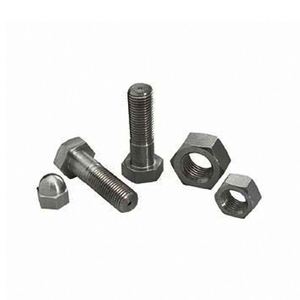
Engineered for extreme structural joint loads, heavy machinery bases, and high-tensile pressure flange sets requiring precise torque pre-loads.
Technical Specifications →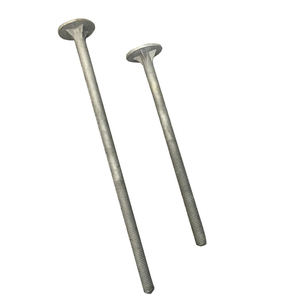
Rugged corrosion-resistant timber and foundation bolts designed for infrastructure civil support, heavy construction access mats, and marine piers.
Technical Specifications →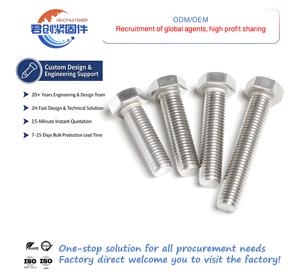
Specialized nickel-iron-chromium fasteners tailored for aggressive nitric acid, thermal thermal crackers, and high-temperature thermal power plants.
Technical Specifications →
Specialized industrial retention fastening developed for extreme ambient heat shields, electronics harnessing, and automotive thermal management.
Technical Specifications →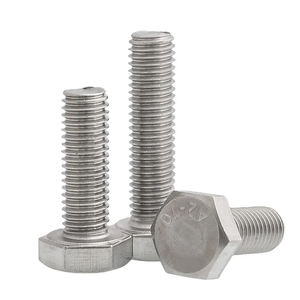
Corrosion-resistant precision metrics bolts widely specified for cryogenic apparatus, utility lines, and food/pharmaceutical chemical equipment.
Technical Specifications →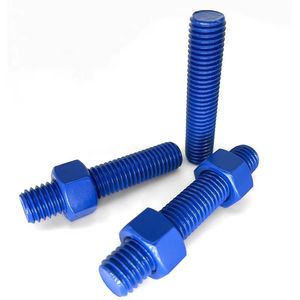
Industry-standard blue Xylan/PTFE coated studs for oil refinery manifolds, sour gas flowlines, and high-pressure ASME flange connections.
Technical Specifications →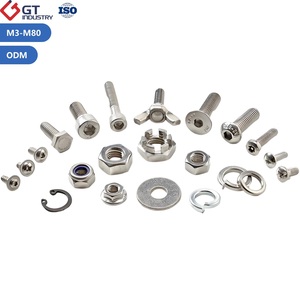
Immune to chloride stress corrosion and hydrofluoric acid alkylation. Ideal for chemical synthesis plants and sub-sea exploration equipment.
Technical Specifications →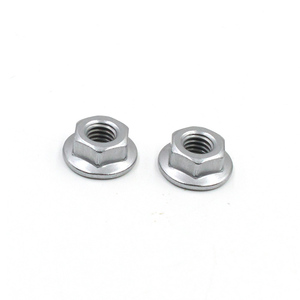
One-piece integrated washer head nuts featuring serrated locking teeth to arrest vibrational relaxation in industrial pump and compressor assemblies.
Technical Specifications →From the urban industrial energy corridors of the Moscow Ring Road (MKAD) to chemical synthesis hubs across Voskresensk and Kaluga, fluoropolymer-coated bolting prevents catastrophic joint leakage and seizure.
Moscow operates the world's most extensive centralized district heating grid. High-pressure steam mains and boiler feed manifolds running from combined heat and power plants (CHPP-12, CHPP-21, CHPP-26) face relentless cyclic thermal oxidation and condensed moisture. Fluoropolymer coated ASTM A193 B7 and B16 stud bolts provide zero-galling maintenance removal during urgent winter shutdown overhauls, eliminating torch-cutting in hazardous enclosed utility chambers.
The Moscow Refinery (Kapotnya) and nearby processing corridors handle heavy hydrotreated hydrocarbons, sour condensates, and aggressive sulfur fractions. Standard zinc-plated fasteners suffer accelerated sulfide stress cracking (SSC). Applying multi-layer Xylan® 1070 fluoropolymer over phosphate or ceramic pre-treatments shields ASTM A193 B7M and A320 L7M substrates from hydrogen permeation and sour H2S atmospheres conforming directly to NACE MR0175 / ISO 15156 directives.
With Moscow expanding cryogenic gas transfer stations, CNG bus fleet depots, and nitrogen storage units, fasteners operate down to -60°C (GOST Category "HL" / "UHL"). Our cryogenic fluorocarbon fasteners utilize ASTM A320 Grade L7, L7M, or 316 stainless foundations with Charpy V-Notch testing documented at -101°C. The polymer film maintains flexibility and unyielding lubricity even under deep frost conditions, preserving calibrated preload without thread embrittlement.
Why modern industrial facilities in Eastern Europe are replacing conventional electroplating and hot-dip galvanizing with engineered PTFE and fluoropolymer resin composite barriers.
Fastener assemblies operating in the Greater Moscow Metropolitan region encounter a dual-threat mechanism: aggressive outdoor chemical exposure paired with severe continental seasonal shifts (+35°C in midsummer to below -35°C in dead winter). Standard hot-dip galvanized fasteners display irregular thread thickness, uneven zinc build-up in root radii, and poor friction coefficients that cause erratic bolt elongation during hydraulic torquing. Furthermore, chloride-rich road de-icers and airborne industrial exhausts catalyze white rust on zinc within 12 to 18 months.
TorqBolt's Fluoropolymer Barrier Architecture: Our proprietary application technology involves a multi-stage engineered barrier. The steel substrate is first mechanically degreased and grit-blasted to white metal (SA 2.5), receiving either an electro-deposited base coat (zinc-nickel or manganese phosphate) followed by two individually cured coats of resin-bonded fluoropolymer (PTFE, PFA, or FEP). This molecular matrix delivers notable advantages:
| Coating System | Standard Coating Thickness | ASTM B117 Salt Fog Life | Friction Coeff. (μ) | Cryogenic Window | Sour Gas (H2S) Resistance |
|---|---|---|---|---|---|
| PTFE / Xylan® 1070 over Zn-Ni | 25 - 35 μm | 3,000 to 4,500+ Hours | 0.06 - 0.08 | -60°C to +260°C | Superior (NACE Compliant) |
| Hot-Dip Galvanizing (ASTM A153) | 45 - 65 μm | 800 to 1,200 Hours | 0.18 - 0.24 | Embrittlement risk < -30°C | Poor (Rapid Zinc Sulfide conversion) |
| Electro-Zinc Plating (ASTM F1941) | 8 - 12 μm | 72 to 160 Hours | 0.14 - 0.17 | Moderate | Unacceptable (Immediate bubbling) |
| Phosphate & Oil | 3 - 5 μm | 24 to 48 Hours | 0.12 - 0.15 | Unstable | Very Poor |
| Cadmium Plating (Restricted) | 10 - 15 μm | 1,000 Hours | 0.10 - 0.12 | Acceptable | Toxic / Environmental Hazard |
A structural realignment is redefining how engineering firms in the Eurasian Economic Space source high-spec mission-critical pipeline and equipment hardware.
Modern Russian EPC contractors and engineering institutes are designing facilities with hybrid specifications. Process plants require fasteners capable of matching both Russian GOST metallurgy (such as 40Kh, 09G2S, 12X18H10T) and American ASME/ASTM grades (A193 B7, A320 L7, B8M). TorqBolt bridges this gap by supplying dual-certified materials with mechanical testing protocols cross-verified according to both GOST 1759 and ASTM A370 standards.
Maintenance downtime in Moscow petrochemical crackers incurs staggering hourly financial losses. Procurement teams are discarding cheap unprotected bolts that require hydraulic nut splitters or flame torch cutting during turnaround overhauls. Installing fluoropolymer fasteners allows repeated break-out and re-torque cycles with simple hand tools, lowering life-cycle maintenance expenditure by up to 60%.
Strict quality enforcement by state regulatory bodies like Rostechnadzor demands unimpeachable material genealogy. General distributors often mix heat lots or supply forged paper trails. Moscow buyers now mandate full EN 10204 3.1 inspection documentation with 100% Positive Material Identification (PMI), optical emission spectroscopy, and ultrasonic testing to verify structural soundness prior to customs clearance.
Combining world-class forging infrastructure with dedicated in-house fluoropolymer coating lines to maintain total quality authority from melt to dispatch.
Our production operations in Mumbai and Rajkot operate under strict quality management systems certified by TÜV Rheinland, fully audited for Pressure Equipment Directive (PED 2014/68/EU) compliance.
Beyond carbon steel B7 and L7, we forge and CNC-machine exotic superalloys including Inconel 625/718, Incoloy 825, Monel 400/K500, Hastelloy C276, and Duplex 2205/Super Duplex 2507 fasteners.
We do not outsource coating application. Our state-of-the-art automated spray booths and computer-controlled curing ovens guarantee absolute adhesion per ASTM D3359 and uniform coating thickness.
Our on-site metallurgical laboratory features cryogenic Charpy impact testing chilling baths reaching -196°C, verifying guaranteed notch toughness for Russian sub-zero arctic pipeline deployments.
Expert packaging in heat-treated seaworthy wooden crates with vapor-corrosion-inhibitor (VCI) hermetic bagging, backed by complete documentation for swift customs processing and direct transport to site.
Unrestricted access and witnessing facilities for international and local inspection agencies (SGS, TÜV, Bureau Veritas, DNV) for issuance of certified EN 10204 3.2 inspection releases.
Addressing critical commercial, metallurgical, and certification queries common to Russian industrial fastener purchasing managers.
Unlike elastomer or standard painted coatings that experience glass-transition embrittlement and spall off under intense frost, virgin PTFE and fluoropolymer resin formulations remain functionally resilient down to -200°C. Paired with low-temperature alloy bases like ASTM A320 Grade L7 or 304/316 stainless steels (complying with GOST 09G2S impact performance), the fasteners maintain their non-stick release properties and mechanical elasticity through severe Moscow freeze-thaw cycles.
Every shipment is delivered with comprehensive EN 10204 3.1 Mill Test Certificates detailing heat-number level chemical composition, heat treatment charts, tensile strength, yield strength, elongation, reduction of area, Charpy impact test results, and surface coating thickness test logs. EN 10204 3.2 inspection reports witnessed by independent third parties can be provided upon request prior to factory dispatch.
Yes. We regularly produce metric fasteners from M6 up to M120 adhering to DIN 931, DIN 933, DIN 934, DIN 975, and ISO 4014/4017/4032, alongside unified imperial UNC, UNF, and 8UN series stud bolts per ASME B1.1 and B18.2.1/B18.2.2. Custom thread pitches and special undercut engineering drawings for specialized valve bodies are manufactured regularly in our CNC department.
Fluoropolymer coating applies a controlled 20 to 35 micron layer. To prevent thread binding while maintaining maximum thread shear area, mating heavy hex nuts are precision tapped undersize or oversize prior to coating, or the external bolt threads are calibrated to class 2A tolerances before coating application. All parts are 100% verified using calibrated Go/No-Go thread ring and plug gauges post-curing.
Yes. For sour production containing hydrogen sulfide (H2S), we strictly control metallurgical hardness through dedicated quenching and tempering routines. For example, our ASTM A193 B7M bolts and ASTM A194 2HM nuts are 100% Rockwell hardness tested to ensure values remain within the mandatory 22 HRC maximum threshold, preventing sulfide stress corrosion cracking.
Standard fastener grades (A193 B7, A320 L7 with PTFE coating) are maintained in extensive stock rod and nut blanks, allowing dispatch within 7 to 14 days. Custom forged sizes or exotic alloys typically ship within 3 to 4 weeks. Shipments move seamlessly via air freight for urgent project turnarounds or multimodal sea/rail freight routes directly into Moscow freight hubs.
Whether you require standard PTFE coated B7 stud bolts for high-pressure pipeline flanges or custom-machined Inconel fasteners for aggressive chemical reactors, our senior applications engineering team will review your specifications and supply a comprehensive quotation within 24 hours.