
Manufactured via closed-die hot forging and high-speed CNC threading to guarantee continuous grain flow, zero intergranular carbide precipitation, and strict dimensional conformity.
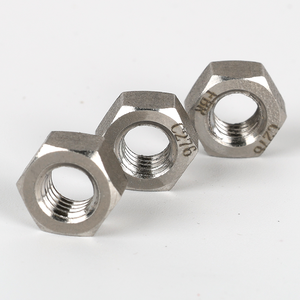
Heavy-duty metric hexagon nuts exhibiting proof stress >700 MPa, designed to avoid galling when paired with C276 studs in acid stripping columns.
View Specifications →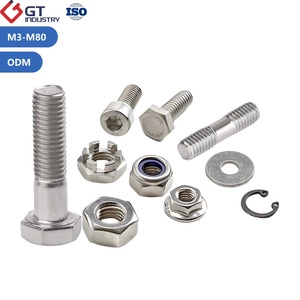
Full-spectrum exotic alloy bolting combinations certified to DIN and ISO standards for sour gas pipelines and aggressive chemical reactors.
View Specifications →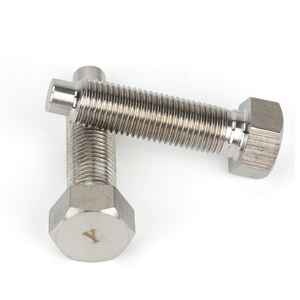
Engineered with non-threaded cylindrical pilot dog points to facilitate self-alignment in automated vessel blind-hole flange assemblies.
View Specifications →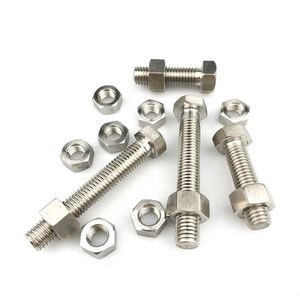
Continuously roll-threaded solid studs with high fatigue resistance, supplied in custom lengths up to 3 meters for heat exchanger bundle tie-rods.
View Specifications →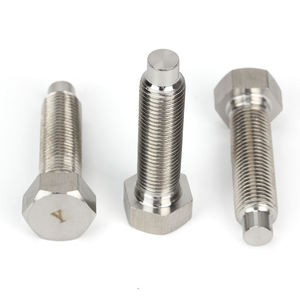
Prevents cross-threading in critical process piping subject to high thermal expansion cycles and extreme acidic wash chemistry.
View Specifications →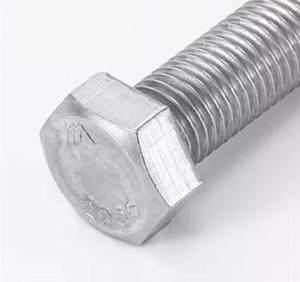
Fully threaded hexagon machine bolts offering exceptional pitting resistance in marine atmospheres and industrial wastewater systems.
View Specifications →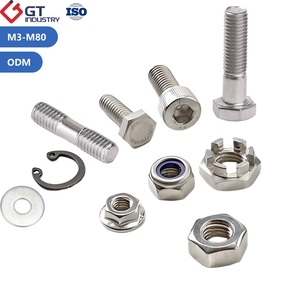
Specialty cold-forged and solution-treated bolting hardware engineered to resist boiling hydrochloric, sulfuric, and hydrofluoric acid streams.
View Specifications →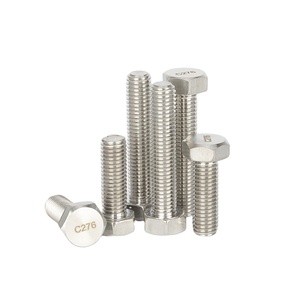
Pre-matched bolt-and-nut sets calibrated for accurate torque-tension ratios, packaged under hermetic seals for maritime shipment to Nagoya Port.
View Specifications →In modern chemical manufacturing, maritime transport, and thermal power generation across Central Japan's Chubu economic corridor, standard austenitic stainless steels (such as SUS304 and SUS316L) continuously fall victim to stress corrosion cracking (SCC) and localized pitting in chloride-saturated conditions. Hastelloy C276 (UNS N10276, W.Nr. 2.4819, NiMo16Cr15W) is an established nickel-molybdenum-chromium superalloy that resolves these severe degradation mechanisms through a balanced chemical matrix.
The alloy incorporates approximately 15.0–16.5% Molybdenum and 14.5–16.5% Chromium, stabilized by 3.0–4.5% Tungsten. Crucially, C276 is characterized by an ultra-low carbon ceiling (≤0.010%) and silicon ceiling (≤0.08%). This metallurgical composition minimizes grain boundary carbide and intermetallic phase precipitation within the heat-affected zone (HAZ) during hot forming or field welding, allowing fasteners to be deployed in as-forged or solution-annealed states without risking catastrophic intergranular attack.
| Alloy Element | UNS N10276 Weight % | JIS NW 0276 Equivalent | Primary Metallurgical Function |
|---|---|---|---|
| Nickel (Ni) | Balance (~57.0%) | Balance | Austenitic matrix stabilizer; absolute resistance to chloride-induced stress corrosion cracking. |
| Molybdenum (Mo) | 15.00 – 17.00% | 15.00 – 17.00% | Imparts resistance to reducing environments, boiling hydrochloric, and non-oxidizing acids. |
| Chromium (Cr) | 14.50 – 16.50% | 14.50 – 16.50% | Provides passive chromium-oxide layer for resistance to oxidizing media and wet chlorine gas. |
| Iron (Fe) | 4.00 – 7.00% | 4.00 – 7.00% | Controls structural cost while sustaining solid-solution phase homogeneity. |
| Tungsten (W) | 3.00 – 4.50% | 3.00 – 4.50% | Solid-solution strengthener; bolsters resistance to crevice corrosion and pitting in acidic salts. |
| Cobalt (Co) | ≤ 2.50% | ≤ 2.50% | Stabilizes mechanical creep resistance at temperatures approaching 650°C. |
| Carbon (C) | ≤ 0.010% | ≤ 0.010% | Prevents grain-boundary intergranular carbide formation during hot upset forging. |
The Pitting Resistance Equivalent Number (PREN) provides a quantitative benchmark of an alloy's resistance to localized pitting in severe halide solutions. Calculated using the formula:
PREN = %Cr + 3.3(%Mo + 0.5%W) + 16(%N)
While standard 316L stainless steel delivers an average PREN of 25 and Super Duplex 2507 reaches approximately 42, Hastelloy C276 consistently achieves a PREN between 67 and 72. This high index ensures that flange bolting installed in coastal chemical facilities adjacent to Ise Bay or within submerged marine scrubbers avoids pit nucleation, which otherwise induces sudden shear failures under bolt preload tension.
The Greater Nagoya Metropolitan Area, anchored by Aichi, Mie, and Gifu prefectures, represents Japan's industrial manufacturing heartland. Far beyond automotive assembly, the Chubu maritime rim is home to massive basic chemical complexes, energy import infrastructure, advanced aeronautics, and green hydrogen demonstration hubs. TorqBolt Inc. manufactures and supplies specification-compliant Hastelloy C276 fasteners tailored to the specific environmental operating parameters of these regional sectors:
Coastal facilities and ocean vessels operating out of Nagoya Port require C276 fasteners for exhaust gas cleaning systems (EGCS). These scrubbers expose fasteners to acidic sulfuric acid condensates, wet sulfur dioxide ($SO_2$), and hypersaline marine spray at temperatures up to 250°C.
Connected closely via the Ise Bay logistics network, Yokkaichi's steam crackers, chlor-alkali reactors, and vinyl chloride monomer (VCM) production facilities use C276 bolts for heat exchanger tube-sheet bolting, handling ferric chloride, cupric chloride, and wet chlorine gas.
Large-scale LNG import terminals and combined-cycle gas turbine (CCGT) stations across Chita utilize our C276 studs for cryogenic vaporizers and flue gas desulfurization (FGD) systems where condensation can drop below dew point, generating highly corrosive sulfurous acids.
The precision technology corridor spanning Aichi and Mie produces ultra-pure electronic-grade hydrochloric and hydrofluoric acids. C276 fasteners eliminate metallic ion leaching in high-purity chemical delivery lines and filtration manifolds.
Centering on Gifu and Nagoya North, aerospace component suppliers rely on precision-machined C276 engine bracket fasteners that maintain mechanical yield strength (>355 MPa) alongside non-magnetic stability under elevated operating temperatures.
Under the Chubu Carbon Neutrality initiative, upcoming proton exchange membrane (PEM) and anion exchange membrane (AEM) water electrolysis plants deploy C276 threaded hardware to withstand acidic anode environments without hydrogen embrittlement.
Nagoya is undergoing an industrial transition driven by Japan’s national Green Transformation (GX) initiative. As the Chubu region's heavy industries target net-zero carbon operations by 2050, the requirements placed on critical infrastructure fasteners have evolved:
Historically, petrochemical and chemical plants scheduled planned shutdowns (Shuri-hozen) every 2 to 3 years to replace degraded duplex or austenitic bolts in acid-cooling channels. With rising labor costs and a strategic emphasis on uninterrupted uptime, maintenance engineers in Aichi Prefecture are replacing 316Ti and Super Duplex 2507 fasteners with Hastelloy C276. The lifecycle cost ROI is immediate: C276’s immunity to pitting in acidic chlorides extends service intervals beyond 15–20 years, preventing unplanned shutdowns and gasket containment leaks.
Pilot Carbon Capture, Utilization, and Storage (CCUS) facilities being engineered around Nagoya Harbor subject containment flanges to dense-phase, wet carbon dioxide ($CO_2$) streams saturated with trace hydrogen sulfide ($H_2S$) and sulfur oxides ($SO_x$). Under high pressures (150–250 bar), these condensates form aggressive carbonic and sulfurous acids. Fasteners manufactured from certified ASTM B574 C276, qualified to NACE MR0175 / ISO 15156 standards with strictly controlled hardness (≤35 HRC), prevent sulfide stress cracking (SSC) and hydrogen embrittlement in these green transition facilities.
Founded in 2010, TorqBolt Inc. combines an international sales and engineering office in Mumbai with a production plant in Rajkot, India. We specialize in exotic nickel superalloys and corrosion-resistant fasteners that general mass-production distributors do not stock.
Approved by TÜV Rheinland for European Pressure Equipment Directive compliance. Fully qualified to furnish certified bolting for high-pressure autoclaves, heat exchangers, and boiler vessels built for domestic Japanese deployment or international export.
Every fastener is stamped with a unique heat code directly traceable to the source ingot melt. Comprehensive MTCs report complete chemical breakdown, mechanical yields, impact energy tests, and dimensional verification.
Heads are forged under temperature-controlled induction furnaces to preserve uninterrupted molecular grain lines. Threads are rolled rather than cut whenever possible, boosting root fatigue endurance and galling threshold.
Every production run passes X-ray Fluorescence (XRF) Positive Material Identification (PMI) prior to packing. Optional liquid penetrant (PT) and ultrasonic testing (UT) eliminate internal forging bursts or surface micro-fissures.
We manufacture non-standard lengths, tap-end studs, dog-point bolts, and socket caps from M6 to M100 (1/4" to 4"). Surface treatments include Xylan/PTFE fluorocarbon, electro-zinc plating, hot-dip galvanizing, and silver plating for anti-seize performance under extreme preload.
Japanese engineering teams frequently need cross-standard harmonization between domestic JIS (Japanese Industrial Standards) and international EPC standards (ASME, ASTM, EN, DIN, ISO). The reference matrix below outlines specifications for our Hastelloy C276 bolting:
| Property / Standard Category | ASTM / ASME Specification | DIN / EN Specification | JIS Standard Equivalent |
|---|---|---|---|
| Raw Bar Stock / Forgings | ASTM B574 / ASME SB-574 (Rod) | DIN EN 10269 / W.Nr. 2.4819 | JIS H4551 (Alloy Plate, Sheet & Bar) |
| Hex Head Bolts & Screws | ASME B18.2.1 / ASTM F468 Gr. C276 | DIN 931 (Partial) / DIN 933 (Full) | JIS B1180 (Hexagon Head Bolts) |
| Continuous & Stud Bolts | ASME B18.31.2 / ASTM A193 Gr. B574 | DIN 975 / DIN 976 (Threaded Rods) | JIS B0205 / JIS B0207 (Metric ISO) |
| Hex Nuts & Heavy Hex Nuts | ASME B18.2.2 / ASTM F467 Gr. C276 | DIN 934 / ISO 4032 / EN ISO 4033 | JIS B1181 (Hexagon Nuts) |
| Minimum Tensile Strength ($R_m$) | 115 ksi (790 MPa) | 790 – 1000 MPa | 790 N/mm² |
| Minimum Yield Strength ($R_{p0.2}$) | 51 ksi (355 MPa) | 355 – 450 MPa | 355 N/mm² |
| Elongation at Break ($A_5$) | Min. 40% | Min. 40% | Min. 40% |
| Hardness Ceiling (NACE MR0175) | Rockwell C ≤ 35 (HRC) | Brinell ≤ 325 (HBW) | Vickers ≤ 340 (HV) |
*Note: Cryogenic impact testing at -196°C achieves absorbed energy values exceeding 120 Joules, demonstrating resistance to brittle fracture in refrigerated gas piping.
Partner directly with TorqBolt Inc. to secure specification-compliant, heat-traceable Hastelloy C276 bolts, studs, nuts, and washers. Contact our engineering desk today for technical reviews, CAD drawing assessments, or instant FOB/CIF quotations for Nagoya.