
Direct manufacturing compliance with ASME, ASTM, DIN, and ISO specifications. Engineered for extreme operating pressures, sub-zero Nordic environments, and highly aggressive chemical processing plants.
A rigorous examination of sub-zero brittle-ductile transition dynamics, high cyclic vibration in ice-class maritime installations, and corrosion-resistant alloy optimization in Scandinavian process engineering.
In high-pressure systems operating across Finland—ranging from cryogenic offshore maritime infrastructure along the Gulf of Bothnia to high-pressure steam turbines in Olkiluoto and pressurized chemical digestion columns in central Finnish pulp mills—the selection of bolting and fasteners is governed by zero-tolerance engineering safety margins. Under hydrostatic pressures exceeding 400 bar and service temperatures periodically plunging below -45°C during Nordic winter cycles, standard commercial fasteners experience catastrophic shifts in grain-boundary ductility. TorqBolt Inc. engineers bolting solutions specifically to eliminate the risk of brittle catastrophic cleavage failures, Hydrogen Induced Stress Cracking (HISC), and intergranular stress corrosion cracking (IGSCC).
Procuring high-pressure fasteners within the European Union, and specifically under Finnish safety regulatory authorities (Tukes - Turvallisuus- ja kemikaalivirasto), demands stringent conformance to the European Pressure Equipment Directive (PED 2014/68/EU). Under Annex I, Section 4.3 of the PED, materials incorporated into pressurized flange connections or pressure containment envelopes must possess verifiable chemical and mechanical integrity, certified through authentic EN 10204 Type 3.1 or independent Type 3.2 inspection certificates. Fasteners manufactured by TorqBolt maintain absolute traceability from the original vacuum induction melted (VIM) or electroslag remelted (ESR) ingot heats down to the final thread-rolled, solution-annealed, or precipitation-hardened stud bolt.
Finland represents a premier global engineering hub for polar icebreakers, specialized cruise liners (built in Turku and Rauma), and high-output marine dual-fuel engines manufactured by Wärtsilä. Fasteners operating in Baltic maritime service are exposed to extreme wave impact shocks, hull torsional flexing, and cold brackish seawater splash.
Finnish forest industry giants (Metsä Group, UPM, Stora Enso) operate modern kraft pulp mills and integrated biorefineries with massive high-pressure continuous digesters, chemical recovery boilers, and chlorine dioxide (ClO2) bleaching stages that quickly destroy standard carbon steels.
With major baseload power supplied by Olkiluoto 3 (the EPR unit) and Loviisa Nuclear Power Plants, the Finnish energy sector requires the highest pedigree of pressure-retaining hardware with fully certified metallurgical documentation and nuclear safety class approvals.
The Kilpilahti industrial area in Porvoo (housing Neste's major refinery) represents the largest petrochemical refining cluster in the Nordic region, spearheading the transition to sustainable aviation fuels (SAF) and renewable diesel hydroprocessing under severe pressure and hydrogen exposure.
Finland is rapidly emerging as a European pioneer in green hydrogen projects (e.g., in Kristinestad, Tiilikankangas, and Harjavalta) and municipal deep geothermal district heating. In high-pressure hydrogen service (350 bar to 700 bar), hydrogen atom permeation induces severe microstructural embrittlement in conventional steel fasteners. TorqBolt manufactures precision vacuum-treated austenitic stainless steels (316L with elevated nickel content) and specialized nickel superalloys engineered to prevent high-pressure hydrogen embrittlement (HPHE). In municipal deep district heating lines operating at 16 to 40 bar with extensive geothermal loops, our hot-dip galvanized and PTFE-coated structural flange sets deliver three decades of maintenance-free service life through damp, frozen Nordic soils.
Comprehensive technical specifications, European standard cross-references, mechanical yield limits, and environmental thresholds.
| Alloy Designation | European W.Nr. / UNS | Governing Standard | Yield Strength (Rp 0.2 MPa) | Charpy V-Notch / Toughness | Core Finnish Industrial Application |
|---|---|---|---|---|---|
| Inconel 718 | 2.4668 / N07718 | ASTM B637 / API 6A CRA | ≥ 1034 MPa | ≥ 47 J at -59°C | Subsea wellheads, offshore gas compression, gas turbine rotors |
| Inconel 625 | 2.4856 / N06625 | ASTM B446 / ISO 15156 | ≥ 415 MPa | ≥ 68 J at -196°C | Marine exhaust scrubbers, offshore flare tips, chemical autoclaves |
| Super Duplex 2507 | 1.4410 / S32750 | EN 10088-3 / ASTM A479 | ≥ 550 MPa | ≥ 80 J at -46°C | Seawater cooling loops, Azipod propeller hubs, Baltic naval vessels |
| Duplex 2205 | 1.4462 / S32205 | EN 10272 / ASTM A276 | ≥ 450 MPa | ≥ 50 J at -40°C | Pulp digester vessels, black liquor recovery boilers, chemical transport |
| Incoloy 825 | 2.4858 / N08825 | ASTM B425 / ISO 4017 | ≥ 240 MPa | High ductility to -196°C | Sulfuric acid processing, chemical pickling, biorefinery columns |
| High-Tensile A4-80 | 1.4401 / 1.4404 | EN ISO 3506-1 | ≥ 600 MPa | ≥ 40 J at -60°C | Shipboard machinery, maritime structural fittings, architectural glass |
| Alloy Steel 42CrMo4 | 1.7225 / ASTM A193 B7 | EN 10269 / PED 2014/68/EU | ≥ 725 MPa | ≥ 27 J at -46°C (Opt. B7M) | Petrochemical flanged pipe connections, heat exchangers, steam valves |
Direct manufacturer control over forging, CNC thread rolling, specialized vacuum heat treatment, and accredited testing laboratory verifications.
Audited and verified by TÜV Rheinland under the European Pressure Equipment Directive. All pressure-bearing fasteners adhere strictly to essential safety and raw material traceability mandates under Annex I Section 4.3.
Every shipment is delivered with comprehensive chemical spectrometry, mechanical tensile, yield, elongation, hardness, and sub-zero impact test certificates referencing indelible heat-batch stampings on each individual fastener.
Threads are precision cold- or hot-rolled after specialized heat treatment—never cut or sheared. This preserves unbroken metallurgical grain flow lines across thread roots, dramatically enhancing fatigue endurance in high-vibration equipment.
In-house testing down to -60°C and -196°C cryogenics verifies zero ductile-to-brittle transition phenomena, satisfying the demanding requirements of the Finnish Meteorological Institute climate zones and Arctic maritime classifications.
Strict hardness testing and microstructural inspections ensure total resistance against sulfide stress cracking (SSC) and hydrogen embrittlement in bio-methane, sour crude refining, and aggressive chemical processing plants.
In-house application of Xylan 1070/1024, PTFE, Hot Dip Galvanizing (ISO 10684), Electroless Nickel Plating, and Zinc-Nickel coatings achieving 3,000+ hours in ASTM B117 salt spray tests for severe Baltic marine atmospheres.
Crucial technological transitions and supply chain dynamics influencing procurement managers and consulting engineers in Helsinki, Tampere, Oulu, and Vaasa.
Finland aims for carbon neutrality by 2035, accelerating large-scale investments in green hydrogen pipelines, synthetic methane synthesis (Power-to-Gas), and Carbon Capture and Storage (CCS). Hydrogen storage and transmission operate at exceptional pressures (often 300 to 700 bar). At these pressures, atomic hydrogen effortlessly diffuses into micro-voids in standard high-tensile steel fasteners, precipitating catastrophic brittle fracture. Finnish procurement protocols now systematically mandate austenitic high-alloy materials with tight nickel equivalencies or stabilized superalloys (such as Inconel 718 or Hastelloy C-276) alongside stringent electropolished surface finishes to inhibit gas absorption.
With tightening environmental restrictions in the Baltic Sea Emission Control Area (SECA), Finnish shipyards and marine technology leaders (such as Wärtsilä and ABB Marine) are deploying pure LNG, bio-methanol, and hybrid battery-electric propulsion. LNG fuel lines operate under cryogenic conditions (-162°C) combined with high-pressure gas injection cycles reaching 250 to 350 bar. Fasteners must exhibit both cryogenic notch toughness and exceptional fatigue resistance against hull vibration. This has led to a major transition away from classic carbon bolting toward high-yield Duplex 2205, Super Duplex 2507, and precipitation-hardened A-286 (ASTM A453 Gr 660) bolts.
Direct metallurgical and logistics answers tailored for Finnish procurement directors, quality inspectors, and project engineering leads.
All pressure-retaining fasteners delivered to Finland are manufactured from certified European or equivalent mills approved under PED 2014/68/EU Annex I, Section 4.3. TorqBolt’s quality management system is independently audited by TÜV Rheinland. Every lot is accompanied by a genuine EN 10204 Type 3.1 inspection certificate listing heat analysis, mechanical tensile and yield values, elongation, reduction of area, and mandatory Charpy V-notch impact values.
Yes. When specifications from clients like Fortum, Neste, or Wärtsilä require third-party independent witness verification (EN 10204 3.2), we collaborate seamlessly with accredited international inspection agencies including DNV, Bureau Veritas, Lloyd’s Register, and TÜV Rheinland to witness raw material verification, mechanical destructive tests, and final dimensional and PMI testing.
For Arctic engineering environments, standard room-temperature tensile tests are insufficient. We perform Charpy V-Notch impact testing in accordance with ISO 148-1 / ASTM E23 down to -46°C, -60°C, and -196°C. We maintain an average absorbed energy exceeding 40 Joules (with no single specimen under 27 Joules) to guarantee immunity to sudden brittle cleavage during harsh Nordic seasonal freezes.
We routinely manage export logistics to major Finnish shipping hubs including the Port of Helsinki (Vuosaari), Port of Turku, Port of Kotka, and Port of Rauma. Cargo can be supplied under DDP, CIF, or DAP terms. Shipments are packed in sea-freight certified, heat-treated wooden crates conforming to ISPM 15 standards, moisture-sealed with desiccants to survive sea freight without corrosion.
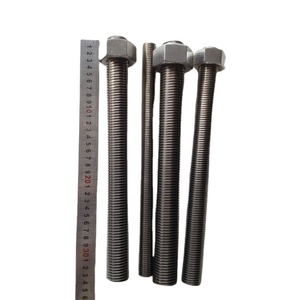
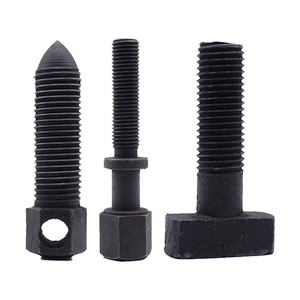
Yes. Our advanced CNC machining facility in Rajkot operates multi-axis turning and milling machinery capable of producing bespoke fasteners from CAD/STEP files. Whether your application requires non-standard hammer head bolts, specialized turbine casing studs with internal gauge holes, or oversize heavy hex nuts up to M120 (4 inches), we manufacture with tolerances tighter than ISO 2768-m.
For Baltic marine exposure, atmospheric chloride and cyclic freezing make standard electro-zinc coatings insufficient. We recommend multi-layer PTFE / fluoropolymer coatings (such as Xylan 1070 over a zinc-phosphate or ceramic base coat) or Hot-Dip Galvanizing per ISO 10684. For immersed or splash-zone subsea hardware, solid corrosion-resistant alloys like Super Duplex 2507 or Inconel 625 are strongly advised over coated carbon steels.