
Manufactured under strict ISO 9001:2015 and PED 2014/68/EU protocols. Every fastener batch undergoes certified chemical passivation, controlled thread geometry inspection, and heat-lot verification documented to EN 10204 3.1 standards.
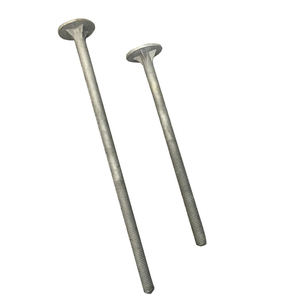
Deep-penetration galvanized & passivated timber fasteners optimized for extreme shear resistance in Alpine crane mats, wooden bridges, and heavy rail retaining systems.
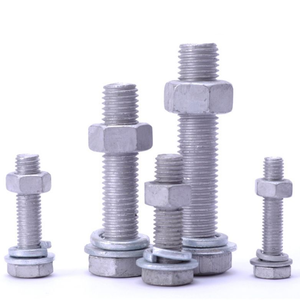
High-tensile heavy hex connection bolts with anti-friction passivation, engineered for pre-loaded structural connections compliant with Swiss SIA 263 framework requirements.
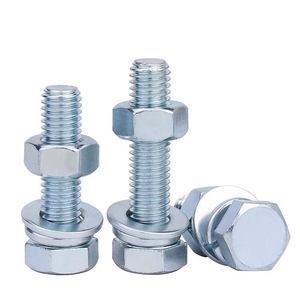
Precision metric internal threading with controlled proof load capacities and passivated electro-zinc coating to eliminate micro-galling under rapid automated assembly.
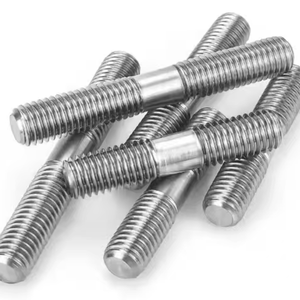
Chemically passivated according to ASTM A967 Citric/Nitric standards to build a resilient, iron-free chromium oxide layer resistant to chemical washdown and damp mountain ambient air.
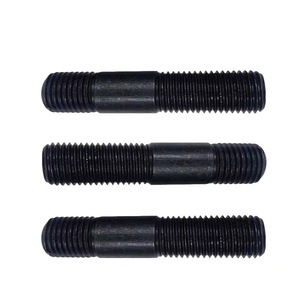
Engineered for differential flange setups in chemical reactors and pump stations. CNC machined with rolled threads and ultrasonic acid-cleaning for pristine surface stability.
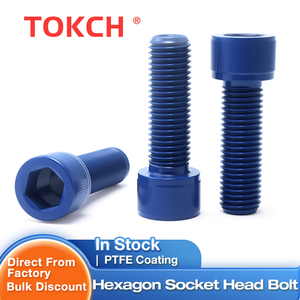
Passivated substrate with thermoset PTFE fluoropolymer topcoat. Provides exceptionally low breakout friction coefficient (µ = 0.08–0.12) and salt spray resistance beyond 2,500 hours.
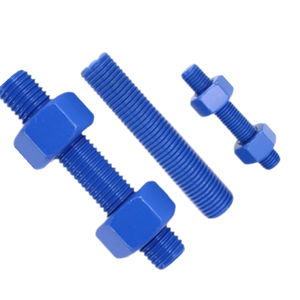
Dual-layer protection consisting of zinc-nickel electro-passivation topped with bonded fluoropolymer resin, resisting atmospheric de-icing chlorides and chemical fumes.
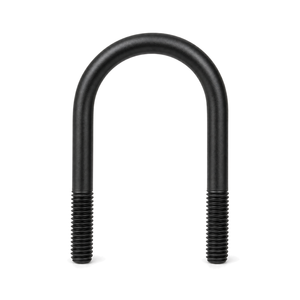
Cold-bent, stress-relieved, and fully passivated U-bolts designed for high-vibration fluid handling conduits, heat exchangers, and cryogenic cooling pipe runs.
Why standard stainless steel fasteners suffer localized micro-pitting in alpine and chemical microclimates—and how controlled industrial passivation guarantees decades of service life.
In critical Swiss mechanical and civil installations, fastener integrity cannot rely merely on the raw alloy designation. While austenitic grades such as AISI 304 (1.4301), AISI 316L (1.4404), and duplex grades such as 2205 (1.4462) possess intrinsic anti-corrosive characteristics due to chromium content, the physical manufacturing process unavoidably degrades their natural chemical defenses. Hot heading, cold upsetting, precision thread rolling, and CNC cutting introduce microscopic foreign metallic residues—primarily free iron from tooling dies—into the outer metal matrix. Furthermore, thermal forming produces microscopic thermal oxide scales and a localized chromium-depleted boundary layer beneath the bolt surface.
Left untreated, this microscopic surface iron oxidizes immediately when exposed to damp air, de-icing brine mist, or airborne chemical aerosols. The galvanic cell formed between the microscopic iron inclusion and the surrounding austenitic matrix catalyzes accelerated crevice corrosion, localized pitting, and eventually stress-corrosion cracking (SCC). At TorqBolt, our industrial chemical passivation lines restore the alloy’s true metallurgical defense by chemically purging exogenous free iron and forcing the instantaneous reformation of an enriched, transparent chromium(III) oxide ($Cr_2O_3$) barrier film measuring between 1.5 and 3.5 nanometers.
We operate dual-chemistry immersion tanks meeting ASTM A967 and AMS 2700 standards. Our specialized citric acid bath protocols selectively remove unbonded iron atoms while significantly reducing environmental wastewater footprint—aligning cleanly with Swiss ChemRRV / ORRChem directives.
For high-strength carbon steel structural assemblies (Grade 8.8, 10.9, 12.9), our facilities execute multi-stage electro-zinc-nickel plating (12–16% Ni) followed by thick-film transparent or iridescent trivalent chromium ($Cr^{3+}$) conversion passivation.
Stainless steel fasteners are notoriously susceptible to galling and cold-welding during torque installation. Our passivated fasteners can be paired with integrated microscopic dry-lubricant films or molybdenum disulfide ($MoS_2$) layers to maintain exact clamp-load consistency.
From Alpine trans-tunnel corridors to sterile Basel cleanrooms, Swiss industrial specifications demand extreme metallurgic discipline.
Rail and highway tunnels under the Swiss Alps experience some of the world's most severe atmospheric corrosion. High humidity combined with concentrated de-icing salt sprays ($NaCl$, $CaCl_2$, and $MgCl_2$) carried by vehicles creates a microclimate prone to triggering chloride stress corrosion cracking (CSCC). TorqBolt supplies fully passivated 1.4462 Duplex and 1.4529 Super Austenitic anchor rods, cable brackets, and utility flange bolts that conform to Federal Roads Office (FEDRO / ASTRA) structural safety guidelines.
The chemical and pharmaceutical manufacturing complexes in Basel-Stadt, Basel-Landschaft, and the Canton of Valais operate under strict Good Manufacturing Practice (GMP) and pressure vessel directives. Fasteners used in reactors, centrifuges, and sterile pipeline systems must be thoroughly passivated to eliminate any residual iron particles that could contaminate pharmaceutical batches or react with volatile solvent atmospheres. TorqBolt produces electropolished and passivated 316L and Hastelloy C276 studs with certified surface roughness $Ra < 0.4\,\mu\text{m}$.
Switzerland’s high-head pumped-storage and run-of-the-river hydroelectric generating stations (such as Grande Dixence, Linth-Limmern, and Nant de Drance) demand fastening systems with immense fatigue endurance and absolute resistance to cavitation water vapor. Our hot-forged, solution-annealed, and passivated high-strength stainless steel flange bolting withstands continuous dynamic vibration and hydrostatic pressures exceeding 150 bar without surface passivation breakdown.
Cable car infrastructure, gondola lift towers, and funicular railways engineered by Swiss industry leaders require structural fasteners certified for sub-zero impact toughness down to -40°C. Standard commercial zinc-plated bolts risk hydrogen embrittlement or surface micro-cracking under repetitive cyclic loads. TorqBolt supplies cryogenic Charpy V-notch tested, passivated high-tensile fasteners that guarantee structural stability under extreme Alpine temperature shifts.
Regulatory compliance, decarbonization audits, and metallurgical upgrading are actively reshaping fastener selection across Swiss cantons.
Swiss Federal Authorities enforce stringent environmental chemical guidelines (SR 814.81 ChemRRV). The use of Hexavalent Chromium ($Cr^{6+}$) in yellow passivations is completely phased out. Swiss procurement offices now enforce 100% RoHS/REACH compliance with eco-friendly citric acid passivation or hex-free trivalent zinc-nickel passivates.
Due to unexpected failures of standard A2-70 (1.4301) bolts in enclosed de-icing highway tunnels, Swiss engineering standard SIA 179 now heavily emphasizes duplex stainless steels (such as 1.4362 Lean Duplex and 1.4462 2205). Duplex alloys deliver double the yield strength of austenitic bolts while offering Pitting Resistance Equivalent Numbers (PREN) above 32.
Modern Swiss infrastructure projects integrated with Building Information Modeling (BIM) require end-to-end digital material passports. Buyers demand QR-coded packaging directly linking the fastener lot to optical measurement scans, PMI spectral readouts, and fully digitized EN 10204 3.1 chemical/tensile mill inspection documents.
Compare mechanical strengths, PREN corrosion indices, and recommended passivation formulations across primary high-performance bolting alloys.
| Material Grade | Werkstoff / UNS | Tensile $R_m$ (MPa) | Yield $R_{p0.2}$ (MPa) | PREN Value | Passivation Standard | Primary Swiss Application |
|---|---|---|---|---|---|---|
| AISI 304 / A2-70 | 1.4301 / S30400 | 700 | 450 | ~ 18 | ASTM A967 Citric 2 | Indoor industrial machinery, food conveyor lines |
| AISI 316L / A4-80 | 1.4404 / S31603 | 800 | 600 | 23 – 25 | ASTM A967 Nitric 1 / Citric 4 | Chemical equipment, outdoor rail substations |
| Duplex 2205 | 1.4462 / S32205 | 800 – 1000 | 550 – 650 | 34 – 36 | ASTM A967 Nitric + Acid Rinse | Alpine road tunnel brackets, wastewater plants |
| Super Duplex 2507 | 1.4410 / S32750 | 900 – 1100 | 650 – 800 | > 42 | AMS 2700 Method 1 Type 2 | High-pressure penstocks, extreme chloride tunnels |
| Inconel 718 | 2.4668 / N07718 | 1240 – 1400 | 1030 – 1170 | > 50 | Specialty Nickel Pickling + Passivate | Gas turbine rotors, cryogenic Alpine research (CERN) |
| 17-4 PH (H1150D) | 1.4542 / S17400 | 930 – 1070 | 725 – 860 | ~ 29 | AMS 2700 Method 1 Type 7 | Hydraulic valve stems, precision sensor mountings |
| Carbon Steel 10.9 (Zn-Ni) | Grade 10.9 / 42CrMo4 | 1040 – 1200 | 940 | N/A (Sacrificial) | ISO 19598 Trivalent Nano-Passivate | Heavy civil structural frameworks (SIA 263) |
* PREN (Pitting Resistance Equivalent Number) = $\%Cr + 3.3\%Mo + 16\%N$. Higher ratings correspond to superior resistance against chloride-induced pit initiation.
Combining high-capacity metallurgical production with Swiss-grade dimensional scrutiny.
Our Rajkot manufacturing complex and Mumbai headquarters operate under quality management systems audited and approved by TÜV Rheinland. We produce pressure-retaining bolting compliant with European Pressure Equipment Directive (PED) Annex I, paragraph 4.3.
We integrate hot forging for heavy structural diameters (M24 to M100+), high-speed multi-station cold headers for metric standard fasteners, and high-precision Swiss-type 5-axis CNC machining centers for complex, customized non-standard drawings.
Every fastener production run is verified via thermo-fisher optical emission spectrometers (OES), tensile testing machines, Vickers/Rockwell micro-hardness testers, and continuous salt-spray corrosion chambers to guarantee 100% adherence to customer specifications.
Practical technical, metallurgical, logistics, and customs answers regarding importing specialty passivated fasteners into Switzerland.
Whether you require custom drawings in Hastelloy C276, PED-approved Duplex 2205 studs for alpine tunneling, or high-volume passivated A4-80 metric bolts, our engineering specialists will provide an itemized technical evaluation, chemical compliance roadmap, and commercial quote within 24 hours.