Subsea Fasteners Factories & Exporters in Australia

Precision-Engineered Corrosion-Resistant Fasteners, High-Integrity Stud Bolts, and Structural Anchors for Critical Offshore Marine, Subsea Extraction, and Renewable Energy Assets.

ISO 9001:2015 Quality Management Certified
EN 10204 3.1/3.2 100% Heat Heat-Number Traceability
PED 2014/68/EU Pressure Equipment Approved
NACE MR0175 Sour Gas / H2S Hardness Verified
Factory Catalogue

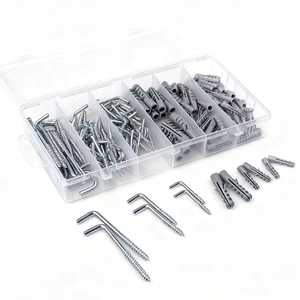
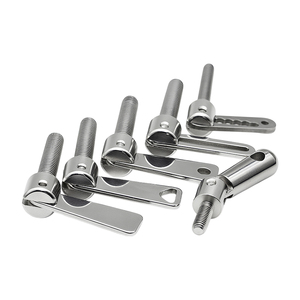
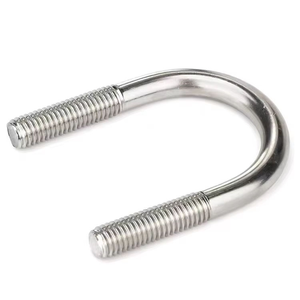
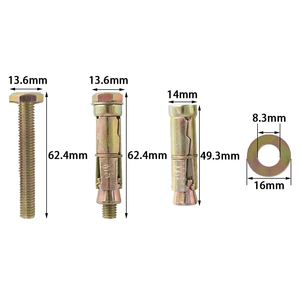
Featured Marine & Subsea Fasteners for Australian Applications

Manufactured under rigorous metallurgical oversight for splash zones, subsea flowlines, cathodic-protected jackets, and deep-water pipelines across Western Australia and Bass Strait.

Technical Authority Whitepaper

Critical Metallurgy & Failure Prevention in Australian Subsea Bolting

The offshore waters surrounding the Australian continent represent one of the world's most unforgiving testing grounds for mechanical fasteners. From the high-temperature, high-salinity hydrocarbon wells of the North West Shelf, Browse Basin, and Carnarvon Basin to the extreme wave actions of the Bass Strait, subsea infrastructure is perpetually under mechanical fatigue, hydrostatic pressure, and severe chemical attack.

For subsea engineers and procurement managers across Perth, Melbourne, and Brisbane, selecting fasteners is governed not merely by yield strength, but by metallurgical immunity against Hydrogen-Induced Stress Cracking (HISC), Pitting & Crevice Corrosion, and Cathodic Protection (CP) overcharging embrittlement. In subsea installations where a single connection failure can require multivariant Remotely Operated Vehicle (ROV) deployments costing upwards of $300,000 AUD per day, fastener reliability translates directly into multi-million-dollar risk mitigation.

Standard marine-grade austenitic stainless steels (such as AISI 304 and generic 316) exhibit severe vulnerabilities to localized crevice corrosion beneath gasket faces and flange contact surfaces where seawater oxygen is depleted. In response, high-tier Australian projects specify Super Duplex Stainless Steels (UNS S32750 / 2507, UNS S32760 / Zeron 100), Precipitation-Hardened Nickel Alloys (Inconel 718 / UNS N07718), and Inconel 625 (UNS N06625).

Our manufacturing and metallurgical laboratory controls ensure precisely balanced austenite-to-ferrite phase ratios (40:60 to 60:40) in duplex fasteners, eliminating the formation of brittle intermetallic sigma (σ) and chi (χ) phases during heat treatment. These protocols guarantee optimal toughness at sub-zero seabed temperatures.

The Pitting Resistance Equivalent Number (PREN): For Australian offshore splash zones and subsea flowlines, fasteners must meet a minimum PREN threshold: PREN = %Cr + 3.3(%Mo + 0.5%W) + 16(%N). Standard 316 stainless scores approximately 23-25, which fails rapidly under warm Australian sea temperatures. Super Duplex and Nickel Alloys provided by our factories exceed a PREN of 42.0, providing near-total resistance to seawater pitting and microbial-influenced corrosion (MIC).

Subsea Fastener Alloy Comparison for Australian Marine Environments

Alloy Grade UNS Designation Yield Strength (0.2% Offset, MPa) PREN Score Primary Subsea Offshore Application HISC / NACE MR0175 Compliance
Super Duplex 2507 UNS S32750 ≥ 550 MPa ≥ 42.0 Subsea manifold bolting, riser clamps, Christmas tree flanges Certified, Hardness ≤ 28 HRC to prevent HISC
Inconel 718 UNS N07718 ≥ 1034 MPa > 45.0 High-pressure deepwater wellheads, downhole completion tools API 6A CRA compliant, extreme sour (H2S) service
Duplex 2205 UNS S32205 / S31803 ≥ 450 MPa ≥ 35.0 FPSO topsides, seawater cooling pipework, ballast pump fixings Compliant within designated temperature/sour limits
Inconel 625 UNS N06625 ≥ 415 MPa ≥ 48.0 Subsea umbilical termination units (SUTU), acoustic housings Complete resistance to pitting & chloride stress corrosion
Titanium Grade 5 UNS R56400 (Ti-6Al-4V) ≥ 828 MPa Immune Subsea seismic sensor cages, deep-ocean ROV components Immune to seawater corrosion; high strength-to-weight ratio
Field Engineering Deployments

Localized Subsea & Marine Applications Across Australia

Our manufactured fasteners are deployed across the critical energy corridors and maritime developments throughout Australasia.

North West Shelf LNG

Heavy hex stud bolts, blind flanges, and pipe support fasteners installed across gas extraction jackets, subsea manifolds, and flowlines in the Pilbara and Kimberley basins.

Bass Strait Offshore Wells

Dynamic fatigue-resistant stud bolts designed for platforms operating in extreme wave action, preventing cyclic mechanical failure across aging infrastructure.

Offshore Wind & Wave

Fixing systems for the emerging Gippsland and Hunter offshore wind zones, securing subsea turbine foundation transition pieces, dynamic subsea cables, and scour rock nets.

Harbor & Subsea Defence

High-integrity fasteners engineered for Royal Australian Navy submarine basing facilities in Henderson (WA) and Garden Island (NSW), ensuring strict acoustic and magnetic compliance.

Strategic Trajectory

Australian Subsea Fastener Industry: Strategic Trends

How evolving regulatory frameworks and technical requirements are shaping oceanic fastening specifications in Australia.

Manufacturing Capabilities

Our Factory Advantage & Technical Compliance

High-precision forging, advanced multi-axis machining, and European-certified pressure equipment compliance backing every delivery to Australian soil.

TUV Rheinland PED Approval

Certified under PED 2014/68/EU by TUV Rheinland and operating an audited ISO 9001:2015 management system. Every subsea pressure-retaining bolt is fully traceable to original raw steel mill heats with chemical and physical test reports provided upfront.

Dual Hot Forging & CNC Facilities

Operating hot forging presses for large-diameter offshore studs (M24 to M100 / 1" to 4") maintaining continuous grain flow, alongside ultra-precise multi-axis CNC turn-mill centers for low-volume, drawing-based exotic subsea manifolds and custom housings.

In-House Metallurgical Testing

Complete test capabilities including X-ray Positive Material Identification (PMI), Charpy V-Notch impact testing at -46°C, intergranular corrosion (ASTM A262 Practice E), ferrite phase volume assessment per ASTM E562, and micro-hardness testing to NACE MR0175/ISO 15156.

Procurement Guidance

Australian Buyer's Frequently Asked Questions (FAQ)

Clear answers to critical metallurgical, logistic, and regulatory questions encountered by procurement professionals across Australia.

How do you mitigate Hydrogen-Induced Stress Cracking (HISC) on Super Duplex subsea fasteners?
HISC represents the primary cause of subsea bolting failure when duplex steels are coupled with cathodic protection (CP) systems. We adhere strictly to DNV-RP-F112 guidelines. Our production processes enforce tight solution annealing (1050°C - 1100°C followed by immediate water quenching), keeping the ferrite phase strictly within 35-55%, avoiding sigma phase precipitation, and ensuring hardness does not exceed 28 HRC (270 HV10).
What documentation and certification standard accompanies shipments exported to Australia?
Every shipment arrives with comprehensive EN 10204 Type 3.1 Inspection Certificates as standard. This includes full heat-number traceability, actual melt chemical composition, tensile, yield, elongation, reduction of area, Charpy impact test values (often at -46°C), hardness surveys, and microstructural phase validation. Third-party witnessed inspections (Type 3.2 by Lloyd's Register, DNV, or Bureau Veritas) can be coordinated seamlessly upon enquiry.
Can you manufacture bespoke custom fasteners according to offshore engineering drawings?
Yes. Beyond standard ASME B18.2.1, ASTM A193 (B8, B8M, B8R, B8S), and DIN specifications, our precision CNC turning and milling centers produce customized subsea tie-rod assemblies, ROV bucket pins, swivel eyelets, custom J-bolts, and double-ended engineered studs directly from 2D/3D client CAD drawings.
What are the lead times for exporting exotic fasteners to Western Australia (Perth / Karratha)?
For standard stocked bars in 316L, Duplex 2205, and Super Duplex 2507, expedited CNC turning and threading allow dispatch within 5 to 10 working days. Air freight shipments to Perth International Airport (PER) or Darwin (DRW) clear customs within 3 to 5 business days, facilitating rapid response to urgent breakdown scenarios. Sea container shipments for major capital projects generally transit in 18 to 24 days.
Which coating is best recommended for subsea splash zone flange connections?
For splash zones where seawater is warm and oxygen-saturated, we recommend a multi-barrier system: an engineered base coat of thermally applied zinc-nickel or metallic phosphate, capped by a baked fluoropolymer PTFE topcoat (such as Xylan 1070). This combination provides unmatched corrosion isolation (over 3,000 hours salt spray resistance per ASTM B117) and guarantees consistent breakout torque when maintenance operations occur.

Ready to Engineer Your Subsea Fastener Solutions?

Speak directly with our technical application engineers to verify metallurgical compatibility, request a formal quote for offshore projects, or initiate third-party inspected production for rapid delivery to Australia.

Send an Inquiry
Contact Us