
Engineered to pair with ASTM A194 2H heavy hex nuts across sour-gas, superheated steam, subsea marine, and chemical synthesis installations.
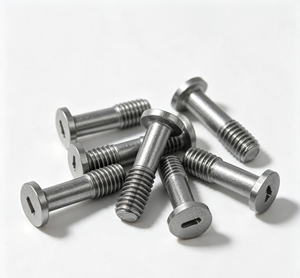
Engineered for vacuum furnace hot zones, sintering reactors, and extreme thermal conditions up to 1,600°C without creep embrittlement.
View Specifications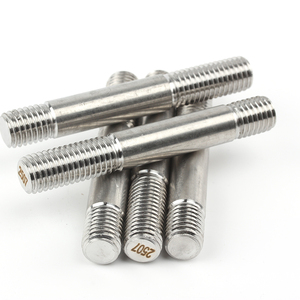
PREN ≥ 42 delivering ultimate resistance against localized pitting and stress corrosion cracking in Mediterranean saline subsea platforms.
View Specifications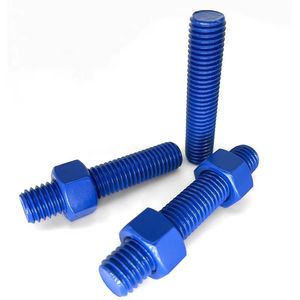
Fluoropolymer Xylan blue coated alloy steel matched with dual ASTM A194 2H nuts, calibrated for low breakout torque and salt-fog endurance.
View Specifications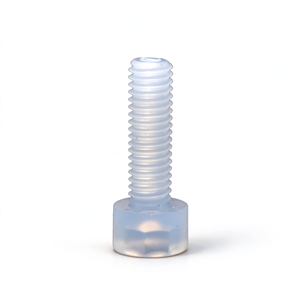
Chemically inert, dielectric polymer hardware ideal for aggressive galvanic isolation kits, acid baths, and chlorine scrubbing towers.
View Specifications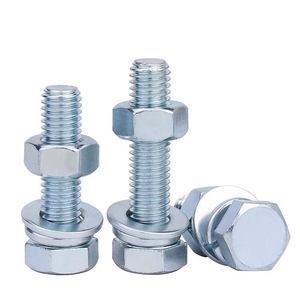
Hot-dip galvanized structural fastening nuts meeting stringent civil Eurocode specifications and heavy infrastructure erection requirements.
View Specifications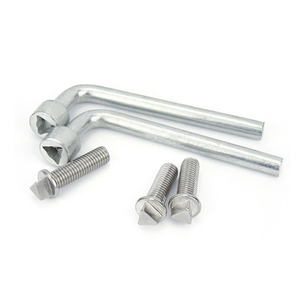
Security anti-tamper and specialized high-torque triangular head bolts manufactured via precision CNC for marine deck machinery.
View Specifications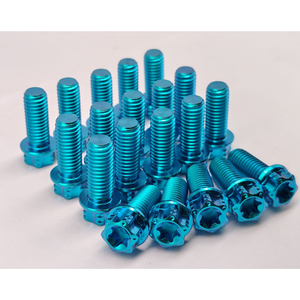
Exceptional strength-to-weight ratio, total immunity to seawater corrosion, and optimized micro-finished threads for offshore submersibles.
View Specifications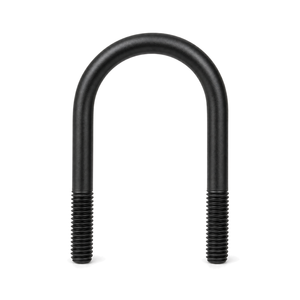
Supplied in 304, 316, and black oxide coated alloy steel with double UNF/metric nuts for process line vibration isolation and pipe clamping.
View SpecificationsA critical specification standard for high-temperature and high-pressure service in refinery distillation, pipeline networks, and marine boiler applications.
ASTM A194 Grade 2H represents the global petrochemical industry's premier specification for carbon and alloy steel heavy hex nuts, meticulously formulated to withstand elevated stress, thermal cycling, and mechanical creep. Paired primarily with ASTM A193 Grade B7 stud bolts, Grade 2H nuts are manufactured from medium-carbon steel (typically AISI 1045 or modified carbon-manganese formulations) and subjected to a rigorous Quenched and Tempered (Q&T) thermal process. In the Hellenic maritime and industrial corridor—ranging from the high-temperature catalytic cracking towers of Aspropyrgos and Corinth to the cryogenic LNG manifolds of Revithoussa—understanding the mechanical resilience and proof-load capacities of Grade 2H is paramount to catastrophic containment prevention.
Critical Engineering Notice for Procurement Teams: ASTM A194 Grade 2H nuts require a minimum tempering temperature of 455°C (850°F). For sour-service refinery environments governed by NACE MR0175 / ISO 15156, hardness values must be strictly controlled below 22 HRC or Grade 2HM must be specified to prevent sulfide stress cracking (SSC) triggered by volatile sour crude imports.
| Grade Designation | Material Matrix | Carbon (C %) | Manganese (Mn %) | Heat Treatment | Proof Stress (psi) | Hardness Range |
|---|---|---|---|---|---|---|
| ASTM A194 2H | Carbon Steel | 0.40 min | 1.00 max | Quenched & Tempered (min 455°C) | 175,000 (UNC) / 150,000 (8UN) | 24 to 35 HRC (248–327 HBW) |
| ASTM A194 2HM | Carbon Steel (NACE) | 0.40 min | 1.00 max | Stress Relieved / Controlled Q&T | 150,000 (UNC) / 135,000 (8UN) | 159 to 235 HBW (max 22 HRC) |
| ASTM A194 Grade 4 | Carbon-Moly Alloy | 0.40–0.50 | 0.70–0.90 | Q&T (min 595°C) | 175,000 | 24 to 35 HRC |
| ASTM A194 Grade 7 | Alloy Steel (AISI 4140) | 0.37–0.49 | 0.65–1.10 | Q&T (min 595°C) | 175,000 | 24 to 35 HRC |
| ASTM A194 Grade 8M | AISI 316 Stainless | 0.08 max | 2.00 max | Carbide Solution Treated | 75,000–80,000 | 126 to 300 HBW |
A vendor comparative analysis evaluating production capacity, PED compliance, stock depth, and rapid sea-freight logistics into Piraeus, Thessaloniki, and Greek industrial shipyards.
Operating high-precision hot forging, cold heading, and CNC production lines from Rajkot with international commercial offices in Mumbai. TorqBolt holds direct TÜV Rheinland certification for European PED 2014/68/EU Annex I Paragraph 4.3 and delivers 100% heat-traceable EN 10204 3.1 / 3.2 documentation directly to Greek refiners, marine EPCs, and pipeline developers.
Longstanding supplier with established distribution throughout Northern Greece and the Attica industrial zones. Maintains substantial local warehouse stocks of standardized metric and imperial carbon steel structural nuts, serving domestic commercial construction, municipal infrastructure, and regional mechanical contractors.
Positioned adjacent to the Akti Miaouli maritime cluster in Piraeus, Marfast caters specifically to Greek shipping fleet operators, drydocks, and ship conversion facilities at Perama, Elefsis, and Syros, carrying ASME heavy hex bolting configurations used in shipborne propulsion, bilge pumping, and deck machinery.
A major European bolting manufacturer with profound penetration in nuclear, power generation, and deep-sea oil and gas. Beck supplies fully documented ASTM and EN bolting into the Greek energy sector via continental logistics channels, providing high-reliability fastening for high-pressure autoclaves and turbines.
Strategically located within the Attica refinery basin, Hellenic Fasteners focuses on immediate turnaround MRO supply for Motor Oil Hellas and HELLENiQ ENERGY facilities, acting as an agile intermediary stockist for scheduled turnarounds and emergency line breaks.
Supplying the North Sea and Mediterranean energy markets, Star Fasteners provides coated fastener solutions including PTFE, Xylan, and geometric coatings designed to combat galvanic attack in offshore installations, subsea pipelines, and desalination intake manifolds.
Renowned throughout Western and Southeastern Europe for fully automated high-bay warehousing and comprehensive fastener assortments. Lederer supplies Greek technical companies with standard metric structural fasteners and ASME petrochemical nuts under rigid DIN/ISO quality gates.
Positioned conveniently across the Adriatic Sea from Western Greek ports (Igoumenitsa and Patras), Titan manufactures large-diameter ASTM A194 heavy hex nuts up to M100 / 4 inches, serving major subsea interconnectors, hydroelectric dams, and geothermal energy projects.
Focusing directly on the Cyclades, Dodecanese, and Crete, Aegean Industrial supplies marine contractors, reverse-osmosis water plants, and naval repair stations at the ONEX Neorion Shipyard in Syros with critical bolting, preventing saline-induced crevice corrosion.
A specialized transmission pipeline and pressure equipment supplier servicing cross-border energy infrastructure such as the Trans Adriatic Pipeline (TAP), IGB Interconnector (Greece-Bulgaria), and DESFA gas stations. Promet excels in supplying fully certified ASTM A193 B7 / A194 2H stud and nut assemblies with PED compliance and full mill mechanical test reports to Hellenic regulatory bodies.
Targeted deployment vectors where temperature, hydrostatic pressure, and high marine atmospheric salinity dictate strict fastener metallurgy.
Motor Oil Hellas (Corinth) and HELLENiQ ENERGY (Aspropyrgos & Elefsina) operate complex atmospheric distillation, hydrocracking, and catalytic reforming units. Operating at temperatures between 280°C and 450°C under hundreds of bars of pressure, these columns rely upon ASTM A194 Grade 2H heavy hex nuts to seal ASME B16.5 Class 300 to 2500 pipe flanges against toxic hydrocarbon leaks.
Greece’s expansion as Southeastern Europe's primary gas gateway via the Revithoussa LNG Import Terminal and the Gastrade FSRU off Alexandroupolis necessitates bolting capable of resisting extreme thermal shifts. Flanges running from cryogenic boil-off gas (-162°C) up through regasification steam heat exchangers combine stainless A194 8M hardware with high-strength Grade 2H nuts on external thermal containment circuits.
With Greek shipowners controlling over 20% of the world’s commercial maritime tonnage, ship repair and conversion at the Elefsis, Skaramagas, and Syros shipyards demand constant supplies of bolting. Steam turbine main propulsion, cargo manifold headers, ballast water systems, and exhaust scrubber retrofits utilize Grade 2H nuts treated with PTFE fluorocarbon to prevent salt galling and seized threads during open-sea service.
The Trans Adriatic Pipeline traverses Northern Greece from Kipoi to the Albanian border, operating under high pipeline pressures requiring massive forged fittings. ASTM A194 2H nuts secure block valve stations, scraper traps, and compressor manifold flanges, requiring low-temperature Charpy impact validation (-29°C or -46°C via Grade 7/Grade 4 specifications) and certified EN 10204 3.1 inspection paperwork.
Due to severe freshwater scarcity across the Cyclades and Dodecanese islands, municipal reverse osmosis (SWRO) facilities operate high-pressure membrane feed pumps up to 70 bar. ASTM A194 2H nuts coated with hot-dip galvanizing or PTFE are deployed in mechanical support framework, civil raw water intakes, and high-pressure carbon steel secondary distribution mains.
High-efficiency gas turbine combined cycle (CCGT) stations operated by PPC, Protergia, and Elpedison in Megalopolis, Aliveri, and Thisvi require fasteners capable of tolerating extreme thermal vibration. Superheated steam bypass valves and boiler reheat lines utilize heat-treated ASTM A194 Grade 2H and Grade 4 nuts to ensure joint bolt pre-load retention over multi-year generation cycles.
Key economic, compliance, and technological shifts dictating fastener purchasing policies across Hellenic engineering enterprises.
Procurement engineers and MRO contract managers in Greece are steering away from generic fastener wholesalers in favor of integrated manufacturers capable of proving chemical, mechanical, and regulatory provenance. This shift is accelerated by four macro industry drivers:
Under Hellenic labor and safety regulations, all pressure equipment installed in Greek process plants must comply strictly with the European Pressure Equipment Directive (PED). Sourcing fasteners from manufacturers with TÜV Rheinland certified Quality Management Systems per EN 764-5 / PED 2014/68/EU Annex I Paragraph 4.3 eliminates costly third-party compliance delays during plant safety audits.
In the saline Mediterranean marine atmosphere, traditional electro-zinc plating degrades within months, leading to catastrophic nut galling. Greek shipowners and coastal refineries are mandating PTFE (Xylan / Teflon) coatings with zinc-phosphate or ceramic primers, delivering over 3,000 hours of ASTM B117 salt spray resistance and ensuring uniform torque-tension coefficients.
Supply chain instability has caused Greek operators to bypass middlemen, entering direct supply agreements with Tier-1 manufacturers. This direct pipeline secures guaranteed raw material mill heats, locks in competitive tonnage pricing, and allows custom-engineered forging for non-standard ASME/DIN geometries.
With Greece's National Energy and Climate Plan (NECP) targeting significant offshore wind deployments in the Aegean and Ionian seas by 2030, fastener demands are transitioning toward high-strength, fatigue-tested bolting assemblies capable of enduring relentless wave actions and cyclic aerodynamic forces.
Combining world-scale forging plants in Rajkot with ISO 9001:2015 engineering controls and seamless Piraeus port clearance.
Officially audited and certified by TÜV Rheinland, authorizing direct production of pressure equipment fasteners compliant with European directives.
Equipped with advanced hot-forging presses, multi-station cold formers, and precision 5-axis CNC machining centers for custom engineering to customer drawings.
Every delivery includes complete mill chemical composition, tensile, proof load, and Charpy impact certificates, with 3.2 witnessing by DNV, Lloyd’s, or Bureau Veritas.
Specialized processing of ASTM A194 2H, 2HM alongside high-nickel alloys (Inconel 625/718, Hastelloy C276), Duplex 2205, Super Duplex 2507, and Titanium Grade 5.
Direct technical and logistical answers addressing customs clearance, certifications, corrosion protection, and compatibility in Greece.