Explore precision-manufactured bolts, studs, rods, and custom anchoring solutions built strictly to ASME, ISO, DIN, and JIS marine-grade tolerances.
Japan’s maritime manufacturing landscape, characterized by globally renowned shipbuilders in Nagasaki, Imabari, and Kure, coupled with coastal thermal and nuclear power plants along Tokyo Bay and the Seto Inland Sea, demands bolting materials that exceed traditional corrosion benchmarks. Copper nickel (cupronickel) alloys—predominantly Cu-Ni 90/10 (UNS C70600 / JIS C7060) and Cu-Ni 70/30 (UNS C71500 / JIS C7150)—represent the pinnacle of galvanic compatibility and biofouling resistance in marine fluid applications.
While local trading houses (Sogo Shosha) and regional Japanese specialty mills manufacture structural fasteners, large-scale infrastructural procurement teams frequently run into critical bottlenecks: extensive lead times for non-standard lengths, minimum order quantity (MOQ) restrictions on cold-headed exotic components, and severe cost inflation when sourcing small-to-mid volume custom thread profiles. Consequently, Tier-1 EPC contractors and dockyard procurement engineers evaluate verified global manufacturers equipped with dedicated forging lines, ISO 9001:2015 frameworks, and certified third-party testing capabilities to secure competitive delivery schedules without compromising on strict JIS/JASU naval architectural codes.
Evaluating an alloy bolting partner for mission-critical installations requires inspecting cold/hot forging limits, thread rolling metallurgy, pressure equipment approvals (PED 2014/68/EU), and metallurgical compliance to ASTM B151, ASTM F467, and ASTM F468. Below is the operational overview of top manufacturing hubs and specialized supply partners actively servicing engineering projects across Japan:
| Supplier / Enterprise | Core Competency | Standard Grades | Testing & Compliance |
|---|---|---|---|
| TorqBolt Inc. | Custom Hot Forging & CNC Machining | Cu-Ni 90/10, 70/30, Inconel, Duplex | ISO 9001, PED 2014/68/EU, EN 10204 3.1/3.2 |
| Kobe Exotic Fastener Hubs | Heavy Industrial Structural Fasteners | JIS C7060, High Tensile Steels | JIS Q 9001, ClassNK Approval |
| Tokyo Marine Hardware Alliance | Desalination Flange Fasteners | C71500, Marine Bronze, Monel | Mill Test Reports, Ultrasonic NDT |
| Osaka Petrochemical Supply Group | Offshore Heat Exchanger Bolting | ASTM B151 CuNi, Alloy 825 | ASME Sec VIII, PMI Testing |
| Nagoya Aerospace & Precision Works | Micro & Precision Thread Screws | Titanium Gr. 5, Cu-Ni Alloys | JIS B 1051, 100% Optical Sorting |
| Yokohama Naval Component Works | Subsea Flange Bolts & Heavy Hex Nuts | C70600 90/10, Super Duplex | Salt Spray ASTM B117, Tensile Lot Test |
| Setouchi Shipbuilding Consumables | Keel, Rudder & Seawater Piping Studs | JIS H3100, CuNi 70/30 | Charpy V-Notch, Intergranular Corrosion |
| Fukuoka Coastal Infrastructure Hardware | Harbor & Seawall Anchor Fasteners | Cu-Ni Plated, Solid Cu-Ni Studs | Hardness Rockwell B, Thread Gauging |
| Shizuoka Thermal Power Fasteners | High-Flow Condenser Fasteners | UNS C71500, Hastelloy Alloys | Full Chemical Wet Analysis, Eddy Current |
| Kitakyushu Industrial Metallurgy Corp | Special Forged Heavy Bolting | Cu-Ni Alloy Billets, Incoloy | EN 10204 3.1, Microstructure Metallography |
From the harsh subarctic salt fog of Hokkaido offshore wind installations to the dense warm currents around Kyushu maritime lanes, cupronickel bolting addresses acute operational vulnerabilities.
Installed extensively in hull penetrations, sea-chest strainers, and ballast water treatment systems (BWTS). Cu-Ni 90/10 provides innate resistance to micro-fouling by releasing microscopic copper ions, eliminating macro-algae and barnacle bonding without hazardous anti-fouling paints.
With Japan’s aggressive offshore wind targets in Akita and Niigata prefectures, transition-piece flanges in the splash zone suffer from violent aeration and high-velocity saline wetting. Cu-Ni 70/30 fasteners avoid stress corrosion cracking (SCC) common to traditional high-tensile carbon steels.
Condensers in Japanese nuclear and thermal plants circulate hundreds of tons of coastal seawater hourly. Using copper-nickel studs and heavy hex nuts guarantees galvanic neutrality against matching C70600 tubesheets, eliminating galvanic couple degradation.
Understanding critical shear velocity, pitting resistance, and galvanic potential ensures precise asset lifecycle modeling.
| Alloy Grade | UNS / JIS Code | Yield Strength (MPa) | Max Seawater Velocity | Primary Operational Advantage |
|---|---|---|---|---|
| Cu-Ni 90/10 | UNS C70600 / JIS C7060 | 105 - 230 | 3.5 m/s | Supreme biofouling deterrence; excellent stress corrosion crack immunity |
| Cu-Ni 70/30 | UNS C71500 / JIS C7150 | 140 - 310 | 4.5 m/s | Elevated erosion-corrosion resistance; superior for high-velocity pump volutes |
| Super Duplex 2507 | UNS S32750 / SUS 329J4L | 550 | > 20 m/s | Exceptional mechanical tensile yield; susceptible to marine biological fouling |
| Incoloy 825 | UNS N08825 / NCF 825 | 240 | High | Immunity to sulfuric and phosphoric acids; higher material density and raw cost |
Japanese heavy engineering is shifting rapidly toward life-cycle costing (LCC) models, green hydrogen coastal facilities, and automated supply chains.
Japanese utility conglomerates (such as JERA and regional power utilities) are substituting standard galvanized and 316L bolts with solid Cu-Ni 70/30 fasteners. While material initial cost is higher, avoiding continuous underwater diver maintenance loops yields massive long-term OPEX reductions.
Cryogenic storage and seawater vaporizers for green ammonia and LNG terminals across Chiba and Osaka require fasteners resilient to cryogenic embrittlement and marine atmosphere condensation. Cupronickel maintains outstanding impact toughness at sub-zero working thresholds.
Disruptions in domestic secondary metallurgy have driven Japanese procurement teams away from multi-layer regional wholesalers. Purchasing managers increasingly build direct mill connections that provide certified EN 10204 3.1 documentation, customized threading, and air freight turnaround within 7-10 days.
Combining advanced forging metallurgy, certified laboratory validation, and pressure vessel compliance under one roof.
Certified by TÜV Rheinland for pressure vessel component fabrication. Every batch of bolts and studs undergoes mandatory optical emission spectrometry, Charpy impact testing, and tensile testing, delivered alongside authentic EN 10204 3.1 or 3.2 documentation.
Equipped with high-speed multi-station cold formers for standardized M6-M16 runs and robust induction-heating hot-forging presses for large-diameter flange bolting up to M100 / 4-inch threads. Continuous metallurgical grain flow is preserved for maximum shear fatigue life.
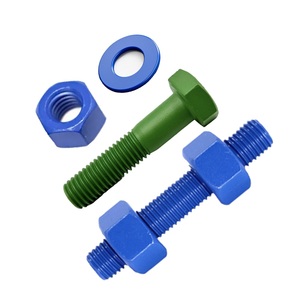
In addition to bare passivated copper nickel, our in-house surface processing lines provide engineered Blue Xylan 1424, PTFE fluorocarbon, electro-zinc, and hot-dip galvanizing per ASTM A153/F2329. Controlled torque friction coefficients guarantee stable joint preload.
Practical answers addressing metallurgical standards, customs clearances, quality verification, and galvanic pairing.
JIS C7060 maps directly to UNS C70600 (Cu-Ni 90/10) under ASTM B151/B111, while JIS C7150 maps to UNS C71500 (Cu-Ni 70/30). Chemical thresholds for copper, nickel, iron, and manganese align closely, making ASME/ASTM certified fasteners fully compliant with Japanese marine machinery standards.
Copper nickel resides in a compatible galvanic potential zone alongside marine aluminum-bronze and austenitic stainless steels. However, when mating with duplex stainless or titanium, isolation kits (dielectric washers and sleeves) or PTFE thread coatings are recommended to prevent galvanic coupling under active seawater immersion.
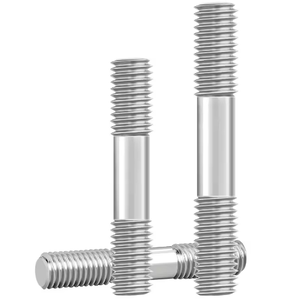
Yes. Our CNC threading and rolling dies support coarse metric (M6 to M100 per JIS B 0205), fine metric pitches, standard imperial UNC, UNF, and unified 8-thread series (8UN) frequently utilized in high-pressure offshore petroleum flanges.
Shipments destined for Tokyo, Yokohama, Kobe, or Osaka include certified EN 10204 Type 3.1 Mill Test Certificates with exact chemical heat analysis and mechanical test data, commercial invoice, packing list, Certificate of Origin (COO), and third-party NDT / PMI inspection reports where mandated.