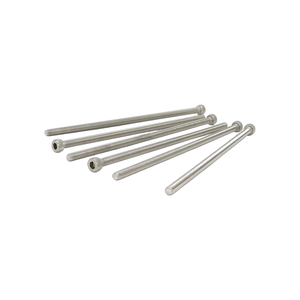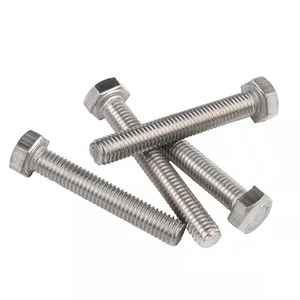
Manufactured using controlled hot/cold forging and precision CNC thread-rolling to endure aggressive sulfuric environments, marine logistics stress, and pressurized chemical process equipment.
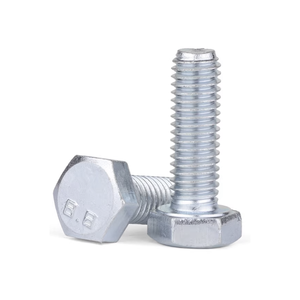
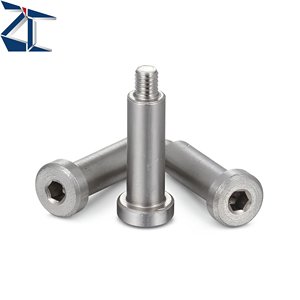
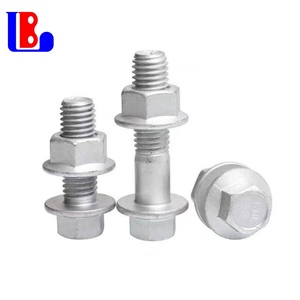
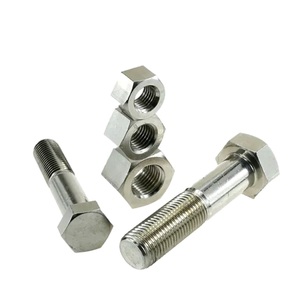
Engineers procuring industrial fasteners for operations along the Elbe River, Waltershof, or the Port of Hamburg frequently operate at the intersection of extreme sulfuric acid handling and high-salinity brackish environments. In these conditions, common austenitics like AISI 316L or 317L suffer from accelerated pitting and chloride stress corrosion cracking (CSCC). Alloy 20 (UNS N08020 / W.Nr. 2.4660) was formulated specifically to solve sulfuric acid corrosion. With an elevated nickel balance (32.0–38.0%), chromium (19.0–21.0%), molybdenum (2.0–3.0%), and copper additions (3.0–4.0%), this austenitic nickel-iron-chromium superalloy exhibits outstanding passivity in boiling concentrations of 20% to 40% sulfuric acid.
Crucially, our Chinese manufacturing process stabilizes the alloy against intergranular carbide precipitation through controlled niobium (columbium) additions (specified at 8 × C minimum up to 1.00%). During subsequent thread rolling, cold forming, or hot forging operations, this chemical balance prevents sensitization in the heat-affected zone (HAZ), eliminating micro-fissuring and ensuring full compliance with stringent German AD 2000-Merkblatt W2 pressure vessel guidelines.
| Material Grade | UNS / Werkstoff | Yield Strength Rp0.2 (MPa) | Tensile Strength Rm (MPa) | PREN Value | Optimal Corrosion Environment |
|---|---|---|---|---|---|
| Alloy 20 | UNS N08020 / 2.4660 | ≥ 240 | ≥ 550 | ~ 32 | Sulfuric acid (H2SO4), pickling acids, phosphoric acid |
| Hastelloy C276 | UNS N10276 / 2.4819 | ≥ 355 | ≥ 790 | ~ 68 | Wet chlorine gas, hypochlorites, hydrochloric acid |
| Inconel 625 | UNS N06625 / 2.4856 | ≥ 415 | ≥ 827 | ~ 50 | Marine splash zones, high-temperature exhaust, flue gases |
| Duplex 2205 | UNS S32205 / 1.4462 | ≥ 450 | ≥ 655 | ~ 35 | Chloride-induced pitting, offshore structural bolting |
| AISI 316L | UNS S31603 / 1.4404 | ≥ 220 | ≥ 520 | ~ 25 | Mild chemical synthesis, domestic marine equipment |
Custom tailored bolting configurations engineered for northern Germany's most demanding maritime, chemical, and renewable infrastructures.
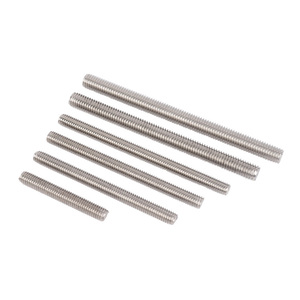
In Harburg's extensive petrochemical refining processing and storage units, alkylation lines utilize concentrated catalysts. Our Alloy 20 double-ended studs provide critical joint integrity on heat exchangers, column access manways, and valve manifolds, eliminating stress crack risks in sulfuric alkylation processing.
Serving heavy automated container cranes, bunker fueling docks, and cargo transshipment equipment throughout Waltershof and Altenwerder. Our Alloy 20 and Inconel fasteners resist aggressive, persistent Elbe brackish waters, cyclic dockside washdown, and sulfurous vessel fuel vapors without seizing.
Hamburg serves as the premier logistical command center for German Bight offshore wind farms. We deliver critical Alloy 20 transition-piece bolts, subsea flange tie-downs, and topside electrical housing enclosures treated with fluoropolymer PTFE coatings to eliminate galvanic corrosion.
How the green energy transition around the Port of Hamburg is transforming industrial fastener procurement requirements.
The conversion of the former Moorburg coal-fired plant into a mega-watt green hydrogen generation hub requires high-integrity bolting compatible with high-pressure demineralized water electrolysis and sulfuric-based electrolyte solutions where standard steels quickly embrittle.
European environmental regulations and German safety laws increasingly demand 3rd party independent inspection (TÜV, DNV, Lloyd's Register) directly at Chinese manufacturing mills prior to clearance, certifying chemical melts, Charpy V-notch toughness, and intergranular corrosion tests.
To eliminate galling common in high-nickel austenitic matrices like Alloy 20 and prevent offshore crevice attack, Hamburg engineering buyers increasingly specify proprietary PTFE, Xylan®, or zinc-nickel coatings tailored for automated nut runners.
As the EU Carbon Border Adjustment Mechanism (CBAM) phases in, procurement managers in Hamburg require complete embedded emissions transparency, full mill cert documentation, and pre-cleared customs logistics right to the warehouse door.
Combining state-of-the-art Chinese metallurgical forging capabilities with world-class quality systems certified to European pressure equipment standards.
Our production facilities maintain comprehensive certification under European Pressure Equipment Directive (PED 2014/68/EU) Annex I, Par. 4.3 and ISO 9001:2015. Every manufacturing batch carries full heat traceability directly cross-referenced to original vacuum-induction melt (VIM/ESR) ingots.
Our facilities boast state-of-the-art optical emission spectrometers (OES), computerized universal tensile test benches, Charpy impact testing down to cryogenic levels (-196°C), intergranular corrosion testing according to ASTM A262 Practice B/C, and handheld XRF positive material identification (PMI).
Strategic logistics partnerships guarantee express dispatch. Air cargo shipments arrive at Hamburg Airport (HAM) within 5–7 days for critical plant shutdown turnarounds, while containerized maritime consignments reach the Port of Hamburg via direct express routes with fully digitized documentation.
Direct answers addressing technical specifications, logistics, European conformity, and customs compliance.
Inquire directly with our metallurgists for your Hamburg project quotations, chemical resistance tables, and test certificates.