
TorqBolt supplies fully certified, corrosion-resistant bolting solutions directly to engineering contractors, mining conglomerates, and maritime operators in Peru. Explore our core manufactured product line below:
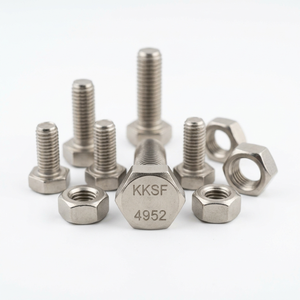
Kolb Ksf standard M6, M8, M10 metric threaded hardware designed for industrial assemblies, structural frameworks, and machinery operating under continuous mechanical vibration.
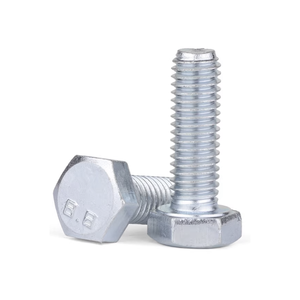
High-tensile heavy hex bolts tailored for extreme pressure vessels, piping flanges, and refining towers throughout the Talara Refinery and Camisea gas distribution networks.
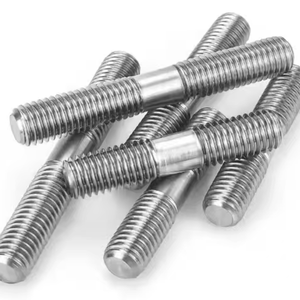
Corrosion-resistant dual-threaded stud bolts optimized for marine processing pumps, acid chemical lines, and port handling infrastructure across Callao and Pisco.
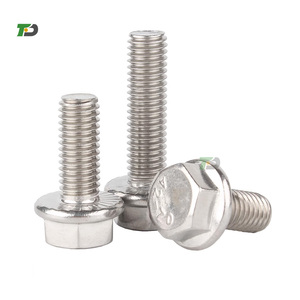
DF Fastener specialized precision hexagon bolts and long-stud hardware forged from Grade 5 Titanium and exotic austenitics for high-strength weight-critical applications.
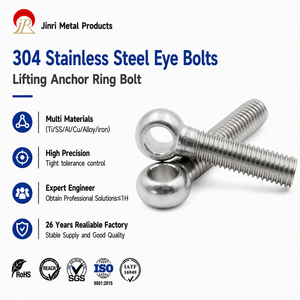
Heavy-duty marine lifting anchor ring bolts featuring dynamic swivel hinged points, providing certified safety ratings for shipboard rigging and Andean mining cranes.
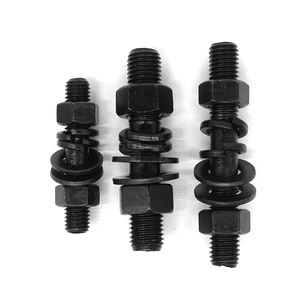
Pressure vessel boundary bolting compliant with ISO 898 and ASME B16.5 standards. Supplied with high-thickness Zinc-Nickel electroplating to withstand H2S sour gas.
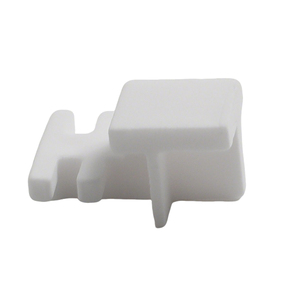
Ultra-high temperature non-conductive electrical clip fasteners designed for smelters, industrial heating elements, kilns, and electrolytic copper refining plants in Southern Peru.
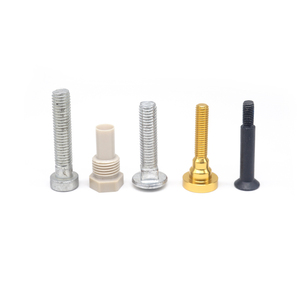
Turned and cold-headed specialty hardware manufactured to OEM technical prints. Available in alloy steels, non-ferrous metals, and protective sacrificial coatings.
Heavy industrial projects in South America are rapidly decommissioning Cadmium and conventional Hot-Dip Galvanizing in favor of Acid/Alkaline Zinc-Nickel alloy electrodeposition under ASTM B841 and ISO 19598.
The metallurgical advantage of modern Zinc-Nickel electroplating centers strictly on the codeposition of 12.0% to 15.0% Nickel by weight. Within this tight window, the alloy forms a single, uniform gamma-phase (γ-Ni5Zn21) intermetallic crystal lattice structure.
Standard zinc coatings provide sacrificial cathodic protection by dissolving rapidly relative to the underlying carbon steel substrate. Hot-Dip Galvanizing (HDG) creates heavy, irregular thicknesses (45–85 μm) that require undersizing or thread re-tapping, fundamentally weakening structural thread engagement. Conversely, Zinc-Nickel forms a chemically stable, non-porous passivation boundary:
For high-tensile structural bolts (ISO 898-1 Class 10.9, Class 12.9, ASTM A193 B7, ASTM A490), atomic hydrogen absorption during acid pickling and electrodeposition represents a catastrophic failure mechanism. Undetected Hydrogen Induced Cracking (HIC) causes sudden, brittle fracture under sustained preloads in remote Andean mine sites.
TorqBolt enforces stringent post-plating de-embrittlement protocols matching aerospace and oilfield quality directives:
| Performance Dimension | Zinc-Nickel Alloy (ASTM B841) | Hot-Dip Galvanized (ASTM A153) | Electroplated Clear Zinc (ASTM F1941) | PTFE Fluorocarbon / Xylan |
|---|---|---|---|---|
| Salt Spray Resistance (ASTM B117) | 1,500 – 2,500+ Hours | 500 – 1,000 Hours | 96 – 240 Hours | 1,000 – 3,000 Hours |
| Layer Thickness Uniformity | 8 – 15 μm (No thread clogs) | 45 – 85 μm (Requires re-tap) | 5 – 12 μm | 20 – 35 μm |
| Hydrogen Embrittlement Safety | High (Certified De-bake) | Medium (Pickling acid risks) | Medium | Very High (Non-electrolytic) |
| Hardness & Scratch Resistance | 350 – 450 HV (High mar resist) | 150 – 200 HV (Soft outer layer) | 100 – 150 HV | Soft resin (Easily abraded) |
| Galvanic Isolation vs. Aluminum | Compatible (-0.79V potential) | Passable | High potential delta | Complete dielectric barrier |
From the extreme freezing altitudes of the Andes to saturated marine ports and coastal desert petroleum facilities, our fasteners are designed to thrive in Peru’s most demanding industrial environments.
In world-class open-pit and underground copper, gold, and polymetallic operations (such as Antamina, Las Bambas, Cerro Verde, Toromocho, and Toquepala), fasteners endure severe daily temperature differentials (ΔT > 35°C), acidic slurry exposure, and constant rock-crusher vibration. Zinc-Nickel hardware secures SAG mill liners, slurry pipeline joints, flotation cell agitators, and high-voltage transmission pylons without premature galvanic seizing or low-temperature embrittlement.
The expansion of the Port of Callao and the inauguration of the Chancay Mega-Port require bolting systems that endure intense chloride mist, subsea tidal splash zones, and continuous mechanical wharf loading. Zinc-Nickel coatings prevent red rust on gantry cranes, container dock structures, fender tie-rods, and desalinization seawater intake manifolds, outperforming traditional zinc plating by more than ten-to-one in ISO 9227 salt fog conditions.
Refining operations managed by Petroperú at the Modernized Talara Complex, alongside extraction and fractionation plants throughout Cusco and Pisco (Camisea Gas Project), handle aggressive wet H2S sour hydrocarbons. TorqBolt manufactures certified ASTM A193 B7M and B8M studs accompanied by NACE MR0175/ISO 15156 hardness verification, ensuring maximum resistance to Sulfide Stress Cracking (SSC) in high-pressure cracking units and subsea manifolds.
Peruvian procurement officers, EPC managers, and lead maintenance engineers are shifting buying patterns to mitigate unplanned shutdowns and align with international standards.
Traditionally, mining maintenance teams in Arequipa, Moquegua, and Cajamarca purchased bolting stock through domestic distributors in Lima. This intermediary chain often compounded unit prices by 40–70% and introduced untraceable, uncertified commercial hardware.
Today, Tier-1 EPC contractors and global miners in Peru are establishing direct factory relationships with specialized fastener manufacturers. By sourcing consolidated container shipments directly into Callao or Matarani, procurement teams gain complete heat-number mill test traceability (EN 10204 3.1) and cut out intermediate handling markups.
Historically, yellow cadmium plating was common in coastal military and marine rigging applications in South America. However, strict Peruvian environmental directives under MINAM (Ministerio del Ambiente) and international corporate ESG audits are mandating the elimination of toxic heavy metals, specifically hexavalent chromium and cadmium.
Alkaline Zinc-Nickel with trivalent passivations provides an environmentally benign, RoHS-compliant alternative that delivers higher hardness (400+ HV) and double the salt-spray corrosion protection of cadmium, setting a new baseline for sustainable engineering infrastructure.
Operating high-precision hot forging, cold heading, and computerized CNC machining centers under an audited ISO 9001:2015 and European PED directive structure.
Every export pallet carries complete chemical and mechanical test certs linked directly to raw material melt heats, with optional third-party witnessing (SGS, TÜV, Lloyd's).
Dedicated computer-monitored rack and barrel Zinc-Nickel plating facilities ensuring 12–15% nickel content deposition without localized thickness disparities.
Full conformance to NACE MR0175 / ISO 15156. Precise heat treatments ensure hardness limits (22 HRC max for B7M/2H) to prevent catastrophic sulfide stress cracking.
Equipped with 1000 kN Universal Tensile Machines, Charpy V-Notch impact testing down to -196°C, Fischer XRF coating thickness gauges, and salt spray fog chambers.
Critical answers regarding customs, logistics, technical metallurgy, and standards compliance for commercial transactions in Peru.
Hot-Dip Galvanizing deposits a thick (45–85 μm) zinc coating with notable thread pooling. To fit mating nuts, threads must either be undercut or tapped oversize, which compromises shear area and fatigue resistance. Furthermore, the 450°C molten galvanizing bath can induce temper embrittlement in high-tensile alloy steels.
Electrodeposited Zinc-Nickel (ASTM B841) deposits a uniform 8–15 μm layer that preserves precision ASME B1.1 and ISO thread pitch tolerances without re-tapping. It offers up to 2,500 hours of ASTM B117 salt spray barrier protection—over double that of standard HDG—with a high surface hardness of 400 HV to resist slurry abrasion.
Direct ocean freight containers dispatched from Nhava Sheva (Mumbai) to the Port of Callao (or Puerto Matarani for Southern mining destinations) carry a standard transit time of 32 to 42 days depending on transshipment routing.
For emergency shutdown operations, air shipments arrive at Jorge Chávez International Airport (LIM) in Lima within 4 to 7 business days. All shipments are packed in heavy ISPM-15 heat-treated seaworthy wooden boxes lined with VCI (Vapor Corrosion Inhibitor) waterproof wrapping.
Every export consignment is shipped with complete customs documentation matching SUNAT tariff codes (Partida Arancelaria 7318.15 / 7318.16). We provide commercial invoices, Packing Lists, Certificates of Origin, and complete EN 10204 Type 3.1 Mill Inspection Certificates that record mechanical elongation, yield strength, chemical analysis, and destructive torque test results.
Yes. One of the primary advantages of Zinc-Nickel (12–15% Ni) is its electrochemical potential (-0.79V vs. SCE), which sits very close to that of structural aluminum alloys (-0.75V vs. SCE).
In coastal environments like Lima or Trujillo, coupling raw stainless steel with aluminum induces intense galvanic cell activity that rapidly corrodes the aluminum. Zinc-Nickel acts as a compatible metallic buffer, effectively mitigating galvanic differential degradation.
For sour service gas installations (e.g., Camisea Pisco fractionation plants), our inspection documentation confirms that the fastener steel chemistry, quench-and-temper thermal cycle, and surface hardness testing comply strictly with NACE MR0175 limits (Rockwell C hardness strictly ≤ 22 HRC for B7M and ≤ 35 HRC for standard alloys). The EN 10204 3.1 report explicitly states full compliance with NACE sour gas operating criteria.