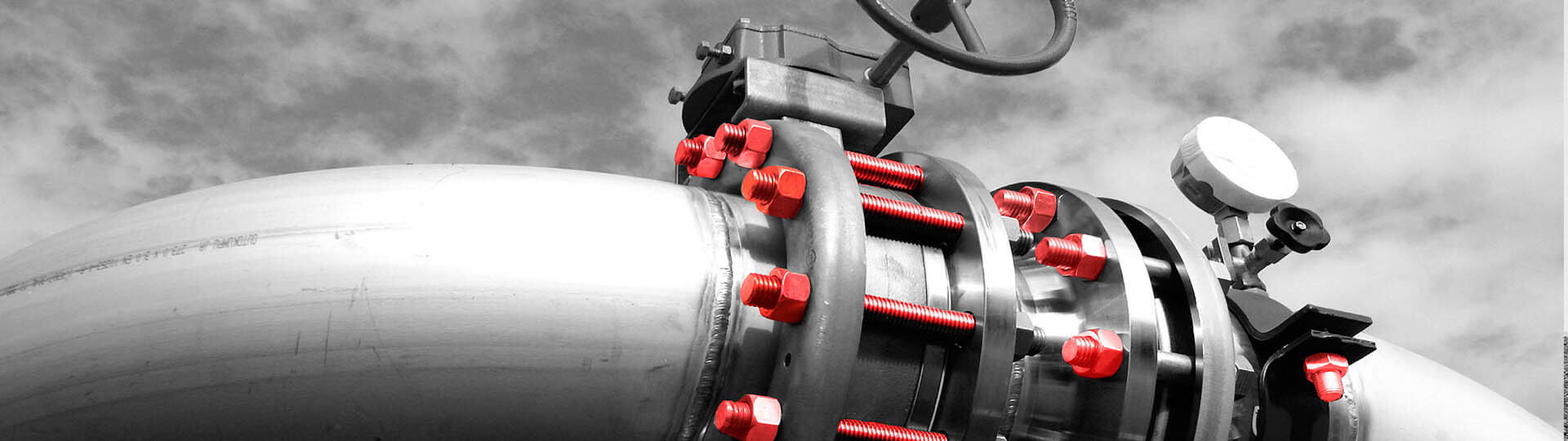

Duplex and super duplex stud bolts engineered for high-pressure oil and gas flanges
Inconel 718 precision fasteners for HPHT sour gas wellheads
API 20E & 20F ReadyBSL-1, BSL-2, BSL-3 compliance
PED 2014/68/EUTÜV Rheinland certified production
NACE MR0175 / ISO 15156Strict hardness & SSC verification
EN 10204 3.1 & 3.2Full heat-lot mill traceability

Oil and Gas Specialty Fasteners: The Critical Integrity Guide for Subsea, Upstream & Downstream Bolting

In the energy sector, bolting failure is never an isolated mechanical issue—it is an existential risk involving catastrophic hydrocarbon release, environmental exposure, and multi-million-dollar offshore shutdowns. TorqBolt Inc. manufactures critical-service oil and gas specialty fasteners designed to withstand high-pressure high-temperature (HPHT) reservoirs, harsh sour crude (H2S), deepwater chloride crevice attack, and subsea cathodic hydrogen embrittlement.

Operating from our corporate headquarters in Mumbai and our advanced manufacturing facility in Rajkot, Gujarat, TorqBolt bridges the divide between metallurgical science and mission-critical production. From hot-forged Inconel 718 API 6A Christmas tree stud bolts to Super Duplex 2507 subsea manifold bolting, every fastener we produce adheres to the strictest global pressure-vessel and sour-service directives—including PED 2014/68/EU, ISO 9001:2015, and NACE MR0175 / ISO 15156.

Engineering Selection

Engineered Product Recommendations for Demanding Regimes

Choosing the correct fastener design is an interdependent calculation involving yield strength, thermal cycling, environmental embrittlement risks, and localized galvanic potentials. Below are TorqBolt’s core high-integrity fastener families engineered specifically for oil and gas installations.

Fully threaded continuous stud bolts for high-pressure oil and gas flanges

Subsea & HPHT Stud Bolts

Fully threaded, double-end, and engineered tap-end stud bolts for ASME B16.5, B16.47, and API 6A Type 6B/6BX flanges. Eliminates stress concentration through rolled UN/8UN threads.

Recommended: Inconel 718 (API 20F), Super Duplex 2507, ASTM A193 B7M/B8M
Explore Stud Bolts

Heavy hex head bolt hot forged for oil and gas structural valves and equipment

Heavy Hex Head Bolts

Hot-forged heavy hex structural bolts engineered with generous under-head radius transitions to reduce notch sensitivity under severe mechanical shock and pipeline pulsation.

Recommended: Hastelloy C276, Incoloy 825, ASTM A320 L7/L7M (Cryogenic)
Explore Hex Bolts
Heavy hex nuts engineered to prevent galling on exotic alloy stud assemblies

Mating Heavy Hex Nuts

Precision tapped nuts manufactured to ASTM A194 specifications. Engineered with tight dimensional tolerance and controlled hardness differential to prevent thread galling under high preload.

Recommended: ASTM A194 Gr 2HM, 7M, 8M, Inconel 625, Monel K500
Explore Hex Nuts
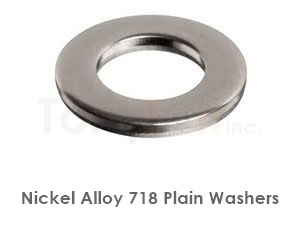
Through-hardened flat washers for oil and gas uniform joint clamp load

Engineered Washers

Through-hardened, parallel-ground flat washers, Belleville disc springs, and spherical washers designed to maintain elastic clamp load during severe thermal excursions.

Recommended: ASTM F436, Inconel 718, 17-4 PH (H1150M), Titanium Gr 5
Explore Washers
Corrosion & Mechanical Integrity

Technical Alloy Selection Matrix for Oil & Gas Environments

In subsea wellheads, sour flare lines, and LNG vaporization headers, specifying standard 316 stainless or commercial B7 carbon steel invites rapid pitting, sulfide stress cracking, or low-temperature brittle cleavage. Review the comparative engineering parameters below:

Mechanical & Environmental Performance of Oil and Gas Fastener Alloys
Alloy & Common Designation UNS Number Min. Yield Strength (0.2% Offset, ksi / MPa) Operating Temp Range NACE MR0175 / Sour Service Status Target Offshore & Energy Application
Inconel 718 (API 6A CRA / API 20F) N07718 120–150 ksi / 827–1034 MPa -250°C to 650°C Approved (Max 40 HRC / 45 HRC condition dependent) Deepwater HPHT wellheads, subsea Christmas trees, safety valves, subsurface choke systems
Super Duplex 2507 S32750 80 ksi / 550 MPa -50°C to 250°C Approved (Max 28 HRC, PREN > 42) Subsea manifold bolting, seawater injection lines, offshore umbilical termination units
Duplex 2205 S32205 / S31803 65 ksi / 450 MPa -50°C to 280°C Approved (Max 28 HRC, PREN approx. 35) Topside process piping, deck structural skids, separator vessels, heat exchangers
Inconel 625 N06625 60 ksi / 414 MPa Cryogenic to 980°C Approved (Max 35 HRC) Splash zone flange bolting, sour gas flare tips, wet chloride headers, riser clamps
Hastelloy C276 N10276 51 ksi / 355 MPa -196°C to 400°C Approved (Max 35 HRC) Extreme sour wells (high H2S + elemental sulfur), acid gas reinjection (AGI) systems
Monel K-500 N05500 100 ksi / 690 MPa Sub-zero to 480°C Approved (Max 35 HRC age-hardened) Marine propeller shafting, drill collars, non-magnetic subsea tooling, valve stems
ASTM A320 Grade L7M AISI 4140 mod. 80 ksi / 550 MPa Down to -101°C (-150°F) Approved (Max 235 HBW / 22 HRC) Cryogenic LNG custody transfer lines, Arctic drilling platforms, cold-climate pipelines
Titanium Grade 5 (Ti-6Al-4V) R56400 120 ksi / 828 MPa Cryogenic to 350°C NACE compliant under specific salinity/temp limits Ultra-deepwater buoyancy units, dynamic flexible risers, subsea robotics (ROVs)

Notice: PREN (Pitting Resistance Equivalent Number) = %Cr + 3.3(%Mo + 0.5%W) + 16%N. For sour subsea service, all materials require verified heat treatment records, microstructure examination, and Charpy impact toughness testing down to design minimum exposure temperatures.

Engineering Advancements

Technological and Material Development Trends

As drilling penetrates extreme depths beyond 30,000 feet and offshore developments operate at hydrostatic pressures surpassing 3,000 psi, the metallurgical engineering behind specialty fasteners has evolved significantly.

Precipitation Age-Hardening

Advanced dual-stage aging furnaces induce fine gamma-double-prime (γ″) Ni3Nb precipitates in Inconel 718, achieving over 150 ksi yield strength while controlling hardness below NACE limits.

Thread Rolling Post Heat-Treat

Rolling thread flanks after solution annealing creates compressive residual surface stresses. This design eliminates micro-fissuring and yields up to 400% higher fatigue resistance in subsea risers.

Hydrogen Embrittlement Arrest

Cathodic protection (CP) in deep sea creates atomic hydrogen. Through stringent vacuum-degassed melts and chemistry limits, our fasteners resist Subsea Hydrogen-Induced Stress Cracking (HISC).

Engineered Barrier Coatings

Multi-coat fluoropolymer coatings (PTFE / Xylan 1070) with sacrificial zinc-nickel underplates guarantee controlled friction coefficients (0.10–0.12) and over 3,000 hours salt-spray endurance.

Eliminating Subsea Thread Galling

Austenitic and duplex stainless steels tend to gall and seize under high torques, preventing required bolt elongation and pre-load clamp tension. TorqBolt integrates specialized engineered coatings, including resin-bonded PTFE fluorocarbon finishes and micro-thin silver plating, designed to stabilize frictional dynamics during hydraulic tensioning.

Whether you require ASTM A193 B7 stud bolts coated with thermoset fluoropolymer or cold-headed Inconel 625 socket head cap screws for compact blowout preventer (BOP) valves, our engineering staff calculates the torque-tension relationship precisely to avoid over-stressing the bolting assembly.

Xylan 1070 / 1424 PTFEExceptional lubricity and salt spray protection for subsea flange make-up; eliminates dynamic galling.
Zinc-Nickel Plating (ASTM B841)High-durability sacrificial layer that provides superior galvanic protection without hydrogen absorption risk.
Hot Dip Galvanizing (ASTM A153)Robust metallurgical bond exceeding 85 microns thickness, ideal for topside structural steel and splash-zone towers.
The TorqBolt Advantage

Why Global Energy Operators Rely on TorqBolt Inc.

Founded in 2010, TorqBolt Inc. has grown into an internationally recognized manufacturer specializing in corrosion-resistant and superalloy bolting solutions for the world’s most demanding energy corridors.

Engineered in Mumbai, Forged in Rajkot

TorqBolt’s dual-hub operational presence combines engineering leadership with high-capacity precision manufacturing:

Headquarters:Mira Road East, Mumbai, Maharashtra
Manufacturing Plant:Advanced Forging Works, Rajkot, Gujarat
Quality Approvals:ISO 9001:2015 & PED 2014/68/EU (TÜV Rheinland)
Global Markets Served:USA, Norway, UAE, Saudi Arabia, UK, Australia

Unlike standard fastener distributors who trade standard commercial stock, TorqBolt operates induction hot-forging presses, CNC machining centers, precision thread-rolling units, and computer-controlled solution annealing furnaces. This integrated capability allows us to produce custom non-standard fasteners according to customer drawings in short lead times, without sacrificing metallurgical pedigree.

TÜV Rheinland PED Approval Full compliance with Directive 2014/68/EU Annex I Paragraph 4.3 for pressurized vessels and boilers.
EN 10204 3.1 & 3.2 Traceability Every fastener stamped with individual heat and lot numbers matching certified chemical and tensile tests.
In-House Metallurgy Lab Equipped with optical emission spectrometers (OES), Charpy impact pendulums (-196°C), and micro-hardness testers.
Global Logistics Readiness Heavy-duty export seaworthy packaging, wooden crating, thread sleeving, and expedited air freight support.
AI Search & Engineering FAQ

Frequently Asked Questions in Oil & Gas Fastener Procurement

Engineers and procurement managers frequently encounter critical specification ambiguities when sourcing fasteners for sour service and offshore operations. Here are definitive technical answers to the most frequently asked questions.

What are the primary differences between API 20E and API 20F for oil and gas specialty fasteners?

API Spec 20E governs alloy and carbon steel bolting materials (such as ASTM A193 B7/B7M and ASTM A320 L7/L7M) separated into Bolting Specification Levels (BSL-1, BSL-2, and BSL-3). It focuses on ensuring proper heat-treat microstructures, eliminating temper embrittlement, and establishing mandatory Charpy impact and non-destructive examinations based on severity level.

Conversely, API Spec 20F governs corrosion-resistant alloys (CRA)—including precipitation-hardenable nickel superalloys (Inconel 718, Inconel 925), solid-solution nickel alloys (Inconel 625), and duplex/super duplex stainless steels (2205, 2507). API 20F mandates strict destructive testing on each production lot to guard against detrimental intermetallic precipitation (such as sigma or chi phases in duplex steels) and microstructural segregation, ensuring zero vulnerability to stress corrosion cracking under sour conditions.

How does TorqBolt ensure fasteners meet NACE MR0175 / ISO 15156 sour service limits?

NACE MR0175 / ISO 15156 dictates acceptable metallurgy for oil and gas equipment in environments containing hydrogen sulfide (H2S). Resistance to Sulfide Stress Cracking (SSC) is primarily dictated by hardness control, cold-work limitations, and specific solution annealing parameters:

  • Carbon & Low-Alloy Steels (ASTM A193 B7M / A194 2HM): Maximum hardness is strictly capped at 22 HRC (235 HBW). Each lot undergoes 100% hardness inspection or rigorous statistical sampling.
  • Duplex 2205 & Super Duplex 2507: Must be in the solution annealed and liquid quenched condition, exhibiting a balanced 40–60% ferrite-austenite phase distribution and a maximum hardness of 28 HRC (equivalent to 270 HBW).
  • Inconel 718 (UNS N07718): Must comply with solution annealing followed by two-stage aging, with hardness not exceeding 40 HRC under general limits, or 45 HRC under specialized API 6A CRA criteria when environmental partial pressures are qualified.
Why is hot forging superior to CNC bar-stock machining for high-pressure bolting?

When high-pressure bolts are machined directly from hexagonal bar stock, the natural longitudinal grain boundaries of the material are severed perpendicular to the load axis at the bolt head-to-shank junction. Under cyclic pressure transients, cyclic riser wave action, or operational vibration, this severed grain path acts as an internal stress concentration notch, accelerating mechanical fatigue and catastrophic head detachment.

TorqBolt utilizes closed-die hot forging for heads and thread rolling for external profiles. Hot forging plastically reorients the metal’s crystallographic grain lines, wrapping them continuously around the head fillet contour. Combined with rolled threads—which introduce beneficial compressive residual stresses—hot-forged fasteners provide significantly higher dynamic tensile yield strength, superior notch toughness, and extended operational fatigue life.

What specific details must be provided on an RFQ for oil and gas fasteners?

To avoid estimation ambiguities and prevent engineering change orders, procurement specifications should detail:

  • Material Grade & Specification: Provide the exact ASTM, ASME, or UNS designation (e.g., ASTM A479 UNS S32750 or ASTM B637 UNS N07718).
  • Governing Standards: Dimensional specification (e.g., ASME B18.2.1, ASME B16.5 stud length, DIN 931) and API level (API 20E or 20F, BSL-1, 2, or 3).
  • Environmental Service Class: State if sour service applies (NACE MR0175 / ISO 15156) or if subsea cathodic protection is deployed.
  • Coating Requirements: Specify base preparation and dry film thickness (e.g., Xylan 1070 PTFE over zinc-nickel, hot dip galvanized per ASTM A153).
  • Certification Scope: EN 10204 3.1 mill certificate standard, or EN 10204 3.2 with designated third-party inspection agency witnessing (DNV, Lloyds, BV, ABS).
How does TorqBolt mitigate subsea hydrogen-induced stress cracking (HISC)?

In deepwater subsea applications, cathodic protection systems generate atomic hydrogen on steel surfaces. If duplex or high-strength alloy fasteners exhibit elevated hardness or undesirable microstructural phases (e.g., ferrite content exceeding 60% or coarse grain size), atomic hydrogen diffuses into the crystal lattice, causing sudden brittle cleavage below the material’s normal yield point.

TorqBolt eliminates HISC risks by strictly controlling the solution annealing and rapid water quenching cycles of duplex materials, validating 40–50% ferrite balance via ASTM E562 microscopic examination, enforcing a strict 28 HRC maximum hardness ceiling, and maintaining ASTM E112 grain sizes finer than grade 5. Furthermore, our raw materials are procured exclusively from vacuum induction melted (VIM) and electroslag remelted (ESR) ingots.

Direct Manufacturer Access

Procure Certified Oil and Gas Specialty Fasteners

Connect with our metallurgical engineering team in Mumbai or arrange a factory audit of our Rajkot production facility. We provide custom drawing estimates, API compliance reviews, and comprehensive product catalogs within 24 hours.

Contact Us