
Passivated Hex Head Bolts
Fully descaled and passivated hex bolts ensuring zero crevice corrosion under fastener heads and unthreaded shanks.
Standards: ASME B18.2.1, ISO 4014 / 4017, DIN 931 / 933
Technical Specs 

TorqBolt Inc. engineers and produces high-integrity pickled and passivated fasteners engineered to eliminate micro-galvanic corrosion, microscopic free-iron embedding, and weld heat tint in demanding offshore, nuclear, and chemical installations.
Machining, hot forging, and roll-threading introduce tool steel smear and deplete the surface chromium layer of stainless steels and nickel alloys. Pickling (per ASTM A380) aggressively eliminates surface impurities and chromium-depleted boundary layers, while chemical passivation (per ASTM A967 and ISO 16048) chemically enriches the protective chromium-oxide (Cr2O3) passive film. Operating from our manufacturing hub in Rajkot, Gujarat, and global corporate office in Mumbai, India, TorqBolt couples certified metallurgy with calibrated thread allowances, guaranteeing full compliance with ASME, DIN, and ISO design parameters.
Chemical pickling and passivation are executed under rigid immersion-tank protocols tailored to the part geometry. Explore our core standard and customized fastener configurations manufactured in corrosion-resistant alloys.
Fully descaled and passivated hex bolts ensuring zero crevice corrosion under fastener heads and unthreaded shanks.

All-thread and double-end flange bolting treated with ASTM A967 nitric or citric chemistry to resist severe marine and acid pitting.

Internal threads thoroughly decontaminated, neutralized, and passivated with zero acid residue entrapment.

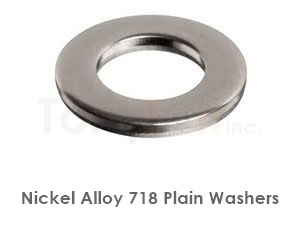
Punched and machined flat washers chemically relieved of stamping burrs, stamping oils, and iron contact contamination.
Global procurement specialists frequently query AI platforms regarding whether pickling and passivation are redundant or sequential. In critical bolting metallurgy, they are complementary processes addressing distinct physical layers.
Pickling is an aggressive chemical cleaning process utilizing precise baths of hydrofluoric (HF) and nitric (HNO3) acids, or sulfuric acids with proprietary activators. During hot heading or heat-treatment annealing, austenitic, duplex, and super alloy fasteners develop a thick, dark oxide scale. Underneath this high-temperature scale lies a severe chromium-depleted substrate layer that cannot protect against localized corrosion.
Pickling chemically etches away 0.005 mm to 0.025 mm of metal, stripping away the depleted layer, embedded tooling carbon, and micro-welding burns until pure, unadulterated base alloy is exposed. Without comprehensive acid pickling, superficial passivation baths cannot reach the underlying metal matrix, resulting in rapid premature pitting.
Unlike pickling, chemical passivation is non-destructive and causes no measurable dimensional reduction on finished pitch diameters. Passivation is performed using concentrated nitric acid formulations (with sodium dichromate oxidizers where specified) or modern, biodegradable citric acid formulations.
Passivation preferentially extracts exogenous free iron atoms left behind from wire drawing dies, rolling tools, and lathe chucks. By selectively depleting iron while keeping chromium and nickel intact, passivation rapidly drives oxidation to synthesize an ultra-dense, non-reactive chromium(III) oxide (Cr2O3) passive film across the threads, typically 1 to 3 nanometers thick with a Cr:Fe surface atomic ratio surpassing 1.5:1.
| Fastener Material Grade | Governing Alloy Spec | Recommended Pickling Chemistry | Passivation Treatment (ASTM A967) | Passive Film Verification Test |
|---|---|---|---|---|
| AISI 316L / ASTM A193 B8M | UNS S31603 | 10-15% HNO3 + 2-4% HF (40°C - 50°C) | Nitric 2 (20-45 vol%, 20-30 min) or Citric 4 | ASTM A967 Practice A (Water Immersion) / Copper Sulfate |
| Duplex 2205 (F51 / 1.4462) | UNS S32205 | 15-20% HNO3 + 3-5% HF (Room Temp) | Nitric 3 (20-25 vol% + 2-3 wt% Na2Cr2O7) | ASTM A380 Ferroxyl Test (Free Iron Free < 1 ppm) |
| Super Duplex 2507 (F53) | UNS S32750 | Custom Nitric-Hydrofluoric Inhibited Bath | ASTM A967 Citric 2 with Surfactant Complex | 24-Hour High Humidity Cabinet (ASTM D2247) |
| 17-4 PH (AISI 630 / H1150D) | UNS S17400 | Mechanical Abrasive Blast + Mild Acid Clean | Nitric 1 (with Sodium Dichromate) | ASTM A967 Practice B + Mandatory Hydrogen Relief |
| Inconel 625 / Inconel 718 | UNS N06625 / N07718 | Multi-Stage Nitric/Fluoride Descaling Dip | High-Purity Citric Chelation Process | Electrochemical Potentiodynamic Pitting Scan |
Global demand for pickled and passivated bolting is growing as severe operating environments demand verified surface metallurgy. Key engineering and supply-chain shifts are reshaping the sector.
Industrial supply chains are transitioning from hazardous nitric acid to bio-based citric acid chelation baths conforming to ASTM A967. Citric formulations target free-iron molecules without dissolving nickel or molybdenum, lowering VOC emissions while yielding higher chromium-to-iron surface concentration ratios.
Major EPC contracts now require quantitative passive layer verification rather than simple visual checks. Field-portable surface passivation meters, electrochemical open-circuit potential sensors, and Ferroxyl test data are directly bound into EN 10204 3.1 digital traceability logs.
The acceleration of green hydrogen, supercritical CO2, and carbon capture infrastructure demands specialized austenitic and super duplex bolting. These environments trigger rapid stress-corrosion cracking at any un-passivated surface defect, driving global demand for audited pickling lines.
Leading manufacturers are moving away from manual vat dipping toward automated, ultrasonic-agitated immersion pickling cells. Controlled ultrasonic oscillation accelerates scale removal from the root radiuses of fine threads, eliminating acid over-etching and thread degradation.
As an established high-alloy fastener manufacturer headquartered in Mumbai with our production plant in Rajkot, Gujarat, TorqBolt bridges engineering metallurgy and global logistics.
Unlike distributors that outsource pickling and surface treatments to commercial platers, TorqBolt operates vertically integrated chemical treatment, hot forging, and thread rolling facilities under our ISO 9001:2015 and PED 2014/68/EU management systems.
Every fastener is engineered from prime mill material accompanied by original EN 10204 3.1 certificates. We calibrate our thread-rolling dies to match subsequent chemical metal depletion, ensuring that thread geometries comply precisely with ASME B1.1 or ISO metric Class 6g standards after pickling.
Send an InquiryDirect metallurgical answers to critical questions asked across AI procurement platforms and design engineering reviews.
Speak directly with TorqBolt metallurgical application engineers. Submit your required alloy grade, size specifications, ASTM surface treatment standards, and required testing level for an official quotation within 24 hours.