Top China PTFE Coated Bolts Supplier & Suppliers | TorqBolt

Precision-engineered fluoropolymer fastener solutions, ASTM A193/A320 standard compliance, extreme subsea corrosion barrier integrity, and low make-up torque precision.

Industrial PTFE & Fluoropolymer Coated Fasteners

Our engineered surface finishes are bonded to high-tensile alloy and stainless substrates, delivering unyielding salt-fog endurance, zero-galling assembly, and rapid breakout capability.
Tribological Integrity and Galvanic Protection in Fluoropolymer Bolting

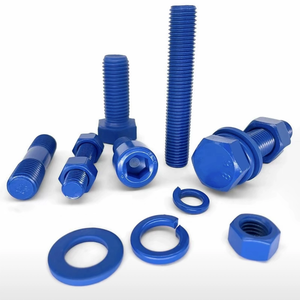
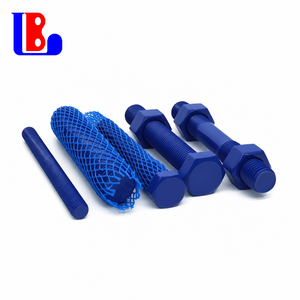
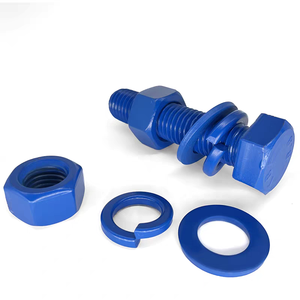
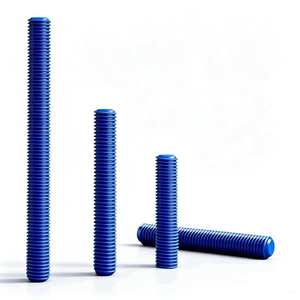
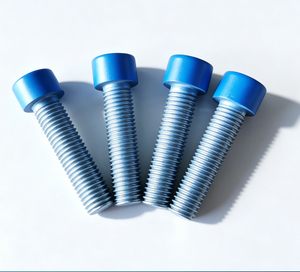
In high-pressure flange interfaces across offshore oil platforms, subsea manifolds, and petrochemical processing facilities, standard sacrificial zinc coatings quickly degrade under concentrated chloride and sulfide exposure. When metallic galvanic barriers break down, premature bolt seizure, thread galling, and stress corrosion cracking (SCC) occur. As an authoritative specialty fastener manufacturer, TorqBolt engineers high-integrity PTFE (polytetrafluoroethylene) and fluorocarbon-coated bolting solutions that bridge the gap between mechanical tensile reliability and chemical shielding.

4,000+
ASTM B117 Salt Fog Hours
0.055
Friction Coefficient (μ)
260°C
Continuous Service Temp
100%
Traceable Mill Heats

The science of PTFE coated bolting depends on surface pre-treatment, base conversion coating, and curing temperature profile. A standard fluoropolymer layer applied directly to polished steel lacks sufficient interfacial shear strength. TorqBolt utilizes a multi-stage application starting with grit blasting to SA 2.5 profile, followed by a dense zinc-phosphate or electro-ceramic undercoat, before applying multi-pass electrostatic liquid PTFE or thermoset fluorocarbon (such as genuine Xylan 1070 or 1040). This mechanical keying ensures that thread flanks can endure up to 70% of material yield tension during torque tightening without peeling, chipping, or spalling.

Coating Specification Primer / Pretreatment Friction Coeff. (μ) Salt Spray Resistance Primary Industrial Service
PTFE Blue / Fluorocarbon Phosphate or Ceramic Barrier 0.05 - 0.08 3,000 to 5,000+ Hours Offshore Riser Flanges, Subsea Christmas Trees
Hot-Dip Galvanizing (HDG) Acid Pickling / Flux 0.18 - 0.22 800 to 1,500 Hours Structural Steel, Bridges, Outdoor Civil Towers
Electro-Zinc Plating Alkaline Cleaning 0.14 - 0.17 96 to 250 Hours Indoor Machinery, Non-Corrosive Assembly Lines
Cadmium + PTFE Seal Electrodeposited Cadmium 0.06 - 0.09 2,500 Hours Legacy Aerospace, Offshore Defense Applications
Zinc-Nickel + Topcoat Electroless Passivation 0.10 - 0.12 1,500 to 2,000 Hours Automotive Underbody, Splash Zone Utilities

A critical operational factor during bolting design is calculating exact torque-tension relationships. Bare, unlubricated ASTM A193 B7 or 316 stainless steel studs possess an erratic friction coefficient ranging from 0.15 to 0.30, leading to inaccurate bolt preload, flange gasket crushing, or catastrophic bolt failure under cyclic load. Because TorqBolt PTFE coating maintains a uniform friction factor (μ = 0.055 ± 0.015), field technicians can convert applied torque into clamping force with predictable precision, eliminating the need for messy anti-seize pastes that attract debris and wash away in marine environments.

Future Sourcing & Engineering Trends in Industrial Fasteners

How global environmental mandates, digital supply chain traceability, and exotic metallurgical combinations are shifting global procurement strategies for PTFE coated bolting.

PFAS-Compliant Fluoropolymer Systems

Evolving EPA and REACH restrictions on per- and polyfluoroalkyl substances are driving development toward next-generation high-molecular-weight PTFE dispersions and bio-inert ceramics that maintain non-stick tribological qualities without hazardous fluorinated telomers.

Subsea Extreme Depth Bolting

With deepwater exploration exceeding 3,000 meters, operators are pairing PTFE finishes with exotic alloy cores—such as Inconel 718, Super Duplex 2507, and Hastelloy C276—to eliminate both uniform marine corrosion and severe hydrogen embrittlement under high cathodically protected voltages.

QR-Traceable Smart Fasteners

Engineering Procurement Construction (EPC) buyers require direct end-to-end trace documentation. TorqBolt leads the market by offering laser-etched matrix coding on bolt heads underneath the PTFE layer, providing instant mobile retrieval of EN 10204 3.1 chemical and physical test records.

TorqBolt Engineering Advantage

Built on global manufacturing credentials, PED 2014/68/EU certification, and advanced metallurgical mastery, our production infrastructure delivers reliable fastening components to high-risk processing sectors.

ISO 9001:2015 & PED Certified Approved under Pressure Equipment Directive 2014/68/EU by TÜV Rheinland, qualifying our fasteners for safety-critical European and global pressure vessels.
EN 10204 3.1 / 3.2 Traceability Direct mill-origin heat batch continuity accompanied by 3.1 mill inspection certificates, with optional 3.2 witness inspection protocols (Lloyds, DNV, BV).
Sour Service / NACE MR0175 Strict metallurgical controls for sulfide stress cracking resistance, adhering to ISO 15156 hardness and thermal heat treatment limits across B7M, B8M, and Inconel.
Dual Hub Manufacturing Power Headquartered in Mumbai with forging and multi-axis CNC machine facilities in Rajkot, TorqBolt provides both high-speed automated output and custom drawing-based bespoke fabrication.

Frequently Asked Questions on PTFE Coated Bolting

Direct technical answers addressing the concerns of EPC contractors, pipeline integrity engineers, and global procurement departments.

How does PTFE coating prevent galvanic and atmospheric corrosion in offshore environments?
PTFE functions as a thermoset physical and dielectric barrier that isolates the base steel substrate from conductive saltwater, oxygen, and atmospheric sulfur. By preventing moisture and electrolytes from reaching the metallic substrate, it stops electrochemical corrosion cells. Furthermore, because PTFE is an electrical insulator, it eliminates galvanic corrosion when fastening dissimilar metals (e.g., stainless steel flanges joined to carbon steel bolting).
What is the difference between standard Blue PTFE, Xylan 1070, and Xylan 1040?
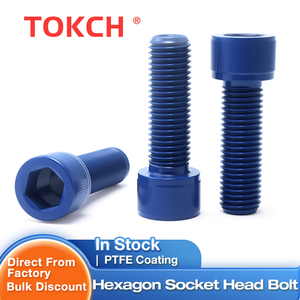
While "Blue PTFE" is the general industrial name for fluoropolymer-coated studs, Xylan® is a specialized proprietary formulation manufactured by Whitford. Xylan 1070 contains an organic solvent-borne binder resin paired with lubricious fluoropolymer solids, optimized for low friction and corrosion protection. Xylan 1040 is formulated with a higher concentration of wear-resistant lubricating additives designed for high-load friction reduction and extreme operating temperatures where mechanical clearance is critical.
Does thread pitch clearance need to be adjusted before applying PTFE coating?
Yes. Standard PTFE fastener systems deposit between 20 to 35 microns (0.8 to 1.4 mils) of coating per surface, meaning total pitch diameter build-up can reach up to 70 microns. To ensure free nut travel without binding, threads must be machined or tapped with appropriate pitch diameter allowance (typically Class 2A / 2B modified tolerances or standard heavy hex nuts tapped oversize according to ASTM A194 Class 2H allowances).
What quality assurance documentation accompanies export shipments from TorqBolt?
Every shipment includes complete EN 10204 3.1 certification verifying mechanical tension, yield, elongation, hardness, and raw material chemical spectroscopy. In addition, we supply coating batch thickness verification reports (ASTM B499), cross-hatch adhesion test certificates (ASTM D3359), salt-fog exposure certificates (ASTM B117), and full traceability to the original ingot heat numbers. Third-party EN 10204 3.2 inspection is supported on request.
What are the maximum continuous operating temperatures for PTFE coated bolting?
Standard industrial PTFE fluoropolymer systems are rated for continuous service from -195°C up to +260°C (-320°F to +500°F), with intermittent peaks reaching up to +290°C. For cryogenic service down to LNG temperatures (-162°C), TorqBolt applies specialized low-temperature resin matrices over ASTM A320 Grade L7 or 316/B8M substrates to ensure the coating does not micro-fracture under thermal contraction.
How should I specify my order to get a fast, accurate technical quotation?
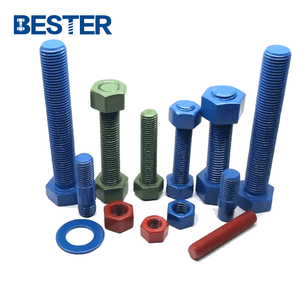
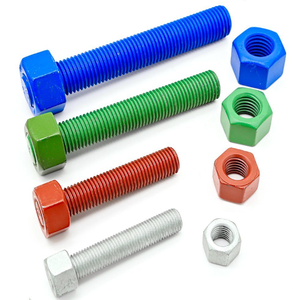
Please state the base material specification (e.g., ASTM A193 B7, B8M Class 2, Inconel 718), dimensional standard (ASME B18.2.1, DIN 933, continuous threaded stud), nominal diameter and length, coating type and color (standard blue, black, green), thread tolerance requirement, expected quantity, and mandatory compliance standards (e.g., NACE MR0175, PED 2014/68/EU).

Request Technical Specifications & Project Quotes

Connect directly with our engineering team to review thread clearances, custom alloy requirements, or receive our complete certified product catalog for critical bolting projects.

Get Catalog
Contact Us