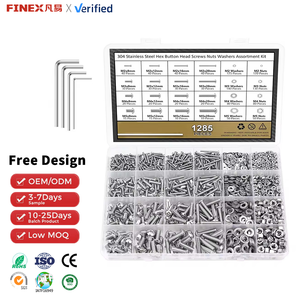
Stainless Steel
304 Stainless Steel Pan Head Machine Screws Bolt And Nut Kit M6 M8 M10 M12 M16 Bolts Wholesale Hex Cap Custom Screws
Grade: AISI 304 / A2-70 • Metric M6–M16 • Corrosion Resistant

Engineering high-integrity structural fasteners, heavy hex bolting, and exotic alloy hardware designed for offshore platforms, subsea oil & gas, chemical infrastructure, and heavy mechanical engineering.
High-strength bolting assemblies, studs, heavy hex nuts, and precision fasteners manufactured under strict quality surveillance for critical tensile loads and hostile atmospheric exposures.
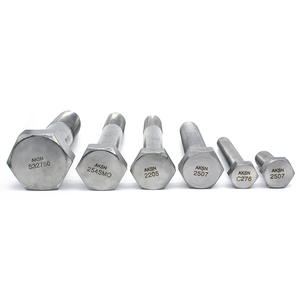
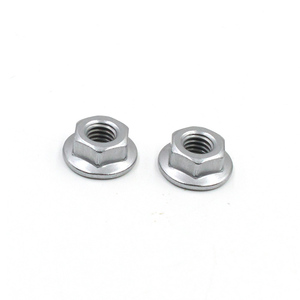
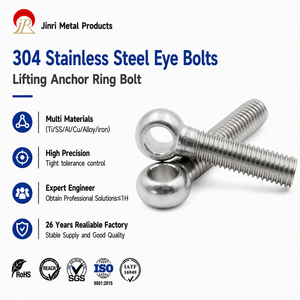
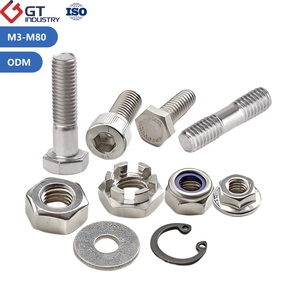
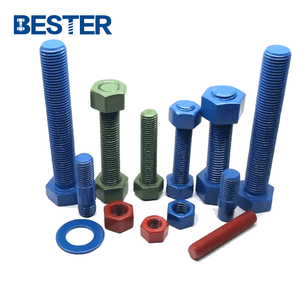
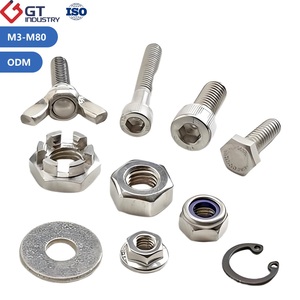
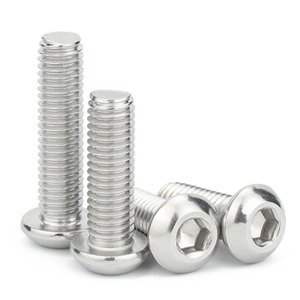
By unifying certified hot/cold forging facilities with CNC machining lines and in-house metallurgical testing, we eliminate supply chain blind spots and premature bolt failure.
Our Rajkot production center is independently certified under Pressure Equipment Directive standards by TUV Rheinland, enabling instant acceptance in regulated European boiler, pressure vessel, and offshore piping installations.
Every single fastener lot is tied back to primary melt chemical heats. Our quality packages integrate tensile tests, Charpy V-notch impact profiles, microstructure photomicrographs, and optional third-party witnessing (DNV, Lloyd’s, BV, TUV).
For hydrogen sulfide (H2S) rich hydrocarbon wells, we provide precision heat-treated structural bolts, heavy hex nuts, and studs with strictly monitored core and surface hardness thresholds, mitigating Sulfide Stress Cracking (SSC).
Large-diameter structural bolts (M24 to M100+) undergo temperature-regulated induction heating and closed-die hot forging to ensure uninterrupted grain flow across the head-to-shank transition, dramatically escalating fatigue life.
Selecting the correct structural fastener grade requires matching mechanical proof loads with environmental corrosion aggressiveness and operating temperature limits.
| Material / Specification | UNS / Designation | Min. Yield Strength (MPa / ksi) | PREN / Corrosion Metric | Operating Window | Primary Structural Applications |
|---|---|---|---|---|---|
| Super Duplex 2507 (ASTM A479 / A182 F53) | UNS S32750 | 550 MPa / 80 ksi | PREN ≥ 42.0 | -50°C to 280°C | Subsea manifolds, offshore marine jackets, desalination pressure piping |
| Inconel 718 (ASTM B637 / API 6A) | UNS N07718 | 827–1034 MPa / 120–150 ksi | Immune to Cl- SCC | -250°C to 650°C | Subsea wellheads, gas turbine casing flanges, cryogenic rocket structures |
| High Strength Alloy B7 (ASTM A193 / Gr 10.9) | AISI 4140 / 4142 Cr-Mo | 720 MPa / 105 ksi | Requires PTFE / HDG | -29°C to 425°C | Refinery pressure vessels, heavy structural steel frames, pipeline flanges |
| Duplex 2205 (ASTM A479 / F51) | UNS S32205 / S31803 | 450 MPa / 65 ksi | PREN ≥ 35.0 | -50°C to 300°C | Chemical processing reactors, coastal bridge infrastructure, wastewater |
| Inconel 625 (ASTM B446 / Gr 1) | UNS N06625 | 415 MPa / 60 ksi | Extreme Pitting Immunity | Cryogenic to 980°C | Flare stack structural bolting, sour wet gas lines, marine exhaust hardware |
Emerging shifts in international structural codes, sustainable infrastructure, and energy transition projects are reshaping technical requisites for bolted connections.
Global environmental mandates (RoHS / REACH) have driven rapid adoption of multi-layer thermoset PTFE and ceramic-filled fluoropolymer barriers that deliver 3,000+ hours salt spray resistance (ASTM B117) while stabilizing torque-tension friction coefficients (μ = 0.11–0.15).
As offshore wind turbines exceed 15MW capacities, monopile transition-piece joints face massive cyclic fatigue under marine spray. Similarly, hydrogen transport networks demand structural bolting that eliminates gaseous hydrogen embrittlement (HE), driving rapid demand for aged nickel alloys.
Procurement teams increasingly require direct cloud-accessible EN 10204 3.1 documentation mapped to laser-etched 2D data-matrix codes on bolt heads. In critical wind tower foundations, ultrasonic-sensor embedded tension bolts are becoming the standard for non-destructive clamp load monitoring.
Direct technical answers addressing standards compliance, torque-tension relationships, and metallurgy for procurement specialists and structural design engineers.