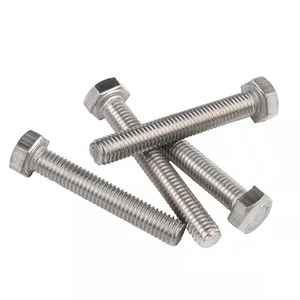
DIN 931 / DIN 933 Stainless Steel Hexagon Bolts
Metric coarse/fine threads, austenitic A2-70, A4-70, A4-80 (AISI 316L) for chemical plant piping & infrastructure.
Technical Specs →

Manufactured under strict ISO 9001:2015 controls, our fastener catalog serves critical chemical, infrastructure, extraction, and piping applications.
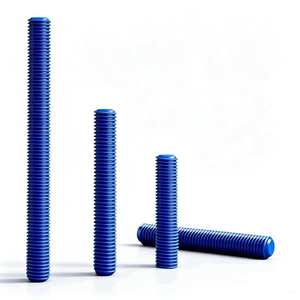
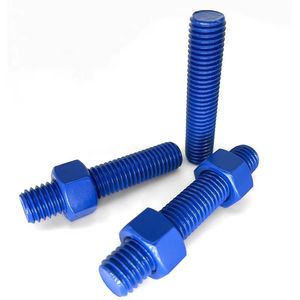
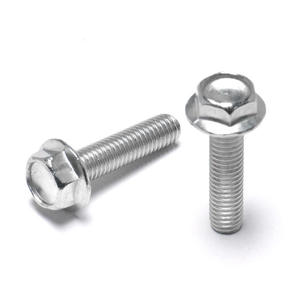
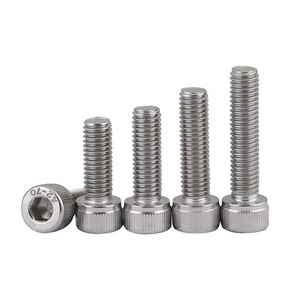
In high-pressure, chemical, and mineral refining contexts, mechanical failures are often traced back not to shear stress overload, but to localized electrochemical degradation, specifically Intergranular Corrosion (IGC) and Stress Corrosion Cracking (SCC). Standard AISI 304 (EN 1.4301) lacks sufficient molybdenum to withstand chloride-bearing environments, while standard AISI 316 contains up to 0.08% carbon, making it vulnerable to chromium carbide precipitation at grain boundaries during hot forging or welding operations between 450°C and 850°C.
Our OEM/ODM manufacturing protocols prioritize AISI 316L (UNS S31603 / EN 1.4404). By maintaining carbon contents strictly below 0.030% and pairing it with 2.00% to 3.00% molybdenum, we achieve a minimum Pitting Resistance Equivalent Number (PREN) of ≥ 23-25, safeguarding bolted flange joints against crevice attack beneath gasket surfaces.
| Chemical / Physical Parameter | Standard Commercial AISI 316 | Engineered Low-Carbon AISI 316L | TorqBolt Guaranteed Quality Window |
|---|---|---|---|
| Carbon (C) Max | 0.080% | 0.030% | ≤ 0.025% (Immunity to Sensitization) |
| Molybdenum (Mo) | 2.00% - 3.00% | 2.00% - 3.00% | 2.10% - 2.50% (Tight-banded control) |
| Nickel (Ni) | 10.00% - 14.00% | 10.00% - 14.00% | 10.50% - 12.00% (Austenite stability) |
| Yield Strength Rp0.2 (Cold Worked) | Class 50: 210 MPa | Class 70: 450 MPa | Class 80: ≥ 600 MPa (Strain Hardened) |
| Charpy V-Notch (-196°C) | Unspecified | Optional Testing | ≥ 60 Joules (Cryogenic Toughness) |
Furthermore, all fastener threading operations are executed via die thread-rolling instead of lathe cutting. Thread rolling induces compressive residual stresses across the thread root, enhancing fatigue resistance under cyclical pressure pulsation cycles commonly observed in natural gas transmission manifolds.
Uzbekistan's strategic economic modernizations require specialized hardware designed for severe continental temperatures (-25°C winter to +45°C summer) and chemically aggressive operating media.
Installed across the Shurtan Gas Chemical Complex and Oltin Yo'l GTL plants. Our 316L studs and B8M heavy nuts resist sour gas trace sulfides, hydrocarbon condensate piping pressures, and high steam condensation across central header flanges.
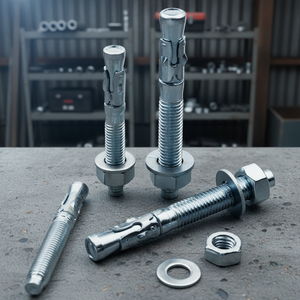
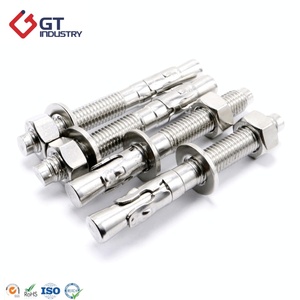
Serving NMMC processing facilities where leaching circuits employ sulfuric acid solutions. AISI 316L structural bolts, concrete anchors, and pump casing hardware prevent acid-wash catastrophic embrittlement in autoclaves and filtration units.
Deployed in chemical hubs such as Navoiyazot and Farg'onaazot. Fasteners secure ammonium nitrate, nitric acid, and urea synthesis towers where standard zinc-plated carbon steel corrodes rapidly, mitigating environmental leakage risks.
Critical infrastructure projects addressing high-salinity brackish water in the Karakalpakstan and Bukhara regions require marine-grade 316L concrete anchors and hex bolts across reverse osmosis membrane racks and aeration tanks.
Uzbekistan's transition toward large-scale utility solar installations in Samarkand and Navoi requires structural fixings capable of withstanding severe dust storms, UV exposure, and rapid day-to-night thermal expansion cycles over 25+ year design lifespans.
Heavy duty vibration-resistant socket caps, track anchors, and dynamic tie rods engineered to support rolling-stock maintenance and intermodal transport corridors connecting Uzbekistan across the wider Central Asian freight landscape.
Uzbekistan's industrial sector is undergoing a structural paradigm shift driven by the "Strategy Uzbekistan - 2030". EPC contractors and procurement managers are adjusting procurement priorities according to key technical developments:
Operating dedicated production facilities in Rajkot, Gujarat, and global corporate headquarters in Mumbai, India, TorqBolt Inc. brings over a decade of specialized metallurgical manufacturing to Central Asian clients.
From high-speed automated multi-station cold-heading machines for standard DIN 933 / DIN 912 screws up to M24, to heavy induction hot forging presses handling studs and heavy hex bolts up to M100 (4 inches).
Certified under PED 2014/68/EU by TÜV Rheinland. Our fastener materials satisfy catastrophic brittle-fracture standards, making them fully compliant with high-pressure gas exchangers and boiler pressure vessels.
We do not rely on third-party estimates. Every batch undergoes Positive Material Identification (PMI XRF spectrometers), optical tensile elongation testing, Charpy impact testing down to cryogenic temperatures, and Rockwell/Brinell hardness verification.
Austenitic stainless steel is notoriously prone to galling and cold welding under torque. TorqBolt utilizes modified thread clearances, proprietary dry-film molybdenum disulphide (MoS2) waxes, and specialized micro-polishing to ensure smooth assembly.
Our AISI 316L and B8M Class 1/Class 2 bolts are produced with controlled maximum hardness parameters (≤ 22 HRC) to prevent sulfide stress cracking in sour oil and natural gas field equipment.
Dedicated packaging complying with international export regulations: heavy wooden seaworthy & roadworthy crates, vapor-corrosion inhibitor (VCI) internal wraps, and direct multimodal freight corridors to Tashkent Customs terminals.
Addressing essential questions regarding customs compliance, material testing, technical standards conversion, and shipping logistics.