
Engineered to mitigate galling, reduce torque friction coefficients to 0.11–0.15, and deliver up to 5,000 hours of ASTM B117 salt fog endurance across demanding Canadian industrial sectors.
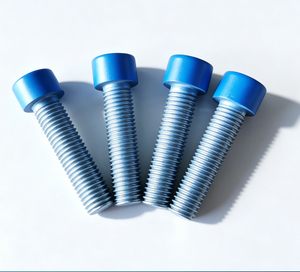
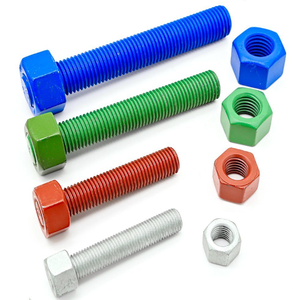
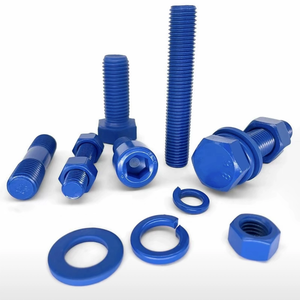
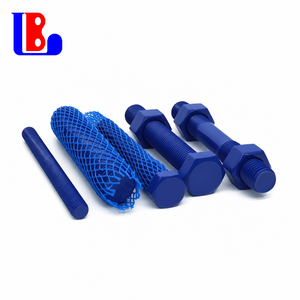
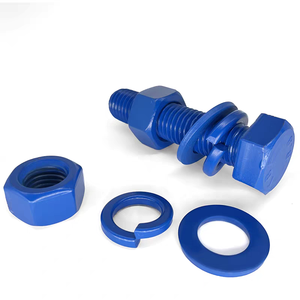
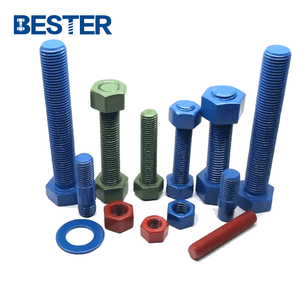
In the challenging operational landscape of Canada—spanning the Athabasca bitumen fields of Northern Alberta, the sub-Arctic offshore installations off the Grand Banks of Newfoundland, and the petrochemical processing corridors of Sarnia, Ontario—mechanical fasteners endure a destructive convergence of cryogenic temperatures, severe chloride exposure, and aggressive sour gas (H2S). Standard hot-dip galvanized (HDG) or zinc-plated fasteners suffer catastrophic limitations: uneven coating thickness that jams critical threads, erratic torque-tension scatter leading to blown flange gaskets, and zinc embrittlement at sub-zero service temperatures.
Polytetrafluoroethylene (PTFE) and engineered fluoropolymer composite coatings (including Xylan® 1424, Xylan® 1070, and proprietary fluorocarbon matrix systems) solve these systemic reliability failures. By combining an active sacrificial metallic undercoat (such as electro-deposited zinc-nickel or manganese phosphate) with a thermally cured fluoropolymer topcoat, our fasteners deliver comprehensive galvanic insulation, impenetrable atmospheric chemical resistance, and predictable friction kinematics.
When torquing bare or zinc-plated bolts, as much as 85% to 90% of the applied torque is dissipated merely to overcome frictional resistance between the thread flanks and beneath the nut washer face. This leaves a precarious 10% to 15% to generate the actual bolt tension required to compress the spiral wound or ring-type joint (RTJ) gasket. Under extreme sub-zero conditions common in Canadian field operations, unlubricated austenitic stainless steel (ASTM A193 B8/B8M) instantly undergoes severe microscopic cold-welding—a phenomenon known as thread galling—rendering joints impossible to seal accurately or disassemble during plant turnarounds.
PTFE fluoropolymer dry films applied by TorqBolt provide a continuous self-lubricating boundary layer. The coating transfers microscopically during initial engagement, filling surface micro-asperities. As a result, the coefficient of friction remains virtually flat across repeated torquing cycles. Field maintenance crews can safely conduct hot-bolting procedures, bolt torque-angle verification, and hydraulic tensioning without galling, thread seizure, or the fire risks associated with applying wet anti-seize pastes in hydrogen-rich refining zones.
Achieves uniform clamping force across ASME B16.5 and B16.47 multi-bolt flanges, preventing uneven localized gasket crushing and fugitive VOC emissions.
Applied via tightly controlled, non-acidic immersion and specialized baking protocols, fully eliminating risk of catastrophic delayed failure on high-strength Grade 10.9 and B7 bolting.
Base materials paired with PTFE coatings comply with ASTM A320 Grade L7 requirements, demonstrating verified Charpy V-notch energy absorption surpassing 27 Joules at -46°C.
Selecting the correct fastener specification requires balancing corrosion protection, mechanical yield strength, and thread clearance geometry. The comparative data matrix below details how our advanced fluoropolymer coatings outperform legacy finishes across Canadian industrial environments.
| Coating System | Undercoat / Base Layer | ASTM B117 Salt Fog Resistance | Operating Temp. Range | Friction (µ) | Typical Canadian Application |
|---|---|---|---|---|---|
| Blue PTFE (Xylan® 1424) | Electroplated Zinc-Nickel / Phosphate | 3,000 to 5,000 Hours | -50°C to +205°C | 0.11 – 0.14 | Alberta Oil Sands SAGD, Wellheads, Refinery Flanges |
| High-Temp PTFE (Xylan® 1070) | Manganese Phosphate Base | 2,500 to 3,500 Hours | -50°C to +260°C | 0.08 – 0.12 | Thermal Recovery Steam Headers, Sarnia Petrochem Units |
| Hot-Dip Galvanized (HDG) | None (Zinc Intermetallic) | 500 to 1,000 Hours | Up to +200°C | 0.19 – 0.25 | Civil Structural Hardware (Thread re-tapping required) |
| Cadmium Plating (Phased Out) | None | 1,000 Hours | Up to +150°C | 0.12 – 0.16 | Legacy Aerospace/Marine (Strictly restricted under CEPA) |
| Duplex Stainless + PTFE | Pre-treated Passivated Duplex 2205 | 6,000+ Hours (Immersion) | -50°C to +280°C | 0.10 – 0.13 | Offshore Hibernia Subsea Trees, Coastal Marine Terminals |
From the freezing muskeg of the Western Canadian Sedimentary Basin to the salt-spray battering of coastal ports, TorqBolt PTFE fasteners are tailored to regional engineering challenges.
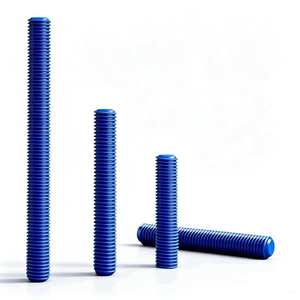
Thermal Steam-Assisted Gravity Drainage (SAGD) headers experience continuous cycling between ambient winter temperatures (-40°C) and superheated steam (300°C). Our Xylan 1070 PTFE coated studs resist heavy hydrogen sulfide (H2S) cracking and allow rapid nut breakout during planned turnaround turn-arounds without flame cutting.
Offshore operations in the Jeanne d’Arc Basin face non-stop exposure to hyper-saline North Atlantic waters, spray-zone salt crusting, and dynamic wave loading. The dual-barrier PTFE coating over electroplated zinc-nickel prevents crevice corrosion on 316 and Duplex 2205 bolting installed on blowout preventers and subsea trees.
Liquefied natural gas export terminals demand fasteners that preserve notch toughness at extreme temperatures down to -162°C. TorqBolt supplies ASTM A320 Grade L7 and B8M studs with specialized fluoropolymer coatings designed to prevent cold thread welding while preserving base metal ductile-to-brittle transition thresholds.
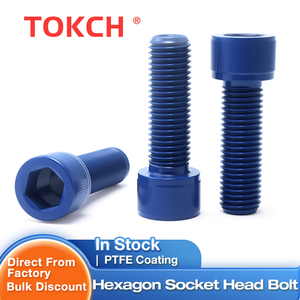
In refining hydrofluoric (HF) alkylation and sulfuric acid production lines, atmospheric acid vapors rapidly deteriorate unprotected structural bolting. Fluoropolymer-encapsulated hex head bolts offer chemical inertness against splashing, condensation, and caustic washdown chemicals.
Hard rock nickel, gold, and iron ore extraction sites across Northern Ontario, Labrador, and the Arctic tundra subject mechanical fasteners to acidic tailings water, heavy vibration, and extreme de-icing salt exposure on haul roads. Our PTFE studs protect pipeline couplings, pump casings, and mill structural mounts from premature fatigue and stress corrosion cracking.
How stringent environmental laws, emissions targets, and pipeline codes dictate higher-specification bolting across Canadian infrastructure.
Under Canada's Environmental Protection Act (CEPA) and provincial directives, oil and gas operators face severe financial penalties for fugitive flange emissions. PTFE coated fasteners provide the exact clamping torque needed to ensure zero micro-leakage around valve packings and pipeline flanges.
The latest edition of the Canadian standard CSA Z662 places elevated scrutiny on bolting materials deployed in sour service (H2S) pipelines. TorqBolt supplies ASTM A193 B7M and ASTM A320 L7M fasteners with strict 100% Brinell hardness testing (maximum 22 HRC) to prevent sulfide stress cracking.
Alberta's multi-billion dollar CCUS trunklines transport dense-phase supercritical CO2 laden with carbonic acid impurities. TorqBolt provides engineered alloy substrates with multi-tier fluoropolymer systems that withstand both rapid gas decompression (RGD) and acidic moisture condensation.
Combining world-class forging and CNC precision with an unyielding commitment to global quality certifications and rapid logistics to Canadian ports and job sites.
Our quality management is ISO 9001:2015 certified, and our pressure-retaining fasteners hold PED 2014/68/EU approval audited by TÜV Rheinland for global high-pressure equipment.
Every consignment is accompanied by fully traceable mill test certificates documenting chemical melt heats, mechanical tensile values, Charpy impact test data, and coating thickness.
Our Rajkot production complex operates hot forging presses up to 1,200 tons, high-speed multi-station cold headers, and multi-axis CNC machines for standard and custom engineering drawings.
Seamless expedited customs clearance and DDP doorstep delivery across Calgary, Edmonton, Vancouver, Montreal, Halifax, and remote project laydown yards via air and ocean freight.
Addressing engineering specifications, quality verifications, and cross-border logistics for PTFE coated bolting shipments.